
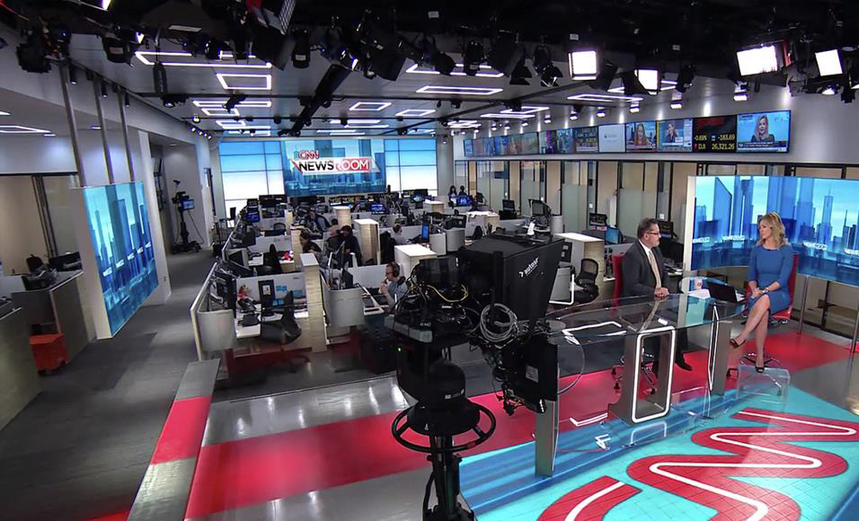

The White House confrontation with CNN, MS NOW and Politico is more than a political dispute. It exposes a growing business challenge for media companies: how to remain commercially resilient when access to the institutions they cover becomes a source of leverage.
For years, access has been one of the hidden assets of political journalism. A correspondent inside the White House can see the president, question officials, attend briefings, travel with the administration and report events as they unfold.
For a media company, that access translates into speed, exclusivity, content and audience attention. But the latest confrontation between President Donald Trump and three major US media organisations raises a more fundamental question: what happens when access to power becomes a business vulnerability?
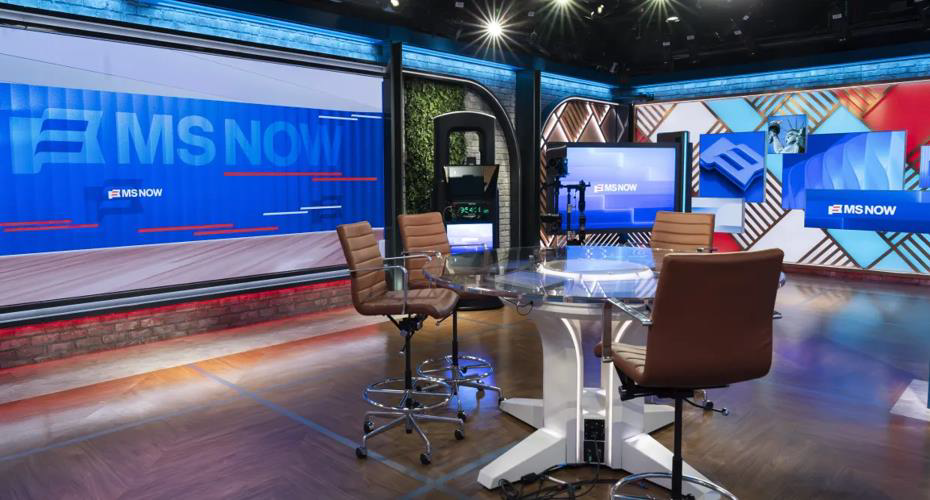
On September 18, Trump announced that CNN, MS NOW and Politico would be banned from the White House, accusing them of repeatedly reporting what he described as “fiction and lies” about his administration. He did not identify particular reports that prompted the decision, saying later that the action was the result of “cumulative stories over the past few years”. By the following day, the administration had begun enforcing the decision, with journalists from
CNN, MS NOW and Politico denied access to the White House grounds, and their press credentials confiscated. CNN, MS NOW and Politico rejected the action and indicated that they would defend their rights.
For BrandiQ, however, the more interesting story lies beneath the confrontation. This is a story about the economics of media access, the resilience of media brands and the increasingly complicated relationship between editorial independence and commercial sustainability.
Access is an Asset
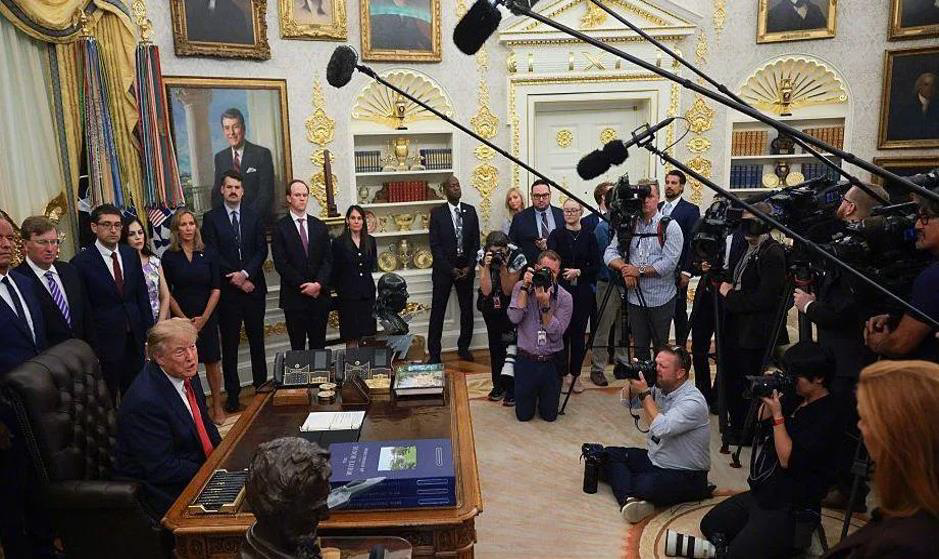
In the media business, information is the product. But access can determine how quickly and distinctively that product reaches the market. A White House correspondent does not simply occupy a prestigious position; the correspondent is part of an information supply chain.
Lose access and a newsroom may still obtain government information through public statements, livestreams, documents, other journalists and alternative sources. What it can lose, however, is the immediacy and first-hand access that give political reporting much of its competitive value.
The Associated Press experienced precisely this problem after the Trump administration restricted its access in 2025. During litigation, AP argued that the restrictions impeded its ability to report rapidly from presidential events. The organisation even testified that it had lost a $150,000 advertising contract from a client concerned about the consequences of the access dispute.
That detail is particularly significant from a business perspective because it demonstrates how a dispute that begins as a constitutional or editorial matter can eventually affect operations, customers, advertising, revenue and brand value.
When Editorial Independence Meets Commercial Reality
The Trump-CNN confrontation therefore presents a classic business dilemma for media organisations. The value of a media brand rests heavily on credibility, but media companies
also operate businesses that depend on audiences, advertisers, subscribers, distribution relationships, talent and access to information. Those interests do not always move in the same direction.
A news organisation may decide that maintaining editorial independence requires confronting a powerful source of information even when doing so carries commercial consequences. Conversely, excessive dependence on access can create a different danger: the media organisation may gradually become reluctant to challenge the institution that controls that access.
That is why the present dispute matters beyond Washington. It raises a fundamental question about brand resilience: how much of a media organisation’s competitive advantage should depend on its proximity to power?
CNN’s Real Asset May Not Be the White House Pass
CNN’s most valuable asset is not a White House press credential. It is its relationship with its audience. That distinction could become increasingly important as media organisations confront governments, corporations, technology platforms and other powerful institutions.
A newsroom that can only function effectively when powerful institutions grant it privileged access has a structural vulnerability. A newsroom capable of producing credible journalism through multiple information channels has greater resilience. This is particularly relevant in the digital era, where government information can be distributed instantly through official websites, livestreams, social platforms and direct presidential communication.
Trump himself has demonstrated the power of bypassing traditional media by communicating directly with audiences through social media. The result is a changing information marketplace in which governments and politicians increasingly operate their own publishing channels, while media organisations compete to interpret, verify and contextualise what those institutions say. In that environment, access remains valuable, but it is no longer the only route to relevance.
The Brand Battle
There is also a reputational dimension to the confrontation. Trump’s description of CNN, MS NOW and Politico as “fake news” is not merely an accusation against individual reports; it is an attempt to influence how audiences perceive the brands themselves. The media organisations, for their part, are responding with a different brand proposition: independence.
CNN says it will continue its duty to hold government accountable. MS NOW says it will defend the role of independent journalism. Politico says it will continue reporting on the White House. The competing propositions are therefore clear: Trump’s message is that these media brands cannot be trusted, while the media organisations’ message is that independence is precisely why they must continue reporting.
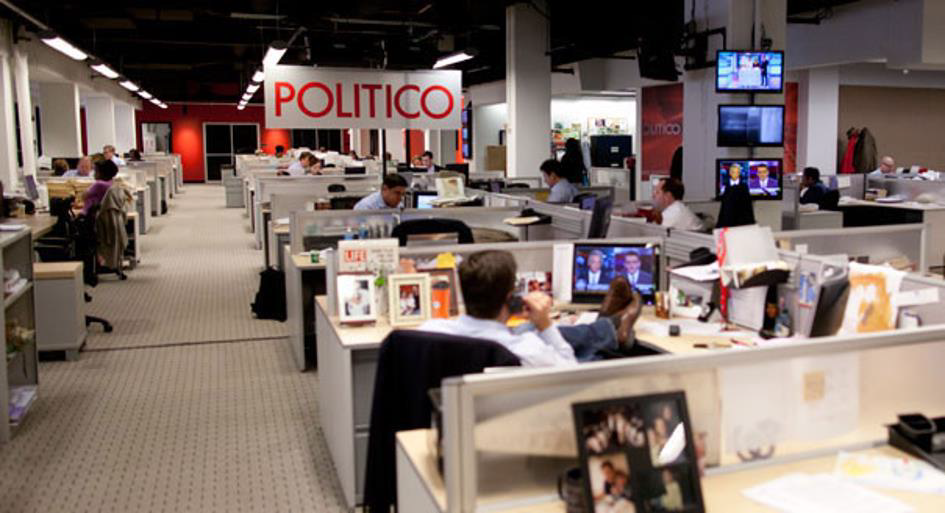
The eventual reputational impact will depend less on the rhetoric of either side than on what audiences believe about the quality, accuracy and independence of the journalism they consume. That makes the confrontation, at its core, a brand-trust battle. For media companies, trust is not simply an editorial virtue; it is a commercial asset that determines whether audiences return, subscribe, share content and remain loyal to a publication or broadcaster.
And There Is a Precedent
This is not Trump’s first confrontation with media access. The administration previously restricted Associated Press journalists after the organisation declined to adopt the administration’s preferred terminology for the Gulf of Mexico. AP challenged the restriction in court, and in April 2025 a federal judge ruled that the government could not punish AP because of its viewpoint and ordered the White House to restore its access.
Subsequent litigation, however, demonstrated that presidential control over access to certain limited events is legally more complicated than simply declaring that every journalist has an unrestricted right to enter every presidential space. That makes the latest confrontation particularly important. The courts may ultimately have to determine where the boundary lies between legitimate control of limited presidential access and impermissible retaliation against media organisations because of their reporting.
What Could Happen to CNN, MS NOW and Politico?
The immediate consequence is disruption rather than disappearance. The organisations can continue reporting on the Trump administration from outside the White House, using public documents, official statements, other sources, interviews and material generated by journalists who retain access.
The more important issue is whether restricted access becomes permanent or institutionalised. If access is restored, the episode could become another chapter in the continuing conflict between the Trump administration and sections of the American media. If restrictions persist or expand to additional organisations, the business implications become more significant.
Media companies could increasingly have to invest in alternative reporting networks and information-gathering systems that reduce their dependence on official access. That could increase costs, but it could also encourage the development of a more distributed and potentially more resilient journalism model. In business terms, the loss of one source of privileged access could become an incentive to diversify the information supply chain.
The Bigger Media-Business Question
The traditional news business was built partly around proximity. Newspapers had correspondents, television networks had bureaus, and major news organisations maintained privileged access to government, corporations and other institutions. Digital media has weakened some of those barriers.
A reporter can now broadcast directly from outside the White House. A newsroom can analyse government documents almost immediately. Audiences can receive the president’s own words directly rather than waiting for the evening news. Governments themselves can publish statements, videos and policy announcements without traditional media acting as the intermediary.
The competitive advantage is therefore shifting. Access alone is becoming less decisive, while interpretation, verification, credibility and audience trust are becoming more important. That may be the most significant business lesson from the Trump-CNN confrontation.
BrandiQ Takeaway
The Trump-CNN dispute may eventually be resolved in a courtroom, through negotiation or through another change in White House media policy. But the business lesson is already visible: media companies cannot build durable brands around access alone.
Access can disappear. Political administrations change. Corporate relationships end. Technology disrupts distribution. What remains is the brand’s credibility and the relationship between the organisation and its audience.
For CNN and its peers, the strategic challenge is therefore bigger than regaining entry through the White House gates. It is building media businesses strong enough to withstand the loss of privileged access while maintaining the audience trust that gives journalism its commercial value.
For the wider media industry, the implication is broader still. The future competitive advantage
will increasingly depend not simply on which media brand is closest to power, but on which
organisations can continue to provide credible, useful and trusted information when their access
to power becomes contested.