


The South African agency’s appointment of Albert De Andrade as chief creative officer and Lerato Moleko as strategy director reflects a wider industry shift: agencies are being asked to move beyond communications execution and become growth partners to clients.
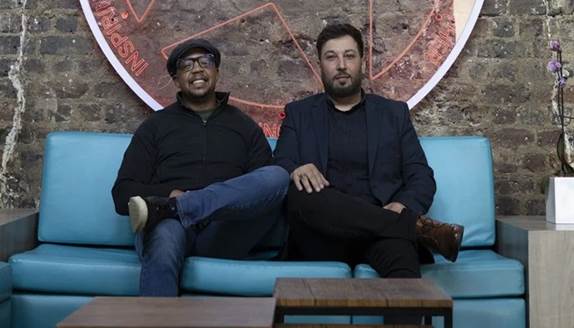
South African brand and communications agency Penquin has strengthened its leadership team with the appointment of advertising veteran Albert De Andrade as chief creative officer, CCO, and Lerato Moleko as Strategy Director, SD, a move the agency says is designed to strengthen its integrated offering and reinforce its ambition to act as a “growth challenger partner” to clients.
At first glance, it is another agency leadership announcement. But the pairing is worth examining more closely. Penquin is not simply adding a senior creative and a senior strategist to its organisation. It is deliberately placing creativity and strategy together at the heart of its growth agenda, reflecting a broader pressure on agencies to connect ideas more directly to commercial problems.
CEO Veronica Moleele says the appointments are intended to bring strategy, creativity and business thinking together “from the very beginning”, arguing that clients are increasingly confronting complex business and communication challenges that require different disciplines to work together. That is an important statement about where the agency believes the market is going.
The traditional agency model often organised itself around specialised disciplines: account management managed the client, strategy defined the problem, creative developed the idea, media distributed it and specialist agencies handled particular channels. The model produced extraordinary work, but the fragmentation also created a persistent industry problem: the people who understand the business problem are not always the people creating the solution, and the people creating the idea are not always accountable for the business result. Penquin’s new structure appears designed to narrow that distance.
Why the creative-strategy relationship matters again. De Andrade brings more than 20 years of advertising and marketing experience to the role. His career includes work for brands such as Coca-Cola, PepsiCo, Procter & Gamble, Ford, Gillette, Vodacom, Discovery, DStv, Castle Lager and Anglo American. Penquin says his approach is rooted in the intersection of business ambition, strategic intelligence and human imagination.
Moleko brings 14 years of experience across business consulting and brand strategy, with previous strategic-planning experience at FCB Africa, Wunderman Thompson, Edelman Africa and Ogilvy South Africa. Her experience includes work for South African Tourism, Telkom, Unilever and Mondelez.
The significance is therefore not merely that both executives are experienced. Their respective backgrounds suggest that Penquin is attempting to strengthen both ends of the agency’s value proposition simultaneously.
Creativity must remain distinctive enough to create memorability, while strategy must become sufficiently commercially grounded to identify problems worth solving. Moleko captures the relationship succinctly: great creative work needs to understand the challenge it is solving, while strategy becomes meaningful when it is translated into ideas people can connect with. That sounds straightforward. In practice, it is one of advertising’s most persistent organisational challenges.
The agency is being asked a different question For decades, agencies could demonstrate their value through communication outputs: campaigns created, media delivered, impressions generated, awards won and audiences reached. Clients increasingly want something harder to demonstrate.
What did the agency change? Did it increase demand? Did it alter consumer behaviour? Did it create a new market? Did it strengthen the brand? Did it accelerate growth? Did it help the client compete differently? That shift is particularly important in an environment in which technology is reducing the cost and time required to produce basic communication assets.
Generative AI can already assist with copy, visual development, ideation, research and production. Automation can handle increasing amounts of execution. Platforms can provide targeting, optimisation and measurement. As these capabilities become more accessible, execution itself becomes less defensible as an agency advantage.
The strategic value therefore moves upward. Agencies increasingly have to demonstrate that they can identify the right problem, understand the consumer and market context, formulate a distinctive strategic response and turn that strategy into ideas capable of creating commercial value. Penquin’s leadership structure can be read against precisely this background.
From integrated communications to integrated thinking There is, however, an important distinction between claiming to be an integrated agency and actually practising integrated thinking. Integration is often used to describe the number of services an agency can provide. An agency may offer advertising, digital, public relations, social media, content, media and experiential marketing and therefore describe itself as integrated. But integration is not the same as accumulation.
An agency can have many capabilities and still operate them in silos. The more difficult form of integration occurs when different disciplines participate in solving the same problem from the beginning rather than receiving the strategy as a finished document and being asked to execute it. That appears to be the direction Penquin is signalling.
Its stated ambition is to create closer collaboration between strategy and creativity while connecting both disciplines to the commercial realities confronting clients. If implemented successfully, this could produce a different kind of agency conversation with clients. Instead of beginning with, “What communication do you need?”, the agency begins with, “What business problem are we trying to solve?” That is a much more valuable starting point.
The AI factor cannot be ignored There is also a technological dimension to Penquin’s decision that deserves attention. As AI increasingly enters the agency workflow, the distinction between strategic thinking, creative production and execution will become more fluid. AI can research, synthesise information, generate ideas, produce creative variants and optimise content. The danger is that agencies respond by becoming faster producers of more content. That would be the wrong strategic response.
If machines increasingly reduce the cost of production, human strategic judgement and creative distinctiveness become more – not less – important. The agency of the future therefore may not be defined by how many specialists it employs or how many assets it can produce. Its competitive advantage may lie in its ability to connect business intelligence, cultural understanding, strategic judgement, creativity, technology and governance into a coherent response.
That makes the relationship between a CCO and strategy director considerably more important than an organisational-chart decision. It potentially represents the agency’s attempt to protect the thinking layer of its value proposition.
BrandiQ Analysis
There is a larger agency-industry story here. For years, the advertising industry has debated whether strategy or creativity should lead. That may increasingly be the wrong question. The more relevant question is whether an agency can create an environment in which strategy and creativity become inseparable in solving the client’s problem.
Strategy without creativity can become analysis without impact. Creativity without strategy can become entertainment without direction. Business thinking without either can become consulting without cultural resonance. The real competitive advantage lies in the intersection.
That is particularly relevant in Africa, where agencies are increasingly competing not only with other agencies but with consulting firms, technology companies, production platforms, specialist digital firms and, increasingly, AI-enabled marketing systems.
The agency that simply produces communication is entering a much more difficult competitive environment. The agency that can diagnose the problem, define the opportunity, create the idea, orchestrate the ecosystem and demonstrate the commercial consequence is playing a different game. Penquin’s appointments suggest that it understands this shift.
BrandiQ Verdict
Penquin’s decision to put a chief creative officer and strategy director at the centre of its leadership structure is more than an appointment story. It is a bet on an increasingly important proposition: The future agency will not win because it can produce more communication. It will win because it can think more effectively about the business problems that communication is supposed to solve.
The real test for De Andrade and Moleko will therefore not be whether they produce better campaigns independently. It will be whether they can make strategy and creativity operate as one commercial capability – and whether clients can see the difference in the growth of their businesses.
That is the standard against which the new Penquin leadership should ultimately be judged. And in an industry being rapidly reshaped by AI, automation and fragmentation, it may be exactly the standard more agencies will soon have to meet.