

By using this site, you agree to the Privacy Policy and Terms of Use.
Accept
BrandiQBrandiQBrandiQ
  • Brand & Marketing
  • Industry News
  • Market Intelligence
  • Business & Economy
  • Technology & Digital
Reading: Why IMF and World Bank Loans Cost Developing Countries More: Nigeria, Debt Markets and the High Cost of Weak Institutions
Share
0

No products in the cart.

Notification Show More
Font ResizerAa
BrandiQBrandiQ
0
Font ResizerAa
Search
  • Brand & Marketing
  • Industry News
  • Market Intelligence
Have an existing account? Sign In
Follow US
© 2026 Brand IQ. All Rights Reserved.
Market Intelligence

Why IMF and World Bank Loans Cost Developing Countries More: Nigeria, Debt Markets and the High Cost of Weak Institutions

BrandiQ Analyst
Last updated: April 22, 2026 6:04 pm
BrandiQ Analyst
April 22, 2026
Share
6 Min Read
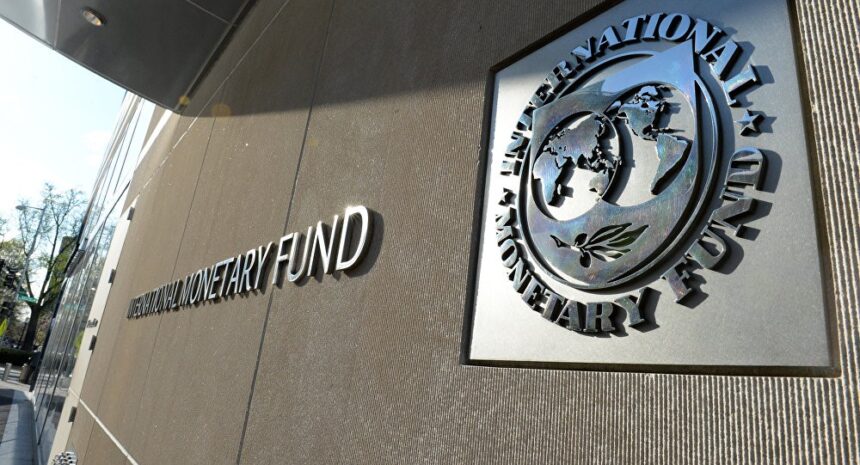
world bank loans
SHARE

Developing economies such as Nigeria continue to face significantly higher borrowing costs than advanced nations, a structural imbalance that raises debt burdens, constrains public investment and slows long-term development.

That was the central message from Group of 24 (G-24) Director Dr Iyabo Masha, who said poorer countries often pay interest rates three to four times higher than richer economies because of weak revenue systems, debt vulnerabilities and global risk perceptions.

Her remarks, delivered during the 2026 Spring Meetings of the IMF and World Bank in Washington, go to the heart of one of the biggest challenges facing emerging markets: how to finance development when capital is expensive.

Why Poorer Countries Pay More

At first glance, the logic appears simple. Lenders charge more when they perceive higher risk. But in practice, this creates a vicious cycle.

Countries with weak tax systems, shallow export bases and volatile currencies are seen as risky. Because they are seen as risky, they borrow at high rates. Because they borrow at high rates, debt servicing consumes revenues. Because revenues are consumed by debt service, they struggle to invest in reforms that would reduce risk.

Nigeria illustrates the dilemma.

Its debt-to-GDP ratio remains moderate by global standards, but its debt-service-to-revenue ratio is far more troubling. That means the issue is not merely how much Nigeria owes, but how much income government generates to pay what it owes.

Revenue, Not Just Debt, Is the Real Story

Masha noted that creditors focus heavily on how much a country earns through taxes, since that determines repayment capacity. That is crucial. A nation with strong revenue mobilisation can sustain larger debt loads than a country with weak collections.

Nigeria’s tax-to-GDP ratio remains among the lowest for large economies. A large informal sector, leakages, exemptions and administrative inefficiencies weaken the state’s fiscal capacity. This means lenders demand a premium.

The Institutional Economics Problem

Economist Douglass North and later Acemoglu & Robinson showed that inclusive, effective institutions are central to prosperity. When institutions are weak, markets price in dysfunction.

Examples include:

  • Uncertain policy direction
  • Poor tax administration
  • Weak rule of law
  • Corruption risks
  • Currency instability
  • Delayed reforms
  • Opaque public spending

These institutional weaknesses translate directly into bond yields, loan pricing and investor caution. Debt markets punish weak governance.

Why Debt Relief Is Harder Today

Masha also explained why large-scale debt forgiveness like Nigeria’s Paris Club relief of the 2000s is less likely now.

Then, much debt was owed to bilateral lenders and official institutions. Today, many developing countries borrow from:

  • Eurobond investors
  • Asset managers
  • Commercial banks
  • Diverse private creditors

This fragmentation makes coordinated relief harder. Private contracts differ, legal jurisdictions vary and investors may resist concessions. That is why frameworks such as the G20 Common Framework have moved slowly.

Nigeria’s Position: Distressed or Still Investable?

Nigeria remains able to borrow and has continued servicing obligations. That keeps it outside the category of countries formally declaring inability to pay.

Paradoxically, this creates a middle-income trap in sovereign finance:

  • Too solvent for relief
  • Too constrained for comfort
  • Too attractive to ignore
  • Too expensive to finance easily

This is where many emerging markets now sit.

Why Borrowing Costs Matter for Growth

High sovereign borrowing costs ripple through the economy.

When government pays more:

  • Less money goes to roads, health and education
  • Domestic interest rates stay elevated
  • Businesses face expensive credit
  • Infrastructure gaps widen
  • Growth slows
  • Poverty reduction stalls

This is why debt pricing is not merely a finance issue. It is a development issue.

What Nigeria Must Do

Rather than waiting for debt relief, Nigeria’s more durable solution lies in reducing perceived risk.

That requires:

1. Revenue Reform
Broaden the tax base without crushing productive enterprise.

2. FX Stability
Predictable currency markets reduce investor fear.

3. Spending Credibility
Show markets that borrowing funds productive assets.

4. Institutional Trust
Transparent procurement, stronger audits and rule-based governance.

5. Export Expansion
Higher non-oil FX earnings improve resilience.

Behavioural Finance Angle

Markets are not purely rational. They also price narratives. Countries known for policy reversals or governance uncertainty often pay more than fundamentals alone justify. Reputation matters. That means communication, credibility and consistency are economic assets.

BrandiQ Takeaway

The high cost of borrowing for developing nations is not simply global injustice, though structural biases exist. It is also a mirror reflecting domestic institutional weakness. Capital goes where it feels safest. Nigeria’s long-term solution is not endless borrowing or hoping for forgiveness. It is building a state strong enough, credible enough and productive enough that lenders no longer demand a fear premium. When institutions improve, interest rates often follow. That is the real path from debt stress to development sovereignty.


You Might Also Like

LG Electronics Expands Smart Home Portfolio in Nigeria with Climate-Focused Innovation
African Cloud Economy: Nigerian Brands Risk Consequences of Over-reliance on Foreign Infrastructure
Revealed: Africa’s Grassroots Bitcoin Expansion is Accelerating Says New Report 
The Rise of Africa’s Brand Economy in 2026
Report: How AI and New Consumer Behaviour Reshape Global Food Industry in 2026
Share This Article
Facebook Whatsapp Whatsapp LinkedIn Telegram Email Copy Link Print
What do you think?
Love0
Sad0
Happy0
Sleepy0
Angry0
Dead0
Surprise0
Wink0
Previous Article nitda Nigeria Digital Sovereignty Drive Gains Pace as NITDA Expands Software Infrastructure and Data Control Strategy
Next Article Sustainable Development Goals Nigeria Targets $31.5 Billion Annual SDG Financing Gap Through Global Sustainability Reporting Standards
Leave a Comment

Leave a Reply Cancel reply

Your email address will not be published. Required fields are marked *

What the NIPR Lagos 2026 PRFest Agenda Really Means for the PR Profession
Brand & Marketing
African Energy Bank Set for September Launch, as Africa Seeks Greater Control of Energy financing 
Business & Economy
Energia Appoints Oshisanya as Director to Strengthen Corporate Governance
Industry News
AI Is Not the Problem – Your Operating Model Is
Market Intelligence
- Advertisement -

You Might Also Like

How to evaluate a business

From Idea to Empire: A Simple but Powerful Framework to Evaluate Any Business

May 6, 2026
african brand assets

The Most Valuable African Brand Assets: What Truly Builds Enduring Power on the Continent

March 23, 2026
african startups

10 African Startups Redefining Consumer Markets

April 4, 2026
Silicon Valley

Is Africa the Next Silicon Valley?

March 2, 2026
AI Advertising Shake-Up: Meta Surges, YouTube Lags as Data Power Reshapes Global Ad Economy By Desmond Ekeh The first quarter of 2026 delivers a clear verdict on the future of digital advertising: scale alone is no longer enough. In a data-driven economy increasingly shaped by artificial intelligence, performance-not presence-is now the defining currency. Fresh analysis from WARC shows a widening divergence among Big Tech platforms, with Meta Platforms outperforming expectations, Amazon holding steady, and YouTube struggling to convert attention into revenue. At stake is more than quarterly earnings. These shifts are redefining how data, AI, and platform economics interact across Nigeria, Africa, and the global marketplace. The Data Behind the Divergence Below is a simplified analytical snapshot of Q1 2026 performance relative to projections: Platform Actual Ad Revenue Forecast Variance Strategic Signal Meta $55.0bn $54.1bn +2.3pp AI translating directly into monetisation Google Search $60.4bn +13.7% growth expected +5.4pp Search remains dominant, AI enhances usage Amazon Ads $17.2bn $17.3bn est. -0.4pp Stable, full-funnel dominance YouTube $9.98bn $10.05bn -1.9pp Engagement not converting to revenue Google Display Network Decline Decline expected -1.6pp worse Structural weakness in open web Meta and the Economics of Intelligent Attention Meta’s outperformance is not accidental; it reflects a deeper structural advantage. By embedding AI into content ranking, ad targeting, and optimisation, the company has effectively closed the loop between attention and monetisation. The implication is profound: AI is no longer a support tool - it is now the core infrastructure of revenue generation. For emerging markets like Nigeria, where platforms such as Instagram and Facebook dominate digital consumption, this signals a future where: • Advertising efficiency improves dramatically • Smaller businesses gain access to precision targeting • Platform dependency deepens Amazon and the Rise of Transactional Advertising Amazon continues to redefine advertising by collapsing the distance between exposure and purchase. Its retail media model - built on first-party data and purchase intent - remains one of the most powerful propositions in modern marketing. For the global economy, this signals a shift toward closed-loop ecosystems, where: • Every ad impression is measurable • Attribution becomes near-perfect • Marketing budgets increasingly migrate to platforms closest to transaction This has direct implications for African e-commerce ecosystems such as Jumia and Konga, which must now evolve beyond marketplace models into data-driven advertising platforms. YouTube and the Monetisation Paradox Despite massive engagement, YouTube continues to underperform expectations. The challenge is structural: short-form video (driven by platforms like TikTok) captures attention at scale but monetises less efficiently. This exposes a critical tension in the digital economy: • Attention is abundant • Monetisable attention is scarce For content creators across Africa and globally, this suggests that visibility does not equal value unless supported by strong monetisation frameworks. Global Implications: A Data-Centric Advertising Order With Meta, Amazon, and Alphabet collectively controlling over 58% of global ad spend (excluding China), their performance sets the tone for the global economy. United States The US remains the epicentre of AI-driven advertising innovation. The ability of firms like Alphabet Inc. and Meta to convert AI into revenue reinforces America’s dominance in the digital economy. United Kingdom The UK advertising industry, one of the most mature globally, faces increasing pressure to adapt. Agencies must now transition from creative-first models to data-led, AI-enabled strategy firms or risk obsolescence. Africa (Nigeria in focus) Africa stands at a critical inflection point: • Digital ad spend will grow, but largely captured by global platforms • Local platforms risk marginalisation without investment in data infrastructure • Governments must confront issues of data sovereignty and digital taxation For Nigeria, this reinforces the urgency of building indigenous data ecosystems - from fintech to media - to avoid becoming merely a consumption market. Global Economy The broader implication is the emergence of a data hierarchy: • Platforms with first-party data dominate • AI capability determines growth trajectory • Traditional media continues structural decline The Strategic Inflection Point What this quarter ultimately reveals is a shift from digital advertising to intelligent advertising systems. Meta’s success shows what happens when AI enhances both engagement and monetisation simultaneously. Amazon demonstrates the power of proximity to purchase. Alphabet proves search remains resilient, even as its broader ecosystem fragments. And YouTube’s struggle offers a cautionary lesson: in the age of AI, attention alone is no longer enough. BrandiQ Insight The future of advertising will not be decided by who captures the most users, but by who understands them best. Data is no longer an asset; it is infrastructure. AI is no longer innovation; it is execution. For businesses, governments, and institutions - from Lagos to London, New York to Nairobi - the message is clear: Those who control data, design algorithms, and own the customer journey will define the next phase of the global economy.

AI Advertising Shake-Up: Meta Surges, YouTube Lags as Data Power Reshapes Global Ad Economy

May 8, 2026
Speakers and attendees gathered during the Imperfectly Awesome Conversations 4.0 event in Lagos discussing leadership, resilience, and authenticity.

‘Enough’ and NESCAFE Next Level Promo: How Philosophy is Rewiring Leadership and Brand Power in an Age of Pressure

May 8, 2026
why everything feels expensive in 2026

Why Everything Feels Expensive in 2026: The Hidden Forces Driving Prices in the US, UK, and Nigeria

April 26, 2026
African Brands

Top 20 Fastest Growing African Brands Transforming the Continent’s Economy (2026)

March 11, 2026

Subscribe to BrandiQ Newsletter

Subscribe to our newsletter to get our latest articles instantly! Don't worry, we don't spam.
Brand IQ

BrandiQ is Africa’s leading digital platform for brand strategy, business innovation, marketing insights, and data-backed intelligence shaping African markets.

  • About Us
  • Contact Us
  • Privacy Policy
  • Terms & Conditions

Copyright 2013 – 2026 BrandiQ. All Rights Reserved

Welcome Back!

Sign in to your account

Username or Email Address
Password

Lost your password?