

Samsung’s title sponsorship reflects a deeper shift in South Africa’s creator economy – from a fringe digital phenomenon to a commercially consequential industry shaping culture, consumption and brand storytelling
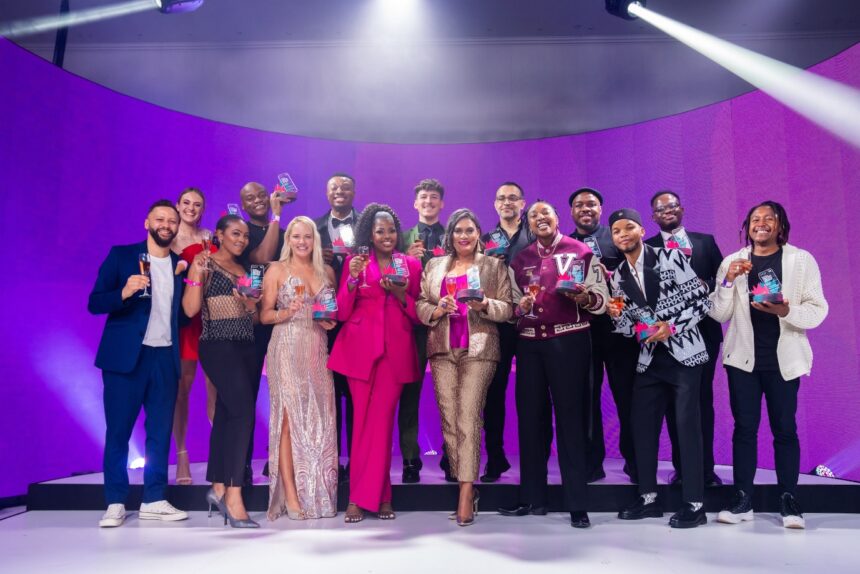
The 2026 Content Creator Awards have unveiled their nominees and named Samsung Galaxy as the title sponsor, underscoring the growing commercial importance of South Africa’s creator economy and the increasing interest of major brands in the people shaping digital culture. The awards, now in their fifth edition, will recognise creators across 20 categories, with winners to be announced at a gala in Sandton on October 17, 2026.
The partnership gives Samsung a prominent position within an awards platform whose evolution mirrors that of the creator economy itself. When the awards were launched in 2022, their purpose was largely to legitimise content creation as a viable profession. Four years later, the organisers argue that the industry has moved beyond that question. Creators are increasingly operating as media businesses, cultural influencers and commercial partners, while brands and agencies are treating creator-led content as an increasingly important part of marketing strategy.
Rae Hargreaves, head of marketing for mobile eXperience at Samsung South Africa, said the company was proud to support the awards because creators were increasingly influencing culture, purchasing decisions and storytelling. “Creators are shaping culture, influencing purchasing decisions and redefining storytelling every single day,” she said, adding that Samsung Galaxy was focused on giving creators the technology required to tell those stories.
The commercial logic is straightforward. A smartphone company does not merely sell a device to creators; it can position the device as part of the creative process itself. Samsung’s sponsorship therefore places its Galaxy brand at the intersection of technology, content creation and cultural production, allowing the company to associate its hardware with the increasingly valuable act of creating and distributing digital content.
The awards have also introduced a new #CapturedWithGalaxy Award, which remains open for entries until September 20. The category is designed to recognise content captured on a Samsung Galaxy device, with the winner receiving a Content Creator Award trophy and a Galaxy Z Fold8 valued at approximately R40,999.
The wider awards programme features both public-voting and non-public-voting categories, covering areas including YouTube, automotive content, emerging creators, online series, dance, style, podcasts, comedy, creator-brand collaborations, expert voices, trendsetting and social impact. Among the nominees are established creators alongside emerging voices, reflecting an industry that is becoming broader and more professionally segmented.
The judging process has also been tightened. The organisers said entry criteria have become more rigorous, with judging criteria developed in collaboration with the Interactive Advertising Bureau South Africa to improve consistency, credibility and alignment with industry standards.
That development may be more important than the celebrity appeal of the nominees. As the creator economy matures, awards cannot rely solely on popularity. They increasingly need to distinguish between audience size, cultural influence, creative quality, commercial effectiveness and professional practice. A more structured judging framework is therefore an attempt to move creator recognition from a popularity contest towards an industry benchmark.
From content creation to commercial influence
Manuela Dias de Deus, founder of the Content Creator Awards and One-eyed Jack, described the transformation in the industry’s position since the awards began.
“When we launched these awards, we were celebrating brave pioneers who were proving that content creation could be a real career,” she said. “Today we’re recognising world-class creators who are building businesses, influencing culture, driving commerce and setting global standards.”
That is perhaps the most important development behind this year’s awards. The creator economy is no longer simply about individuals producing videos for social platforms. It increasingly encompasses production, audience development, brand partnerships, commerce, intellectual property, entertainment and personal brands.
The emergence of categories such as Best Creator x Brand Collaboration, Expert Voices, Impact Creator, Podcast of the Year and Best Online Social Series illustrates that diversification. The creator is becoming less like a traditional media personality and more like a small media enterprise whose influence can extend across several commercial categories.
Dias de Deus says the responsibility of the awards has consequently changed. “Our responsibility has shifted from legitimising the industry to raising the benchmark for excellence,” she said.
That is a significant distinction. Legitimisation asks whether an industry deserves recognition. Benchmarking asks what excellence within that industry should look like.
BrandiQ Analysis
The Samsung partnership reveals an important shift in brand economics. Samsung is not simply sponsoring an awards ceremony; it is aligning itself with a new class of cultural producers whose primary creative tool is often the smartphone. The product and the creator therefore occupy the same ecosystem.
This creates a particularly interesting form of brand association. Traditional technology advertising often tells consumers what a device can do. Creator marketing can demonstrate what people can make with it. The latter is potentially more powerful because it turns the product from an object of consumption into an instrument of creativity.
The #CapturedWithGalaxy category makes this relationship explicit. It effectively asks creators to demonstrate the creative value of the technology through their own work. Samsung gets visibility, but the more strategic prize is cultural relevance: the possibility that the Galaxy becomes associated not simply with consuming content but with producing it.
There is, however, a potential tension. As brands increasingly enter the creator economy, creators must preserve the authenticity that made their influence valuable in the first place. Audiences are generally more sophisticated about sponsored content than they were several years ago. A creator who appears to endorse everything risks losing the credibility that gives the partnership its commercial value.
This is why the development of professional standards and more rigorous judging matters. The creator economy cannot indefinitely operate on reach alone. As money, brands and institutional recognition flow into the sector, questions of disclosure, originality, intellectual property, audience trust, measurement and commercial effectiveness become increasingly important.
The South African experience also has implications beyond the country’s borders. The creator economy is becoming an important component of Africa’s wider digital economy, particularly among younger populations whose relationship with work, entrepreneurship, entertainment and media differs substantially from that of previous generations.
Creators can operate globally without owning traditional media infrastructure. A smartphone, internet connection, platform account and a sufficiently compelling idea can create an audience that crosses national boundaries. This lowers the barriers to entry into media and cultural production while creating new opportunities for African voices to participate in global conversations.
But the real economic opportunity lies beyond influence. The next stage is monetisation and enterprise formation. Creators who can convert audiences into intellectual property, products, services, subscriptions, commerce and durable brands are moving from being content producers to becoming businesses.
BrandiQ Verdict
The 2026 Content Creator Awards tell a larger story than who wins a trophy in Sandton. They mark the maturation of an industry that began by asking for recognition and is now being asked to demonstrate professional excellence.
Samsung Galaxy’s arrival as title sponsor is equally revealing. The smartphone has become part camera, production studio, distribution channel and commercial tool for a generation of creators. By attaching itself to that ecosystem, Samsung is effectively betting that the future of mobile technology will be shaped not only by how consumers consume content, but by how they create it.
The awards therefore sit at an interesting intersection of technology, marketing and the creator economy. Their success will ultimately depend on whether they can maintain credibility as commercial interests become more deeply embedded in the creator ecosystem.
The bigger opportunity for Africa is clear: the creator economy should no longer be treated merely as entertainment. It is becoming part of the digital economy’s productive infrastructure – creating businesses, intellectual property, employment, cultural influence and new routes to market.