
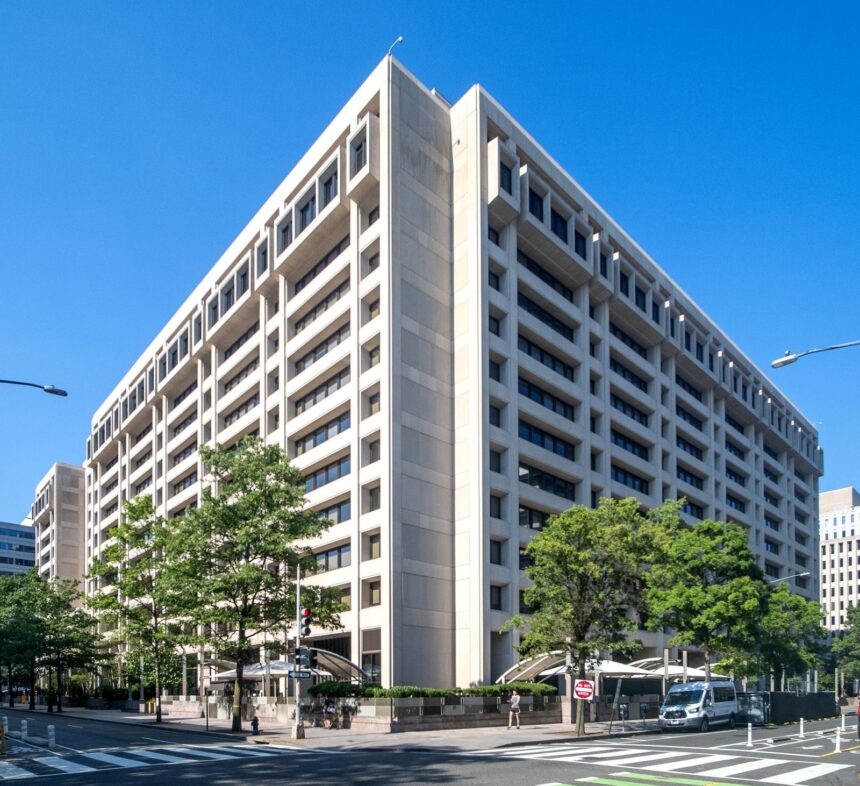

At the IMF World Bank Spring Meetings 2026, a familiar warning returned with renewed urgency. Kristalina Georgieva, head of the International Monetary Fund, urged countries facing mounting economic pressure to move quickly in seeking financial support, cautioning that hesitation could deepen crises already in motion. It was a technocratic message, delivered in measured tones, but beneath it lies a more troubling reality: the global economy is entering another phase of stress, and once again the burden is falling disproportionately on the Global South, particularly sub-Saharan Africa.
The immediate trigger is geopolitical. The ongoing crisis in the Middle East, with its attendant disruption to supply chains and energy markets, is reverberating across continents. Oil prices are rising; trade routes are under strain and inflationary pressures are resurfacing. According to Georgieva, global growth is projected to slow sharply from 3.4 per cent last year to 2.1 per cent in 2026, with a downside scenario of just 2 per cent if the conflict persists. For advanced economies, this implies slower expansion. For developing economies, it threatens something more fundamental: macroeconomic stability itself.
The IMF’s advice is clear. Countries should not delay in seeking financial assistance when needed. Early intervention, Georgieva argues, can prevent deeper dislocation. Yet the advice also raises a deeper question. Why do economies such as Nigeria and its peers in sub-Saharan Africa repeatedly find themselves in positions where external support becomes necessary at moments of global stress? And why do external shocks, originating far beyond the continent, produce such pronounced domestic consequences?
To answer this requires stepping beyond the immediate crisis into the structural features of these economies. The current moment is not an isolated episode. It is part of a pattern in which global shocks, whether financial crises, pandemics or geopolitical conflicts, transmit asymmetrically across the international system.
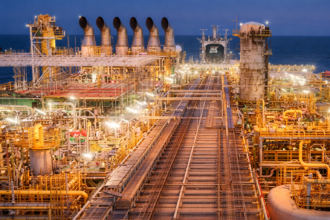
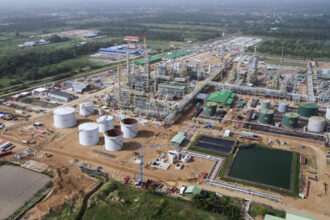
The first channel is energy. Many sub-Saharan African economies are net importers of refined petroleum products, even where they are crude oil producers. This paradox reflects longstanding gaps in domestic refining capacity and industrial infrastructure. When global oil prices rise, the cost of imports increases, feeding directly into inflation, fiscal pressure and foreign exchange demand. For countries like Nigeria, where fuel pricing and subsidies have historically been politically sensitive, the transmission mechanism is both economic and social.
Georgieva’s remarks point to this vulnerability. Energy-importing countries, she noted, are among the hardest hit by the current crisis. The implication is straightforward. Rising oil prices act as a tax on these economies, transferring income outward while constraining domestic policy space. Advanced economies, by contrast, are better positioned to absorb such shocks through diversified energy sources, strategic reserves and more flexible fiscal systems.
The second channel is external financing. Many African economies operate with limited fiscal buffers and rely on external borrowing to finance deficits and development projects. In periods of global uncertainty, capital flows tend to retreat towards perceived safe havens, increasing borrowing costs for emerging markets. This dynamic, often described in international finance as “sudden stops,” can quickly transform manageable fiscal positions into acute crises.
It is in this context that the IMF’s call for early engagement must be understood. The Fund anticipates demand for financial support ranging between $20bn and $50bn, reflecting both existing vulnerabilities and new pressures arising from the current crisis. A significant portion of this demand is expected to come from sub-Saharan Africa.
Yet reliance on external support is not merely a function of external shocks. It is also shaped by domestic institutional capacity. Here, the insights of institutional economics become particularly relevant. Scholars such as Douglass North and Daron Acemoglu have long argued that the quality of institutions, defined as the formal and informal rules governing economic activity, plays a central role in determining a country’s resilience to shocks.
In economies with strong institutions, fiscal discipline, transparent governance and effective policy coordination enable governments to build buffers during periods of growth. These buffers, whether in the form of sovereign wealth funds, foreign exchange reserves or fiscal surpluses, provide the capacity to absorb shocks without immediate recourse to external assistance.
In many sub-Saharan African economies, however, such buffers are often limited. Periods of economic expansion have not consistently translated into sustained fiscal consolidation or investment in resilience. Instead, revenue volatility, governance challenges and competing political priorities have constrained the accumulation of reserves.
Georgieva alluded to this in her emphasis on the need to build buffers during good times. The advice, while technically sound, underscores a persistent gap between policy prescription and implementation. The difficulty lies not in recognising the importance of buffers, but in creating the institutional conditions that make their accumulation politically and economically feasible.
This is where the concept of “extractive versus inclusive institutions,” popularised by Acemoglu and his collaborators, offers a useful lens. In systems where institutions are extractive, economic policies may prioritise short-term gains or elite interests over long-term stability. In such contexts, the incentives to save during periods of abundance are weak, and public resources may be diverted away from productive investment.
By contrast, inclusive institutions, characterised by accountability, transparency and broad-based participation, are more likely to support policies that enhance resilience. The divergence between these institutional models helps explain why similar external shocks produce different outcomes across countries.
The current crisis also highlights the role of structural economic composition. Many African economies remain heavily dependent on primary commodities, with limited diversification into manufacturing or high-value services. This concentration increases exposure to global price fluctuations and reduces the capacity to generate stable export revenues.
When global demand weakens or prices shift, the impact on such economies is immediate and pronounced. In contrast, more diversified economies can offset losses in one sector with gains in others, smoothing the overall effect on growth and employment.
Georgieva’s reference to supply chain disruptions and infrastructure damage in the Middle East underscores another dimension of vulnerability. In an increasingly interconnected global economy, disruptions in one region can propagate through trade networks, affecting countries with no direct involvement in the conflict. For African economies integrated into global supply chains primarily as importers, these disruptions translate into higher costs and reduced availability of essential goods.
The policy responses available to governments in sub-Saharan Africa are correspondingly constrained. Measures such as reducing energy consumption, promoting remote work or subsidising transportation, as suggested by the IMF chief, may provide temporary relief. Yet their effectiveness depends on underlying infrastructure and fiscal capacity, which vary widely across the region.
Moreover, the social implications of such measures must be considered. In economies where a large share of the population operates in the informal sector, the scope for remote work is limited. Similarly, subsidies and incentives require fiscal space that may already be under pressure.
The result is a policy dilemma. Governments must balance the need for immediate stabilisation with the constraints imposed by limited resources and structural vulnerabilities. External support, whether from the IMF or other institutions, can provide temporary relief, but it does not address the underlying drivers of fragility.
This brings the discussion back to the IMF’s central message. Early engagement with financial support mechanisms can mitigate the severity of crises. Yet the effectiveness of such support depends on how it is integrated into broader reform strategies. Without improvements in institutional quality, fiscal management and economic diversification, the cycle of vulnerability is likely to persist.
The global context adds another layer of complexity. The current crisis is unfolding against a backdrop of increasing geopolitical fragmentation and protectionism. For developing economies, this environment reduces the availability of external opportunities and increases the uncertainty associated with global markets.
In such a setting, the capacity to withstand shocks becomes even more critical. Countries that can maintain macroeconomic stability, manage fiscal risks and build credible policy frameworks are better positioned to navigate uncertainty. Those that cannot are more likely to experience repeated episodes of instability.
Nigeria’s position within this landscape is emblematic. As Africa’s largest economy, it possesses significant potential, but also faces substantial structural challenges. The interplay between energy dependence, fiscal pressures and institutional constraints shapes its response to global shocks.
The IMF’s warning, therefore, is not simply about timing. It is about the broader architecture of economic resilience. Acting quickly to secure financial support may prevent immediate deterioration, but long-term stability requires deeper reforms.
These include strengthening fiscal institutions, improving revenue mobilisation, enhancing transparency and accountability, and investing in economic diversification. They also involve addressing governance challenges that undermine policy effectiveness and public trust.
In the absence of such reforms, external shocks will continue to have outsized effects on sub-Saharan African economies. The pattern observed today, where a conflict in the Middle East translates into economic strain in Africa, will repeat itself in different forms.
The lesson from the current crisis is thus twofold. First, in an interconnected world, no economy is insulated from global events. Second, the degree of vulnerability is not predetermined; it is shaped by domestic choices and institutional capacity.
As the IMF prepares to deploy between $20bn and $50bn in support, the immediate priority is stabilisation. But the longer-term challenge is transformation. For Nigeria and its peers, the question is not only how to respond to the current shock, but how to build an economic system capable of withstanding the next one.
That, ultimately, is the deeper meaning behind the IMF’s call to act fast. It is not merely a warning about delay. It is a reminder that resilience is built over time, and that in its absence, the costs of global crises will continue to fall hardest on those least able to bear them.
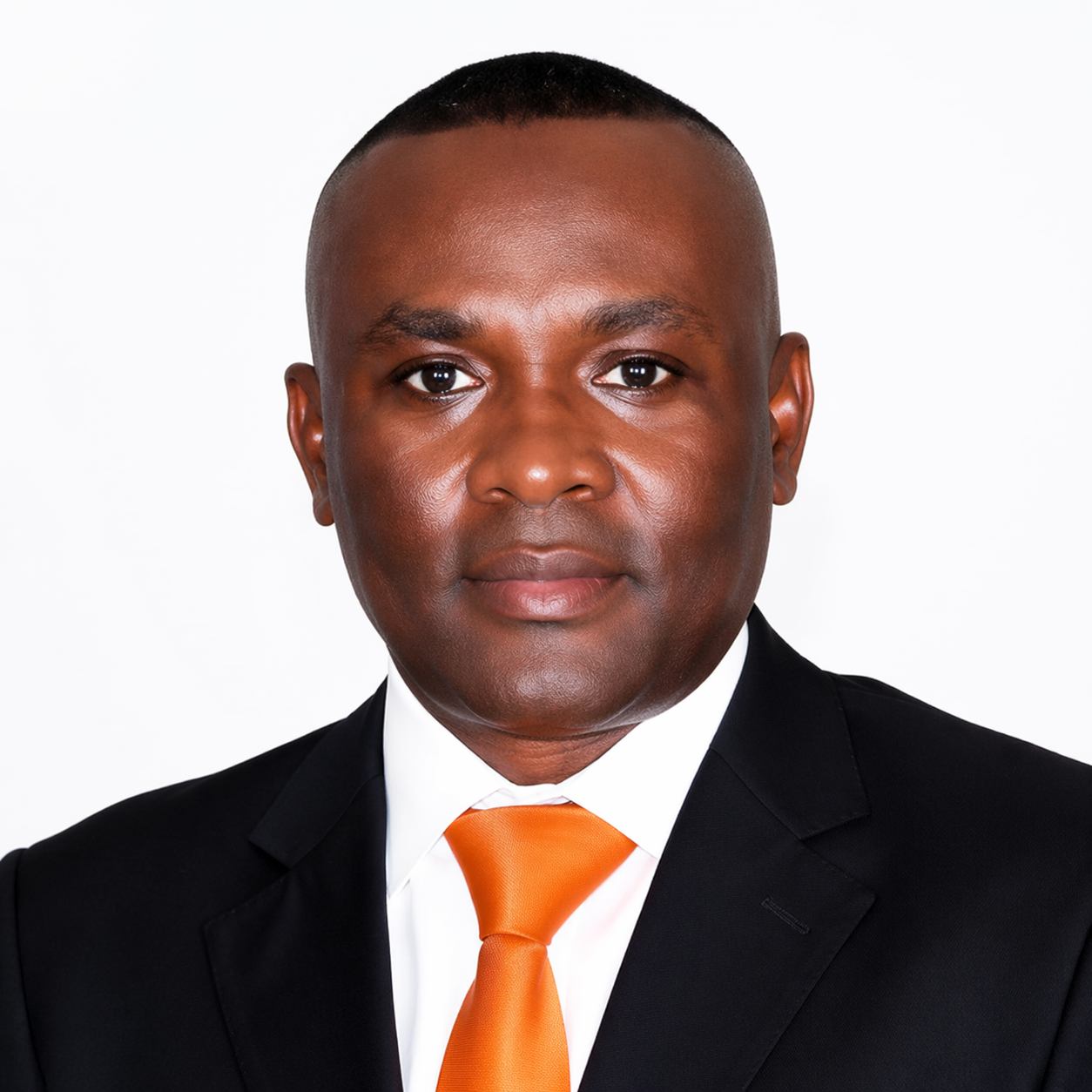
Dr. Desmond Ekeh, a PR consultant, journalist, and brand communicator, researches at the intersection of philosophy, politics and communication.