
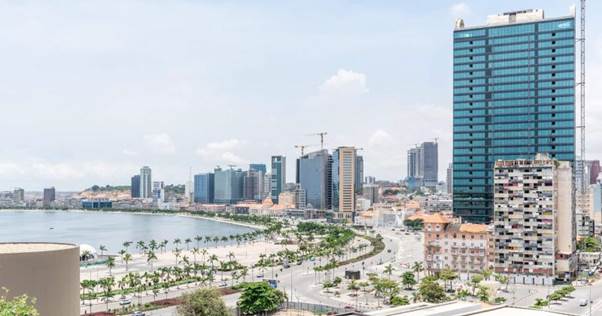

The groundbreaking of the Mbanza Congo Centrality by Mitrelli Group in Angola is more than a ceremonial milestone. It is a strategic signal about where Africa’s urban future – and investment logic – is heading.
Positioned in Mbanza Congo, the project combines 1,500 housing units with full-spectrum social infrastructure – schools, healthcare, security, commerce, and utilities – serving over 10,500 people. On the surface, this is a housing project. In reality, it is a systems-level intervention in urban economics.
From Housing Deficits to Urban Systems Thinking
Africa’s housing challenge has long been framed in quantitative terms: units needed versus units available. But that framing is incomplete.
What Mitrelli is advancing reflects a shift from housing as shelter to housing as economic infrastructure.
The Mbanza Congo Centrality integrates:
- Residential development
- Public services (education, healthcare, security)
- Economic nodes (commercial zones)
- Core infrastructure (roads, water, energy, sanitation)
This aligns with global urban development thinking increasingly discussed at platforms like the World Urban Forum – where the emphasis is not just on building houses, but building functional, resilient, and economically viable cities.
Why This Matters for Africa’s Growth Model
Africa is urbanising faster than any other region globally. Yet, much of this growth has been informal, fragmented, and infrastructure-deficient.
The implication is clear:
Unstructured urbanisation suppresses productivity. Structured urbanisation multiplies it. Integrated developments like Mbanza Congo Centrality address three structural bottlenecks:
1. Productivity Constraint
Without proximity to services and infrastructure, urban populations remain economically underutilised. Integrated planning reduces friction – shorter commutes, better health outcomes, improved human capital.
2. Investment Risk
Fragmented cities increase uncertainty for investors. Planned urban clusters create predictability, which is the currency of global capital.
3. Social Stability
Access to housing, services, and economic opportunity reduces inequality-driven tensions -an often-underestimated factor in long-term investment decisions.
Angola’s Strategic Positioning
By aligning this project with national housing policy, Angola is effectively signalling a transition toward state-enabled, private-sector-executed urbanisation.
For a country historically dependent on oil, this matters.
It suggests a gradual shift toward:
- Infrastructure-led diversification
- Domestic demand stimulation
- Regional economic integration
The expansion to 14 such projects indicates that this is not a pilot – it is a scalable model.
Global Investment Implications (US, UK, Europe)
For investors across the United States, United Kingdom, and Europe, this development sits at the intersection of three major global themes:
1. Infrastructure as an Asset Class
Integrated urban projects are increasingly viewed as long-term, yield-generating assets—combining real estate, utilities, and services.
Africa’s urban expansion represents one of the last large-scale frontiers for this asset class.
2. Demographic Dividend
Africa’s population growth is often discussed as a challenge. Properly structured, it becomes a demand engine—for housing, services, consumption, and labour.
Projects like this convert demographic pressure into economic opportunity.
3. ESG and Impact Investing
Institutional investors are under pressure to deploy capital that delivers both financial returns and social impact.
Integrated housing developments:
- Improve living standards
- Create jobs
- Support sustainable urban planning
This aligns directly with ESG mandates increasingly dominant in Western capital markets.
The Cultural-Economic Layer: Building with Identity
One of the more subtle but strategically important aspects of this project is its location in Mbanza Congo – a site of deep historical and cultural significance.
This introduces a dimension often ignored in infrastructure discourse:
Development that ignores identity creates displacement. Development that integrates identity creates legitimacy. For African cities, where colonial planning often disrupted indigenous spatial logic, this matters. It enhances community acceptance, long-term sustainability, and social cohesion.
Economic Multiplier Effects
Beyond housing delivery, the project is expected to:
- Generate direct and indirect employment
- Stimulate local supply chains
- Increase land and asset values
- Attract complementary investments
In economic terms, this is a multiplier-driven intervention, not a single-output project.
BrandiQ Insight: The Rise of “Urban Platforms” in Africa
What Mitrelli is building is not just a city extension – it is what can be described as an urban platform.
A platform that:
- Aggregates people
- Connects services
- Enables economic activity
- Attracts capital
This is where Africa’s urban story is heading.
Not informal sprawl.
Not isolated housing estates.
But integrated, investable urban ecosystems.
Conclusion: Africa’s Urbanisation Is Becoming Investable
The timing of this project – just ahead of the World Urban Forum 13 – is instructive.
It positions Angola, and by extension Africa, within a global conversation that is increasingly focused on how cities drive economic transformation.
For investors, policymakers, and development strategists, the takeaway is clear: Africa’s housing crisis is not just a social issue. It is one of the largest untapped economic opportunities of the 21st century.
And projects like Mbanza Congo Centrality are early indicators that the continent is beginning to structure that opportunity in ways global capital can understand – and participate in.