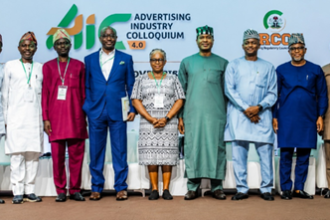

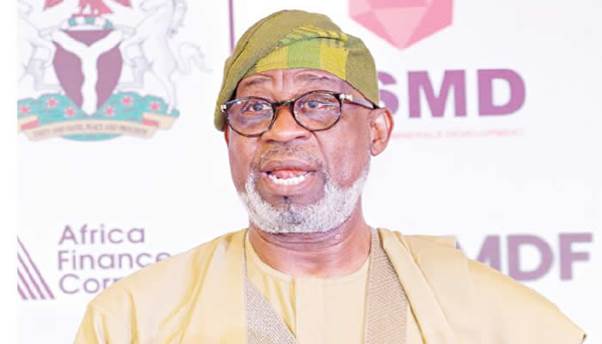

At the Kenya Mining Investment Conference and Exhibition 2026, Oladele Alake, Nigeria’s Minister of Solid Minerals, delivered what may prove to be one of the most consequential economic signals emerging from the continent in recent years: Africa must move beyond extraction and into value creation.
This is not a rhetorical shift. It is a structural one.
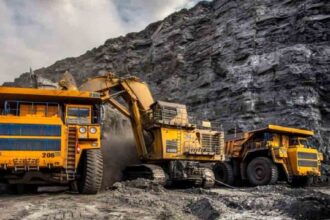
For decades, Africa has occupied a paradoxical position in the global economy – resource-rich yet value-poor. The continent supplies a significant share of the world’s critical minerals – lithium, cobalt, manganese, and rare earth elements – yet captures only a fraction of the economic value embedded in them. The result is a persistent pattern of exporting raw materials while importing finished goods at a premium.
Alake’s intervention, made in his capacity as chairman of the Africa Minerals Strategy Group, reframes this imbalance not merely as an economic inefficiency, but as a strategic vulnerability in an era defined by energy transition, digital transformation, and geopolitical competition.
From Extraction to Industrial Strategy
The global economy is undergoing a profound reconfiguration. The transition to clean energy, the expansion of artificial intelligence, and the growth of advanced manufacturing have intensified demand for critical minerals. These resources now sit at the centre of industrial policy in major economies including the United States and the United Kingdom.
Yet, while these economies compete to secure supply chains, Africa remains largely positioned at the lowest end of the value chain.
Alake’s argument is clear: this positioning is no longer tenable.
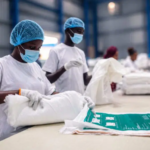
Value addition – processing, refining, and manufacturing – must become the new organising principle of Africa’s mineral economy. Without it, the continent risks perpetuating a colonial-era economic model in a 21st-century industrial landscape.
Regional Integration as Economic Leverage
A central pillar of this strategy is coordination. Through frameworks such as the African Continental Free Trade Area, African countries are being urged to harmonise regulations, develop cross-border infrastructure, and build integrated value chains.
This is where the analysis becomes particularly relevant for global investors.
Fragmentation has historically diluted Africa’s bargaining power. Individual countries negotiating in isolation often accept unfavourable terms, particularly in capital-intensive sectors like mining. A coordinated continental approach changes that equation.
A unified Africa can:
- Negotiate better pricing and offtake agreements
- Attract larger, long-term industrial investments
- Build regional processing hubs that achieve economies of scale
In effect, integration transforms Africa from a collection of resource sites into a coherent industrial platform.
Implications for US, UK and European Investors
For investors across the Europe, the United States, and the UK, this shift presents both opportunity and recalibration.
First, the opportunity.
As Africa moves into value addition, the investment landscape expands beyond extraction into:
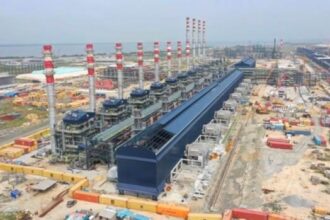
- Mineral processing and refining
- Battery manufacturing and energy storage systems
- Industrial infrastructure and logistics corridors
- Technology transfer and R&D partnerships
These are higher-margin, longer-term investment opportunities aligned with global decarbonisation and digitalisation agendas.
Second, the recalibration.
Investors accustomed to extractive models will need to adapt to:
- More stringent local content requirements
- Greater regulatory coordination across jurisdictions
- Increased emphasis on environmental, social, and governance standards
This is not a constraint; it is a maturation of the market.
Environmental Ethics and the New Resource Economy
From an environmental ethics perspective, the push for value addition introduces a critical tension.
On one hand, local processing reduces the carbon footprint associated with exporting raw materials for refinement abroad. It also creates opportunities for more accountable, transparent production systems.
On the other hand, industrialisation brings its own ecological risks—pollution, resource depletion, and land degradation.
The challenge, therefore, is not merely to industrialise, but to do so responsibly.
This requires:
- Strong environmental governance frameworks
- Investment in clean processing technologies
- Alignment with global climate commitments
For Western investors, particularly those operating under ESG mandates, this creates a dual imperative: profitability must be aligned with sustainability.
The China Factor and Strategic Competition
No serious analysis of global mineral supply chains can ignore China.
China has spent decades building dominance in mineral processing and refining, particularly in battery supply chains. Africa’s shift toward value addition is, in part, a response to this concentration of power.
For the US and UK, supporting Africa’s industrialisation is not merely developmental—it is strategic. Diversifying supply chains reduces dependency risks and strengthens geopolitical resilience.
This positions Africa not just as a supplier, but as a partner in global industrial strategy.
Nigeria’s Strategic Position
Within this broader continental movement, Nigeria occupies a critical role.
With vast untapped mineral resources and a large domestic market, Nigeria has the potential to anchor regional value chains. However, realising this potential will depend on:
- Policy consistency
- Infrastructure investment
- Regulatory transparency
Alake’s call signals an awareness at the highest levels of government that minerals must become a pillar of Nigeria’s post-oil economic diversification.
BrandiQ Insight: From Resource Wealth to Value Wealth
For BrandiQ’s audience – investors, policymakers, and corporate strategists – the message is unambiguous.
Africa’s mineral sector is entering a phase transition. The old model of extraction-led growth is giving way to a more complex, integrated, and opportunity-rich ecosystem. This transition will not be without friction. Governance challenges, infrastructure gaps, and policy inconsistencies remain real constraints.
But the direction of travel is clear. The countries and companies that position themselves early within Africa’s emerging value chains will capture disproportionate returns as the system matures.
Conclusion: The Strategic Repricing of Africa
What Oladele Alake has articulated is, in essence, a call for the repricing of Africa in the global economy.
From raw material supplier to industrial actor.
From peripheral participant to strategic partner.
From resource-rich to value-rich.
For global investors, the implication is simple but profound:
Africa is no longer just where resources are found.
It is increasingly where value will be created.
And those who recognise this shift early will not just participate in Africa’s growth—they will help define it.