


Nigeria is preparing to host investors from more than 50 countries. But the real test will not be how much is announced in Abuja; it will be how much becomes capital deployed, factories built, infrastructure delivered, jobs created and productive capacity expanded.
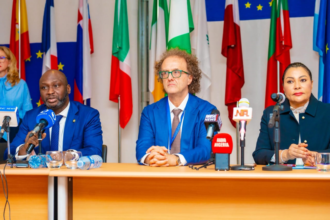
Nigeria is preparing to host investors from more than 50 countries in Abuja in November for what organisers describe as an ambitious attempt to mobilise more than $100bn in investment opportunities and commitments across oil and gas, renewable energy, technology, artificial intelligence, fintech, healthcare, agriculture, mining, infrastructure and education. The International Investors Summit Nigeria 2026, organised by the Business Summit Group, is scheduled for November 10 and 11 at the Abuja Continental Hotel. According to Business Summit Group President Dato’ Uzzaman, the objective is to move the conversation beyond Nigeria’s investment potential and create direct encounters between international investors, Nigerian businesses, state governments and government investment agencies with projects considered investment-ready.
That distinction is important. Nigeria has no shortage of investment summits. What it has struggled with is converting investment interest into investment execution. The organisers appear to recognise the problem. Uzzaman said the summit would not be about bringing investors to Nigeria “merely for speeches and ceremonies”, but about connecting investors with businesses and project owners in ways that can produce transactions, partnerships, financing, technology transfer, expansion and jobs. That is the right ambition. But it also creates a much harder standard against which the summit should eventually be judged.
The $100bn Question
A headline investment figure can be politically and commercially attractive without necessarily representing $100bn of new capital entering Nigeria. The report describes the target as investment opportunities and commitments, which are not the same thing as disbursed investment. That distinction should be at the centre of the conversation.
A commitment can represent serious investor intent, but it can also be conditional on due diligence, regulatory approvals, financing arrangements, foreign-exchange conditions, project viability, land acquisition, environmental approvals or other factors. The economic transformation Nigeria needs occurs much further downstream. It happens when the factory is constructed, when the solar project begins generating electricity, when the agricultural processing plant starts buying from farmers, when the mine creates a value chain rather than simply exporting ore, when the technology company employs skilled Nigerians and exports services, or when infrastructure reduces the cost of moving goods. The summit can create the pipeline. It cannot by itself create the development.
From Investment Promotion to Investment Conversion
Nigeria’s challenge is not simply attracting investors. It is making Nigeria sufficiently predictable for investors to execute. An investor considering a Nigerian project has to assess far more than the attractiveness of the market. They must consider regulation, taxation, foreign exchange, electricity, logistics, security, infrastructure, contract enforcement, access to finance and the ability to repatriate legitimate returns.
This is why the summit’s emphasis on projects with proven track records and expansion opportunities is significant. Uzzaman reportedly told Nigerian businesses that investors prefer projects with established operations and clear opportunities to expand rather than proposals that exist only on paper. That is a sensible investment proposition. A functioning company seeking capital to add a production line is fundamentally different from an entrepreneur presenting an attractive PowerPoint presentation for a business that has never operated. The former has demonstrated demand; the latter is asking the investor to finance both the business and the proof that the business works.
States Are Becoming Investment Competitors
Perhaps one of the more interesting elements of the summit is its emphasis on Nigerian states. This reflects an important change in the political economy of investment. Foreign investors do not invest in “Nigeria” in the abstract. They invest in particular locations, sectors, projects and regulatory environments.
A manufacturing investment eventually chooses a state; a mining project operates within a particular jurisdiction; a logistics corridor passes through particular communities; and a technology company needs particular infrastructure. This means Nigerian states increasingly have to compete for investment not merely by announcing incentives, but by demonstrating that they can provide bankable investment environments.
The organisers cite Plateau State as an example, saying the state secured more than $1bn in investment commitments in the six months following participation in the previous summit in Bangkok. That is potentially encouraging, but the distinction between commitments and realised investment remains important here too. The more useful measure will be how much of those commitments progresses to financial close and implementation. If Abuja’s summit can help states build repeatable mechanisms for converting investor meetings into transactions, it could be more valuable than the summit itself.
The Technology Opportunity Is Bigger Than Attracting Technology Companies
Technology, AI and fintech are among the sectors identified for the summit. But Nigeria should think beyond attracting technology investment. The strategic question is whether foreign investment can help build domestic technological capability.
There is a major difference between a foreign technology company investing $1bn in Nigeria and a $1bn technology investment creating Nigerian engineers, Nigerian intellectual property, Nigerian suppliers, Nigerian exports and Nigerian companies capable of competing beyond Nigeria. The first increases capital formation; the second begins to create an ecosystem.
This distinction is particularly important for AI. Nigeria’s AI opportunity will not be determined simply by how many AI companies establish operations in Lagos or Abuja. It will depend on access to computing infrastructure, data, electricity, connectivity, skilled people, research institutions, capital and governance frameworks. Investment should therefore be judged partly by its capability-transfer effect: does it build Nigerian capacity, train people, create local suppliers, generate intellectual property, create exportable services or deepen Nigeria’s digital infrastructure? These questions should become part of Nigeria’s investment-promotion vocabulary.
The Summit and the $1 Trillion Economy
The summit also sits within Nigeria’s much larger ambition of building a $1 trillion economy. That ambition cannot be achieved through investment announcements alone. Nigeria needs capital that expands productive capacity and raises productivity.
This makes sector selection important. Oil and gas may continue to generate enormous economic value, but a development strategy built predominantly around extracting commodities will have limited transformational power. The more consequential investments may be those that connect sectors: agriculture plus processing; energy plus manufacturing; digital infrastructure plus AI; logistics plus AfCFTA; healthcare plus pharmaceutical manufacturing; mining plus mineral processing; and education plus technology and skills exports. That is how investment begins to create multiplier effects across the economy. The summit’s broad sectoral coverage therefore makes sense – but only if projects are evaluated according to their capacity to generate these linkages.
From FDI to Development
There is an old development-economics lesson here. Foreign direct investment can bring capital, technology, management expertise, access to markets and productivity improvements. But the benefits are not automatic. They depend on how effectively domestic firms and workers connect to foreign-invested businesses.
A foreign-owned factory that imports virtually everything, employs relatively few local workers and exports profits without creating significant domestic capabilities can contribute to GDP while generating a relatively limited developmental transformation. A foreign investor that develops local suppliers, trains workers, transfers technology and creates an export-oriented production ecosystem can have a much larger multiplier effect. This is why Nigeria should think about the quality of investment, not simply its quantity. The relevant question is not how much money came into Nigeria? It is how much productive capacity did that money create?
The Summit Needs a Post-Abuja Mechanism
This is where the organisers – and Nigerian policymakers – face their biggest test. A successful summit should not end when delegates leave Abuja. It should produce a transaction pipeline. Every serious investment opportunity should ideally have a status: lead to qualified investor, to due diligence, to term sheet, to agreement, to financial close, to construction and finally to operation.
That sounds bureaucratic. It is actually the difference between an investment conference and an investment-development mechanism. Nigeria could create a public-private Investment Conversion Dashboard after the summit, reporting periodically – not commercially sensitive details, but aggregate information on the number and value of projects moving through each stage. That would change the incentives. It would make it harder to celebrate a large headline figure without eventually accounting for what happened afterwards, while giving investors greater confidence that Nigeria takes implementation seriously.
BrandiQ Analysis: The Real Scarce Resource Is Execution
Nigeria has become remarkably good at announcing its economic ambitions. The harder task is institutionalising execution. That is why the International Investors Summit deserves attention, but also scrutiny. Its promise of more than $100bn creates a powerful headline. Yet Nigeria’s development challenge is not solved by attracting money to Abuja for two days. It is solved by creating an environment in which capital can remain in Nigeria for years, build assets, employ people, develop supply chains, transfer knowledge and generate competitive businesses.
The summit therefore should be viewed as an investment pipeline-building exercise, not an economic transformation in itself. Its success should ultimately be measured by five things: capital deployed rather than merely announced; jobs created, particularly skilled and productive employment; domestic value added, including local suppliers and manufacturing; technology and skills transferred to Nigerian firms and workers; and export capacity created, enabling Nigeria to earn from markets beyond its borders.
This last point is especially important. Nigeria cannot sustainably build a $1 trillion economy simply by attracting capital to serve its domestic market. It needs investments that make Nigerian production competitive enough to serve Africa and the world. That means the real opportunity behind the summit is not merely foreign investment. It is productive integration into global value chains.
BrandiQ Verdict
The International Investors Summit has chosen the right language: investment-ready projects, direct investor engagement, technology transfer, partnerships and job creation. Now it needs to demonstrate the discipline behind the language.
Nigeria does not need another summit at which everyone agrees that the country has enormous potential. It needs a mechanism that answers three uncomfortable questions after the applause has ended: Which projects secured financing? Which projects were actually built? What changed for Nigerians as a result?
If the November summit can establish that chain between investor interest, financial commitment, capital deployment, productive capacity, jobs and exports, it could become more than another investment gathering. It could become part of the infrastructure of Nigeria’s investment economy.
The real summit will begin after the summit – when the investors go home and Nigeria has to deliver.