


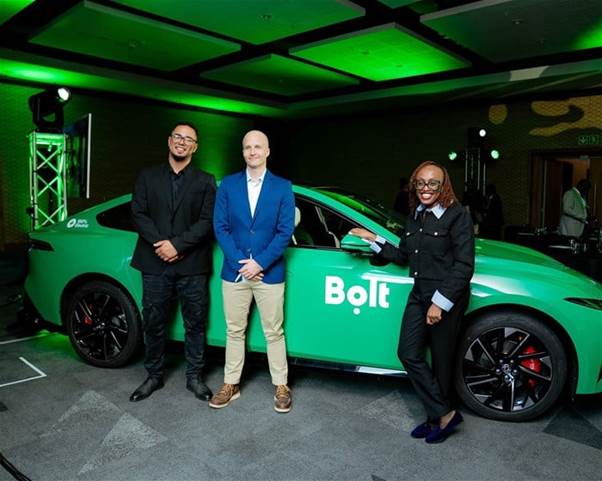

Africa’s Urban Transport Sector Enters the Electric Era
Bolt has launched an electric vehicle ride hailing category in South Africa, beginning with Cape Town, in what represents a significant milestone in Africa’s evolving mobility and clean transport ecosystem.
The initiative, launched through a fleet partnership with YugoRide, forms part of Bolt’s broader strategy to expand electric mobility solutions across African cities, following similar operations in markets such as Nigeria and Kenya.
Although the immediate rollout involves a relatively modest fleet expansion target of 500 electric vehicles by the end of 2026, the implications extend far beyond transportation. The development signals deeper structural shifts involving energy transition, urbanisation, platform economics, environmental policy, and the future of mobility across emerging markets.
Electric Mobility Arrives in Africa’s Mainstream Urban Economy
For years, electric vehicles in Africa were largely viewed as experimental or aspirational technologies constrained by infrastructure deficits, high costs, and weak policy frameworks. Bolt’s launch changes that narrative by introducing EVs directly into mainstream urban mobility operations rather than niche private ownership markets.
This is significant because ride hailing platforms provide one of the most practical entry points for electric mobility adoption in developing economies. Unlike private consumers, commercial ride operators can maximise vehicle utilisation rates, making the lower operating costs of EVs economically attractive over time.
The South African rollout therefore represents more than a transport innovation; it reflects the gradual commercialisation of Africa’s clean mobility economy.
Driver Economics and the Search for Sustainable Earnings
A major strategic driver behind Bolt’s EV rollout is the economics of ride hailing itself. Across Africa, ride hailing drivers face growing pressure from rising fuel prices, maintenance costs, inflation, and platform commission structures.
Electric vehicles offer a potential economic advantage because they typically have lower fuel and servicing expenses compared to internal combustion engine vehicles. By reducing operational costs, Bolt hopes to improve driver profitability while simultaneously promoting cleaner transport systems.
This highlights a broader transformation in platform economics where sustainability initiatives are increasingly being framed not only as environmental policies but also as cost efficiency strategies.
In practical terms, the EV transition becomes commercially viable only when it improves economic outcomes for drivers and operators.
Cape Town as a Strategic Launch City
Bolt’s decision to begin the rollout in Cape Town is strategically important. South Africa possesses one of the continent’s most developed automotive ecosystems, stronger electricity infrastructure, and comparatively higher levels of urban consumer purchasing power.
Cape Town, in particular, has positioned itself as a city supportive of cleaner mobility policies and sustainable urban development initiatives. The endorsement from city authorities also reflects growing collaboration between municipal governments and private mobility platforms in shaping future transport systems.
The city therefore serves as both a testing ground and a signalling market for broader EV adoption across Africa.
Infrastructure Remains the Defining Challenge
Despite the optimism surrounding the rollout, the transition to electric mobility in Africa remains heavily constrained by infrastructure realities.
As noted by YugoRide’s leadership, building an EV ecosystem requires far more than importing vehicles. It requires:
- Reliable charging infrastructure
- Stable electricity supply
- Maintenance and servicing ecosystems
- Financing systems for fleet acquisition
- Technical training and operational support
This is particularly relevant in African economies where electricity reliability remains inconsistent and charging networks are underdeveloped.
The success of Bolt’s rollout will therefore depend less on vehicle availability and more on whether supporting infrastructure can scale alongside fleet expansion.
Ride Hailing Platforms as Urban Mobility Architects
An important insight from Bolt’s strategy is the evolving role of ride hailing companies themselves. Platforms such as Bolt are no longer merely transport intermediaries connecting drivers and passengers. Increasingly, they are becoming architects of urban mobility systems.
By influencing vehicle types, transport patterns, sustainability standards, and operational technologies, ride hailing companies are beginning to shape how cities think about transportation infrastructure and environmental policy.
This introduces a new governance dynamic where private technology companies play an increasingly influential role in public urban mobility outcomes.
Africa’s Energy Transition and Transport Decarbonisation
Bolt’s EV expansion also reflects the broader global shift toward transport decarbonisation. Transportation remains one of the largest contributors to urban carbon emissions globally, making electrification central to climate policy discussions.
For Africa, however, the transition is uniquely complex. The continent faces the dual challenge of expanding mobility access while simultaneously attempting to adopt cleaner technologies without the infrastructure advantages available in advanced economies.
This means Africa’s EV transition will likely be gradual, hybrid, and uneven across regions.
South Africa’s relatively advanced infrastructure gives it an early mover advantage, while countries such as Nigeria, Kenya, and Ghana may follow through selective urban deployments before wider adoption becomes feasible.
Competition and the Future of Africa’s Mobility Market
Bolt’s expansion into EV ride hailing also signals intensifying competition within Africa’s digital mobility sector. Companies are increasingly differentiating themselves not only through pricing and convenience but also through sustainability positioning and operational innovation.
This reflects a larger shift in the global platform economy where investors, regulators, and consumers are placing greater emphasis on environmental responsibility and long term operational sustainability.
In this context, EV adoption becomes both a branding strategy and a future market positioning tool.
Implications for Nigeria and Other African Economies
For Nigeria, Bolt’s South African rollout offers important lessons regarding the future of urban transport and energy transition policies.
Nigeria already represents one of Bolt’s major African ride hailing markets, but widespread EV adoption remains constrained by weak electricity infrastructure, foreign exchange volatility, and limited charging ecosystems.
However, the long-term pressure to adopt cleaner and more cost-efficient mobility systems is likely to increase as fuel subsidy removals and rising energy costs reshape transportation economics.
The broader implication is that African governments may eventually need to rethink urban mobility policies, power infrastructure planning, and automotive regulations in preparation for gradual electrification trends.
Global Implications: Emerging Markets Join the EV Transition
Globally, Bolt’s African EV rollout reinforces a critical industry reality: the electric mobility transition is no longer confined to Europe, China, or North America.
Emerging markets are increasingly becoming part of the global EV ecosystem, although through locally adapted models shaped by infrastructure constraints and affordability concerns.
This creates new opportunities for automakers, battery manufacturers, charging infrastructure firms, and mobility technology platforms seeking long term growth outside saturated developed markets.
Conclusion: Africa’s Mobility Future Is Beginning to Electrify
Bolt’s launch of an electric vehicle ride hailing category in South Africa represents more than a fleet expansion. It marks an early but significant step in Africa’s gradual transition toward cleaner urban mobility systems.
The initiative reveals how technology platforms, sustainability goals, and urban transport economics are beginning to converge across emerging African cities. However, it also exposes the enormous infrastructure and policy challenges that must be addressed before electric mobility can scale meaningfully across the continent.
The future of Africa’s transport sector will likely be shaped not by whether electric mobility arrives, but by how quickly ecosystems capable of supporting it can be built.
BrandiQ Takeaway
Bolt’s EV rollout in South Africa shows that Africa’s mobility future is shifting from fuel dependence toward technology driven transport systems. But the real battle is no longer simply about vehicles; it is about ecosystems. Countries and companies that successfully integrate infrastructure, energy reliability, financing, and digital mobility platforms will define the next phase of Africa’s urban transportation economy.