

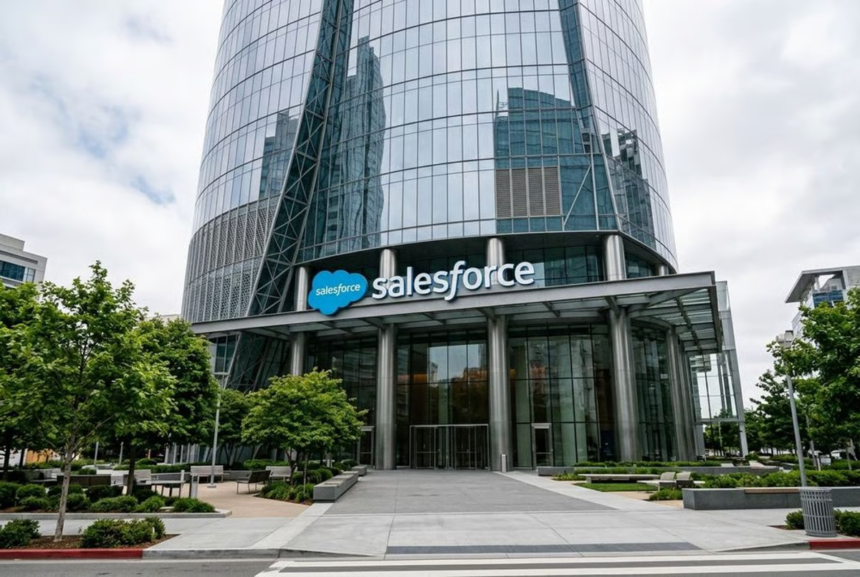

The proposed Salesforce Braze acquisition would give Salesforce deeper real-time customer engagement capabilities as technology companies compete to make AI central to marketing and customer relationships.
Salesforce has entered into a definitive agreement to acquire customer-engagement platform Braze in a transaction valued at approximately $5.66 billion in enterprise value. Announced on October 20, the Salesforce Braze agreement represents a major development in marketing technology, bringing together Salesforce’s customer relationship management infrastructure and Braze’s capabilities in real-time, personalised consumer communications.
Under the announced terms, holders of Braze Class A common stock will receive $47.50 in cash per share. Salesforce expects the transaction to close in its fiscal year 2028, subject to customary closing conditions, including shareholder approval and required regulatory approvals.
Braze serves approximately 2,770 customers, including Canva, Dairy Queen, Equinox, Instacart, Urban Outfitters and Venmo. Its platform helps businesses respond to customer behaviour through communications across mobile applications, websites, email, SMS and other channels.
The Salesforce Braze acquisition would strengthen Salesforce’s efforts to integrate customer information, marketing automation and AI-driven decision-making within a more unified technology offering.
Why the Salesforce Braze Deal Makes Customer Engagement a Strategic Battleground
For years, businesses have invested in customer relationship management systems to organise customer records, manage sales opportunities and support service delivery. Marketing technology has developed alongside these systems, helping companies segment audiences, distribute campaigns and measure responses.
Yet customer interactions frequently remain fragmented. A consumer may receive an email offer, browse a website, abandon a shopping basket and subsequently contact customer service. If these interactions are not connected, the brand may fail to recognise the customer’s immediate needs or may send communications that feel irrelevant.
Braze’s technology is designed to help businesses respond to customer behaviour in real time, coordinating personalised interactions across different channels. Its AI capabilities can help marketers optimise content, offers, communication channels and timing.
Salesforce argues that combining these capabilities with its existing customer and data platforms would allow businesses to make engagement more responsive and relevant.
The AI Strategy Behind the Salesforce Braze Deal
The transaction reflects a wider shift in the technology industry towards AI systems that do more than generate text or images. Companies increasingly want software that can interpret information, recommend actions and help execute workflows. The same direction is visible in Publicis’s growth on AI-powered marketing demand.
For marketing departments, that could mean systems that identify a change in customer behaviour, select an appropriate communication and coordinate the delivery of a personalised message. Such capabilities could reduce manual work and help companies manage engagement across large customer bases.
However, the commercial value depends on the quality of the underlying customer data, the reliability of the automation and the ability to measure whether personalisation improves business outcomes.
An automated campaign that produces more messages but does not improve conversion, retention or customer satisfaction may simply increase operating costs. Similarly, poorly managed personalisation can feel intrusive if customers believe a brand is using their information in unexpected ways.
What the Salesforce Braze Acquisition Means for Marketers
The Salesforce Braze deal signals that customer engagement is increasingly being treated as core business infrastructure rather than a separate promotional function. Marketing systems are becoming more closely connected with sales, customer service, analytics and enterprise data.
For businesses evaluating their own technology investments, the lesson is not that every company needs an expensive enterprise platform. Rather, organisations need to understand how customer information moves through their operations and where fragmented systems are preventing them from delivering consistent experiences.
Nigerian businesses can apply the same principle at different levels of sophistication. A retailer may begin by integrating its customer records and communications preferences. A financial-services company may prioritise relevant, timely service messages. A consumer brand may connect loyalty activity with purchase behaviour, subject to appropriate data protections, which is relevant to the loyalty pressures described in Nigerian consumers rethinking brand loyalty.
BrandiQ Takeaway: The Salesforce Braze acquisition reinforces the movement towards AI-enabled, real-time customer engagement. For marketing leaders, the strategic priority is to connect data, decisions and customer experience. Technology investment will create value when it produces more relevant interactions and measurable improvements, not simply more automated communications.