


A Major Shift in the Global Advertising Landscape
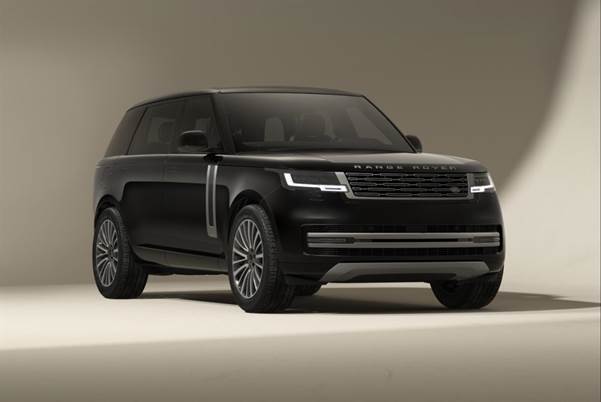
WPP has secured the integrated global media mandate for Jaguar Land Rover in one of the advertising industry’s most closely watched account reviews, marking a significant realignment within the global luxury automotive marketing ecosystem.
The decision follows a nearly nine-month competitive pitch process involving major global agency networks, with incumbents including Omnicom Group and Accenture Song. The move also comes at a time when Jaguar Land Rover, now fully owned by Tata Motors, is intensifying efforts to strengthen its premium brand positioning in high growth markets such as India.
Although the development appears to be an agency account transition, it actually reveals deeper structural shifts shaping the future of global advertising, luxury branding, consumer data strategy, and the geopolitical evolution of emerging market consumption.
Luxury Automotive Marketing Is Becoming a Data and Technology Battle
The JLR account review reportedly focused heavily on integrated planning capabilities, data driven audience segmentation, luxury positioning, and cross platform execution.
This reflects a major transformation in the advertising industry itself. Traditional media buying and creative campaigns are no longer sufficient in premium automotive marketing. Instead, success increasingly depends on the ability to combine consumer analytics, behavioural targeting, digital ecosystems, and brand storytelling into a unified strategic framework.
For luxury automotive brands, marketing has evolved from product promotion into precision consumer intelligence management.
The implication is that agency networks capable of integrating data, creativity, technology, and media execution are increasingly gaining competitive advantage over firms operating in more fragmented structures.
Why the Jaguar Land Rover Account Matters Globally
The importance of the mandate extends beyond India. Jaguar Land Rover reportedly spent approximately $475 million on measured media in 2025, making the account strategically significant within the global agency ecosystem.
Large global mandates such as this influence:
- Agency revenue stability
- International market positioning
- Access to premium global clients
- Cross regional operational scale
- Technological investment capabilities
Winning such an account strengthens WPP’s standing in the highly competitive global advertising market at a time when holding companies are under pressure from consulting firms, digital platforms, and AI driven marketing technologies.
India’s Rise as a Luxury Consumer Growth Market
One of the most revealing aspects of the story is the growing strategic importance of India within global luxury markets.
Historically, luxury automotive demand was concentrated in North America, Europe, and parts of East Asia. However, rising affluence, urbanisation, and wealth concentration in India are rapidly transforming the country into a key growth market for premium brands.
JLR’s intensified focus on India reflects a broader global economic trend where emerging markets are increasingly driving luxury consumption growth.
This has major implications for advertising and brand strategy. Agencies are now required to blend global luxury positioning with culturally localised consumer engagement strategies tailored to fast evolving emerging market audiences.
The Battle Between Holding Companies and Consulting Firms
The account transition also highlights the growing competition between traditional advertising holding companies and consulting driven marketing firms.
The incumbents on the account included Accenture Song, a consulting and digital transformation entity rather than a conventional advertising agency. This reflects the convergence of advertising, technology consulting, customer experience design, and data management within the modern communications industry.
Over the past decade, consulting firms have aggressively entered the advertising space by leveraging technology integration and enterprise transformation expertise.
WPP’s victory therefore signals that traditional agency networks can still remain competitive when they successfully integrate technology, creativity, and media capabilities into unified service models.
Cross Platform Media and the Fragmentation of Consumer Attention
Another critical insight from the review process is the growing importance of cross platform media execution.
Consumer attention is now fragmented across:
- Streaming platforms
- Social media ecosystems
- Search and digital commerce
- Connected television
- Mobile experiences
- Influencer driven engagement
Luxury brands such as Jaguar and Land Rover increasingly require sophisticated integrated campaigns capable of maintaining consistent premium identity across highly fragmented digital environments.
This makes media strategy far more complex and data intensive than traditional advertising models.
The Global Luxury Sector and Economic Resilience
Interestingly, the continued scale of luxury automotive advertising investment also reflects the resilience of affluent consumer segments despite broader global economic uncertainty.
While many economies continue to face inflationary pressure and slowing middle class purchasing power, luxury brands remain aggressively invested in market expansion. This demonstrates the growing concentration of purchasing power among high income consumers globally.
The expansion of luxury demand in emerging markets such as India also reflects the broader rise of globally connected upper middle class and affluent urban consumers across developing economies.
Implications for Nigeria and Africa’s Advertising Industry
For Nigeria and Africa’s communications industry, the JLR WPP deal offers important strategic lessons. First, it reinforces the growing importance of integrated communications capabilities combining data analytics, media strategy, digital execution, and creative storytelling. Second, it demonstrates how global clients increasingly demand measurable, technology enabled marketing systems rather than traditional standalone advertising campaigns. Third, it highlights the opportunities emerging markets present for premium brand expansion as urban affluence and aspirational consumption continue to rise across major African cities.
African agencies seeking long term competitiveness may therefore need to invest more heavily in data capabilities, audience intelligence systems, and integrated digital infrastructure.
Artificial Intelligence and the Future of Advertising Competition
Underlying the broader industry shift is the growing influence of artificial intelligence and automation within advertising operations.
Large global agencies are increasingly competing on their ability to deploy:
- AI driven consumer insights
- Predictive analytics
- Automated media optimisation
- Personalised audience targeting
- Real time campaign measurement
The JLR account review reflects an industry moving toward technologically enabled marketing ecosystems rather than purely creative driven agency relationships.
Conclusion: A Strategic Win Beyond Advertising
WPP’s acquisition of Jaguar Land Rover’s integrated media mandate is more than an agency account win. It reflects the ongoing transformation of global advertising into a data intensive, technology integrated, and globally interconnected strategic industry.
The development also highlights the growing economic importance of emerging markets such as India within luxury consumption ecosystems and reinforces the increasing convergence between media, technology, consulting, and consumer intelligence.
For global agency networks, the future competitive advantage will likely depend less on traditional advertising scale and more on the ability to integrate creativity, data science, AI, and cross platform engagement into cohesive brand systems.
BrandiQ Takeaway
The WPP Jaguar Land Rover deal reveals that modern advertising is no longer simply about visibility; it is about intelligence. In today’s luxury and digital economy, brands are increasingly selecting agency partners based on their ability to combine data, technology, consumer insight, and storytelling into unified growth systems. The future of advertising competition will belong to firms that can transform information into influence across fragmented global audiences.