


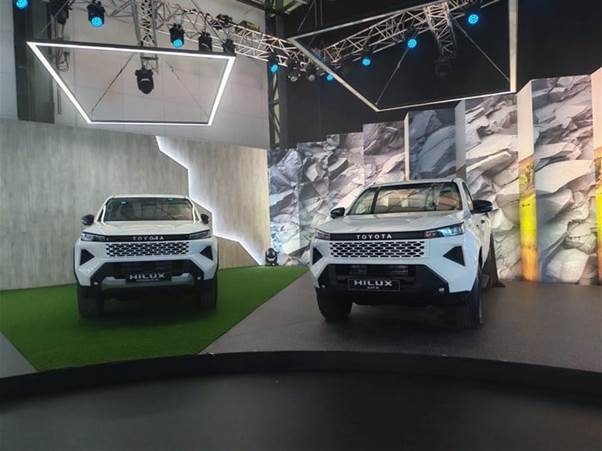

Toyota Reinforces Its Dominance in a Rapidly Changing Market
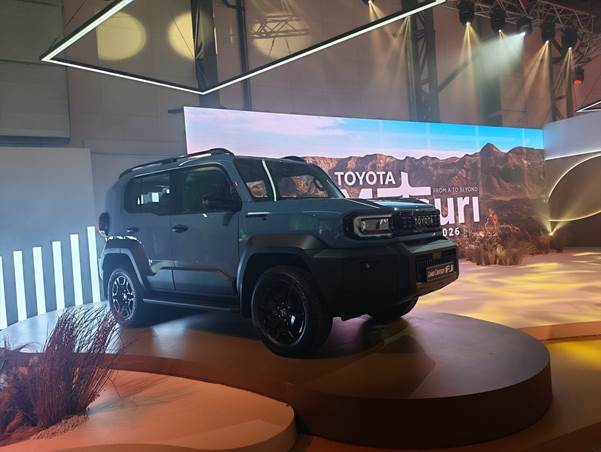
Toyota Motor Corporation is intensifying its strategic push into Africa’s evolving automotive market with the preview of four major vehicle launches in South Africa, including an updated Hilux, the company’s first battery electric vehicle for the market, the bZ4X, and the highly anticipated Land Cruiser FJ.
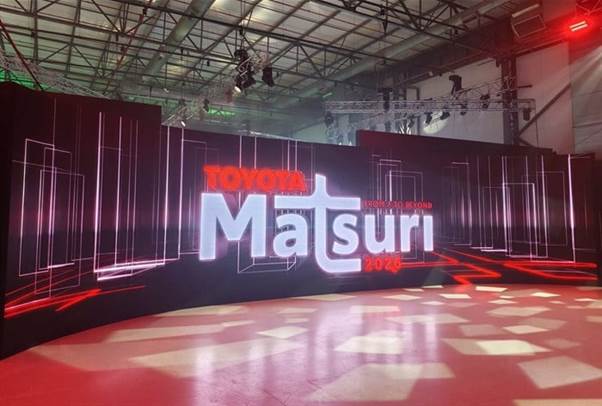
The launches, showcased during Toyota Matsuri at the Kyalami Grand Prix Circuit in South Africa, reveal more than a routine product refresh. They highlight how global automotive manufacturers are repositioning themselves amid shifting consumer preferences, rising Chinese competition, the transition toward electrification, and changing mobility economics across emerging markets.
For Africa’s largest automotive markets, including South Africa and Nigeria, the development signals a deeper transformation in the continent’s mobility landscape.
Toyota’s Strategic Defence Against Chinese Automotive Expansion
One of the clearest insights from Toyota’s latest moves is the growing competitive pressure from Chinese automotive brands across Africa’s SUV and pickup segments.
For years, Toyota has dominated South Africa’s automotive market, particularly through the Hilux and Fortuner platforms. However, Chinese manufacturers have steadily expanded their footprint by offering feature rich vehicles at comparatively lower prices.
Toyota’s decision to strengthen its presence in the D SUV segment with the new Hilux, Rav4, Land Cruiser FJ, and bZ4X reflects a defensive and adaptive strategy aimed at preserving market leadership.
This is part of a broader global trend where legacy automakers are increasingly being forced to compete not only on reliability and brand heritage, but also on innovation, technology integration, and pricing efficiency.
The New Hilux and the Importance of Legacy Brand Equity
The Hilux remains one of Toyota’s most strategically important vehicles globally, particularly in Africa, Asia, and Latin America where pickups serve both commercial and lifestyle functions.
The updated ninth generation Hilux introduces refinements in steering, suspension, interior design, and overall driving comfort while retaining the proven 2.8 GD engine platform. This suggests Toyota is pursuing an evolutionary rather than revolutionary strategy with the Hilux brand.
Economically, this reflects the importance of preserving brand equity in emerging markets where durability, resale value, and maintenance familiarity remain central purchasing considerations.
For African consumers, especially in markets with challenging road infrastructure, reliability often outweighs aggressive technological experimentation.
Electric Vehicles Enter Africa’s Mainstream Conversation
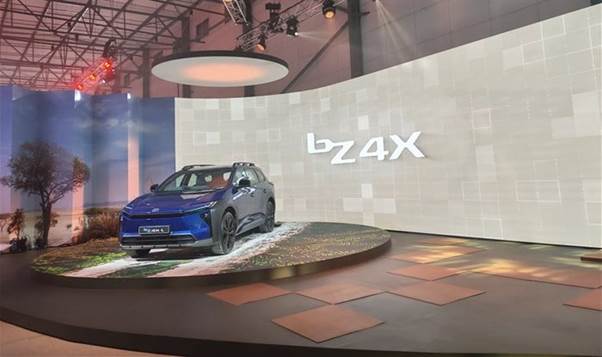
Perhaps the most symbolically important launch is Toyota’s first battery electric vehicle for South Africa, the bZ4X.
The introduction of the EV reflects growing recognition that Africa can no longer be treated as a delayed participant in the global transition toward cleaner mobility technologies. Although EV adoption across Africa remains constrained by infrastructure deficits, high vehicle costs, and inconsistent electricity supply, the launch indicates that automakers are beginning to position themselves early for the continent’s long term electrification trajectory.
The bZ4X, with a projected driving range of approximately 450 to 480 kilometres, signals Toyota’s attempt to establish relevance in a future market where electric mobility is expected to become increasingly important.
However, the pricing also reveals a major structural challenge. At over R1.18 million, the vehicle remains largely inaccessible to average African consumers. This highlights the current reality of Africa’s EV transition: technologically possible, but economically limited to upper income segments.
The Land Cruiser FJ and Africa’s Enduring Off Road Economy
The introduction of the compact Land Cruiser FJ reflects another important insight about African mobility markets: the continued importance of rugged utility vehicles.
Across much of Africa, road infrastructure remains uneven, particularly outside urban centres. Vehicles capable of navigating difficult terrain continue to command strong demand from consumers, businesses, agricultural operators, and tourism sectors. The Land Cruiser brand also carries significant symbolic and practical value across Africa due to its long -standing reputation for durability and off-road performance.
Toyota’s decision to introduce a smaller and more compact off roader suggests a strategic effort to attract younger consumers and urban adventure markets while retaining the brand’s rugged identity.
Hybrid Technology and the Transition Economy
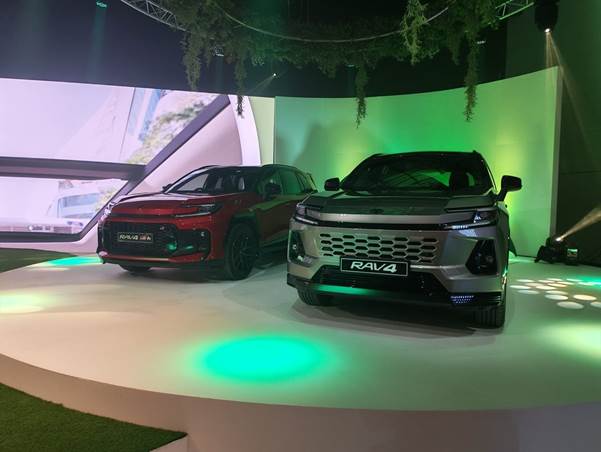
Another important dimension of Toyota’s strategy is the emphasis on hybrid technology within the Rav4 lineup. The company is offering multiple powertrain options, including petrol, hybrid, plug in hybrid, and performance inspired hybrid models.
This reflects a realistic understanding of Africa’s transition economy. Unlike Europe or parts of China where full EV adoption is accelerating rapidly, many African markets are likely to move through a hybrid transition phase due to infrastructure limitations.
Hybrid technology therefore becomes a bridge between traditional combustion engines and full electrification, offering fuel efficiency improvements without requiring complete charging infrastructure ecosystems.
South Africa as Africa’s Automotive Gateway
Toyota’s decision to prioritise South Africa for these launches reinforces the country’s role as Africa’s most sophisticated automotive market and manufacturing hub.
South Africa possesses stronger dealership networks, financing systems, industrial infrastructure, and regulatory frameworks than most African markets, making it a testing ground for advanced automotive products and mobility technologies.
What succeeds in South Africa often shapes future automotive trends across the continent, including eventual market spillovers into Nigeria, Kenya, Ghana, and other fast-growing economies.
Implications for Nigeria and the African Automotive Industry
For Nigeria, Toyota’s expansion highlights both opportunities and structural gaps within the country’s automotive ecosystem.
On one hand, Nigeria’s large population and growing middle class create significant long term demand potential for SUVs, pickups, and alternative mobility technologies. On the other hand, infrastructure deficits, foreign exchange pressures, weak local assembly systems, and limited EV charging infrastructure continue to constrain market development.
The broader implication is that Africa’s automotive future will likely develop unevenly, with South Africa leading early adoption while other markets gradually follow based on infrastructure readiness and income growth.
Global Automotive Industry Implications
Globally, Toyota’s strategy reflects the changing structure of the automotive industry itself. Traditional automakers are now simultaneously managing three realities:
- Defending legacy combustion engine markets
- Expanding hybrid technology adoption
- Investing in long term electric vehicle positioning
At the same time, competition from Chinese automakers is forcing established brands to accelerate innovation while protecting market share in emerging economies.
Africa is increasingly becoming part of this global competitive battleground rather than a peripheral market.
Conclusion: Toyota’s Africa Strategy Reflects a Changing Mobility Future
Toyota’s preview of the new Hilux, bZ4X, Rav4 lineup, and Land Cruiser FJ represents more than a product launch cycle. It reflects the intersection of global automotive transformation, African consumer evolution, and intensifying geopolitical competition within the mobility sector.
The company’s strategy combines legacy brand strength with cautious electrification and diversified mobility offerings, positioning itself for both current market realities and future technological shifts.
For Africa, the launches underscore a larger truth: the continent is no longer simply an export destination for old automotive technology, but an increasingly strategic market shaping how global automakers think about the future of mobility.
BrandiQ Takeaway
Toyota’s latest vehicle launches reveal that Africa’s automotive market is entering a transition era defined by competition, electrification, and consumer diversification. The future winners in the industry will not simply be the companies with the strongest legacy brands, but those capable of balancing affordability, technology, infrastructure realities, and evolving consumer expectations across emerging markets.