
From professional recognition and institutional reform to the growing influence of African voices in global communication, the 13th World Public Relations Forum offers Nigeria an opportunity to redefine its position in the international reputation economy. The recognition of NIPR and the award-winning work of Nigerian consultancies further underline the industry’s expanding ambitions.
Table of Contents
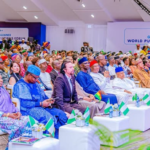
Nigeria’s public relations industry has entered an important phase of international visibility following the successful hosting of the 13th World Public Relations Forum (WPRF) in Abuja, bringing together global communication leaders, policymakers, academics, professional associations and practitioners to examine the future of public relations in an era increasingly shaped by artificial intelligence, misinformation, declining institutional trust and changing expectations of corporate and government accountability.
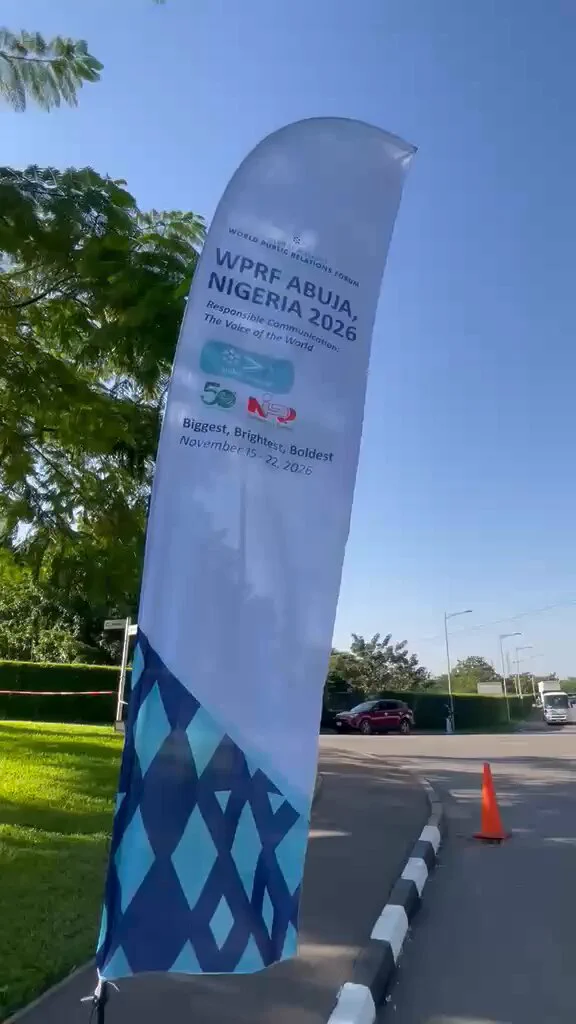
Though the event is ongoing, planned from November 15 to 21, 2026, under the theme Responsible Communication: The Voice of the World, the World Public Relations Forum represents more than an international professional conference. It is an opportunity for Nigeria to demonstrate its capacity to convene global conversations, contribute to the development of professional standards and strengthen Africa’s participation in shaping the future of strategic communication.
Nigeria’s hosting of the World Public Relations Forum is particularly significant because the country is the first in West Africa and the second in Africa to host the international gathering. Organised by the Global Alliance for Public Relations and Communication Management in partnership with the Nigerian Institute of Public Relations (NIPR), the event is being held alongside the African Public Relations Association (APRA) Conference.
The Global Alliance represents public relations associations across 126 countries, giving the Abuja gathering an international professional dimension that extends beyond Nigeria’s domestic communications industry. The event also provides an opportunity for African practitioners to engage with colleagues from other regions on emerging challenges affecting the profession.
The significance of the World Public Relations Forum was underscored by Global Alliance President, Professor Justin Green, who commended Nigeria for securing the hosting rights after competing with countries from different parts of the world. Speaking ahead of the event, Green said Nigeria had won the opportunity on its own merits, emphasising that Africa had demonstrated its capacity to contribute meaningfully to global professional development.
His remarks reflect a broader shift in the international public relations landscape: Africa is increasingly seeking to move from being a recipient of communication frameworks developed elsewhere to becoming an active contributor to global thinking, policy and professional standards. BrandiQ examined how the Nigerian institute is preparing for that shift in NIPR Places AI in the Control Room for the 2026 WPRF Abuja.
At the World Public Relations Forum, Africa’s Voice Moves from the Sidelines to the Global Table
President of the African Public Relations Association, Arik Karani of Kenya, described Nigeria’s hosting of the World Public Relations Forum as a defining moment for the continent’s participation in global public relations.
Speaking in Abuja, Karani said Africa had historically received thematic directions, strategies and policy frameworks developed by other regions. He argued that the continent was now taking a more active role in determining the conversations and priorities shaping international communication practice.
His observation was reinforced by former APRA President and Global Alliance Board Member, Peter Mutie, who described the Abuja gathering as evidence of Africa’s growing professional capacity. Mutie remarked that the international community was increasingly recognising that Africa also had knowledge and experience to contribute to global public relations.
The significance of these comments extends beyond professional recognition. African countries face communication challenges that are often shaped by their distinctive political, economic, cultural and institutional environments. These include public distrust of government institutions, misinformation, weak corporate accountability, reputational risks, digital exclusion and the difficulty of communicating development policies to diverse populations.
The continent therefore has an opportunity to contribute perspectives and solutions that reflect its own experiences rather than merely adopting approaches developed in other environments.
NIPR’s Leadership and the Institutional Repositioning of Nigerian PR
For the Nigerian Institute of Public Relations, hosting the World Public Relations Forum represents a major milestone in its efforts to strengthen professional standards, expand international relationships and reposition public relations as a strategic instrument for national development.
NIPR President and Chairman of Council, Dr Ike Neliaku, has consistently described the World Public Relations Forum as more than an international gathering. He sees it as an opportunity to advance professional knowledge, deepen institutional collaboration and demonstrate Nigeria’s capacity to contribute to global communication practice.
Neliaku has also drawn attention to the increasing representation of Africans within the Global Alliance’s leadership structures. He previously disclosed that the organisation had moved from having no African representation on its governing board to having five Africans, describing the development as evidence of a more inclusive global professional structure.
The institute’s international standing has also received recognition through the Global Public Relations Association of the Year award. NIPR was named the winner for 2026, following its recognition in the previous award cycle. The consecutive recognition places the institute in a prominent position within the international professional community.
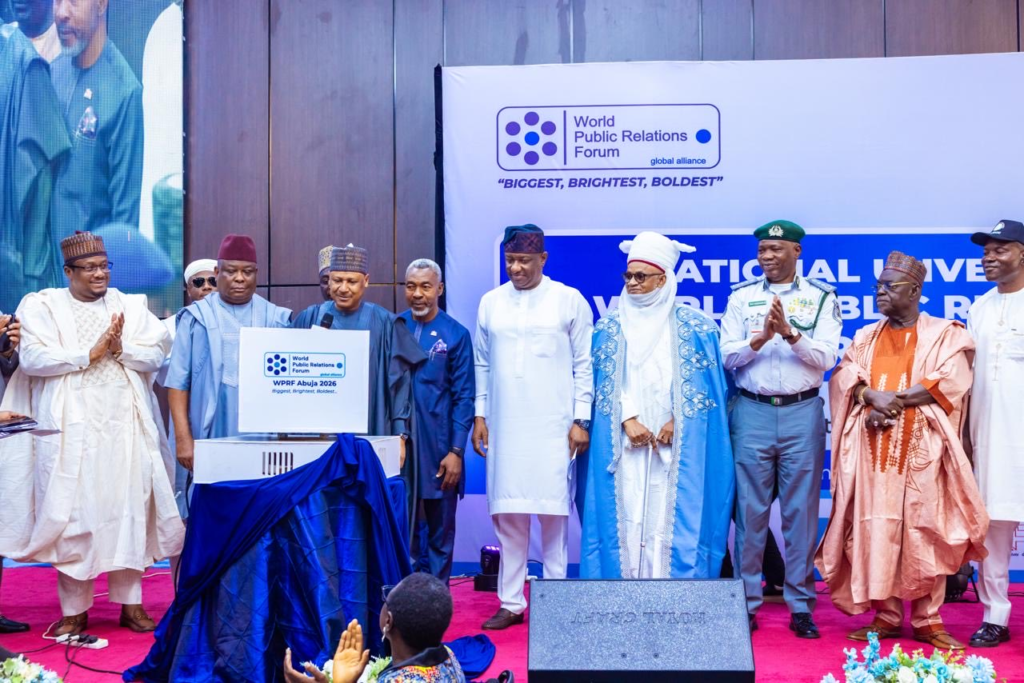
Another significant development was the announcement of the University of Public Relations and Leadership, which Vice-President Kashim Shettima unveiled at the World Public Relations Forum’s official opening on behalf of President Bola Tinubu. Nairametrics reported that the President approved the university’s establishment. The proposed institution, to be established in Nasarawa State, follows an agreement between NIPR and the Nasarawa State Government and is intended to advance professional education, research and leadership development in public relations.
The initiative could address a longstanding need for more specialised academic and professional development pathways in strategic communication, reputation management, leadership and public affairs.
The Global Conversation at the World Public Relations Forum: Trust, AI and Responsible Communication
The World Public Relations Forum’s theme reflects the changing responsibilities of public relations professionals. The rapid growth of artificial intelligence, social media and digital publishing has expanded access to information but has also increased the speed and scale at which misinformation, manipulated content and misleading narratives can spread.
Minister of Information and National Orientation, Mohammed Idris, warned that fake news, disinformation and the misuse of artificial intelligence could undermine societal cohesion. He argued that responsible communication was essential to peace, democracy and sustainable development. ThisDay reported that the Speaker of the House of Representatives also addressed the forum on responsible communication and democratic accountability.
In an interview with Voice of Nigeria, Global Alliance President Justin Green commended Nigeria’s preparations and described the Experience Nigeria Zone established at the World Public Relations Forum as a remarkable showcase.
NIPR’s Vice-President, Professor Emmanuel Dandaura, also highlighted the crisis of public confidence confronting institutions across Africa. Citing an Afrobarometer survey covering 39 African countries, he said only 46 per cent of respondents expressed trust in their presidents, while confidence in national parliaments stood at 37 per cent.
Dandaura argued that the figures should prompt public relations professionals to reconsider their traditional responsibilities. The profession, he suggested, must move beyond information dissemination towards helping institutions establish credibility, demonstrate accountability and sustain public confidence.
He also identified four important outcomes emerging from the Abuja deliberations: a proposed Nigerian definition of public relations, the Abuja Declaration on Responsible Communication, an evaluation framework for assessing its implementation and an African communication framework. He cautioned that their value would depend on implementation rather than their announcement at the conference.
Nobel Laureate Professor Wole Soyinka similarly challenged communication professionals to embrace greater responsibility in shaping public perceptions and rebuilding confidence in institutions. In a goodwill message delivered during the forum’s Africa Day activities, Soyinka warned that technological disruption and growing demands for transparency had increased the importance of ethical communication. The same concerns about data and consent in communications are explored in Consent is the New Currency of Digital Influence.
Nigerian Consultancies Demonstrate International Campaign Capabilities
While the World Public Relations Forum’s wider significance lies in professional collaboration and institutional development, the World Public Relations and Communication Awards also provided an opportunity to recognise the achievements of agencies, organisations and communication teams across different countries.
Nigerian consultancy Chain Reactions Africa recorded a notable performance, winning six campaign categories in the 2026 awards, according to the Global Alliance’s official winners’ list. Its recognised campaigns covered corporate reputation, ESG, consumer relations, public service relations, external events and digital communication.
Among the winning projects were Customs Cares: From Borders to Bridges, developed with the Nigeria Customs Service; Customs Cares: An Engine of Sustainable Development, also for the service; SABI Tribe, developed for NIVEA; and Citizen’s Connect, associated with the Presidency.
The consultancy also received recognition for the Lagos Shopping Festival and the digital campaign #NigeriaRebounds. Its earlier 2025 award recognition brought the total number of honours announced by the agency to seven.
Other Nigerian-related entries appeared among the awards finalists, including work by TPT International and campaigns involving Nigerian organisations. The official winners’ list from the Global Alliance, however, confirms that awards were distributed across several countries and professional categories, reflecting the international character of the competition.
Chain Reactions Africa’s performance deserves recognition as an example of Nigerian-developed campaigns receiving international validation. However, it is one part of a wider professional story involving agencies, in-house communication teams, institutions, practitioners and the professional bodies responsible for advancing standards across the industry.
Dr Nkechi Ali-Balogun, Chairman and Chief Executive Officer of the Public Relations Consultants Association of Nigeria (PRCAN), also played a key role in the hosting of the World Public Relations Forum and in the development of PR practice in Nigeria. Her participation reflects the importance of collaboration between the country’s professional institute and the association representing PR consultancy businesses.
Beyond Hosting the World Public Relations Forum: Sustaining Nigeria’s Global PR Profile
The real significance of the World Public Relations Forum will ultimately be determined by what follows the Abuja gathering. International conferences can create visibility, professional relationships and opportunities for collaboration, but their lasting value depends on whether the ideas discussed translate into institutional reforms, stronger professional standards and measurable industry development.
For Nigeria, the priorities include improving professional regulation, expanding research and training, strengthening ethical practice, encouraging investment in communication technology and developing a stronger relationship between public relations, corporate governance and national development.
There is also an opportunity to position Nigerian consultancies as credible partners for international organisations, multinational companies and African businesses seeking strategic communication expertise. Regulation of AI-assisted marketing is part of that agenda, as BrandiQ’s report on the FCCPC’s proposed AI marketing rules shows.
The country’s growing creative economy, cultural influence, entrepreneurial capacity and large domestic market provide important foundations for such ambitions. But international competitiveness will require consistent quality, demonstrable campaign effectiveness, ethical standards and stronger investment in research and talent development.
BrandiQ Takeaway
Nigeria’s hosting of the World Public Relations Forum should be viewed as a milestone in the country’s effort to strengthen its position in the global reputation and strategic communications industry. It has brought international professional leadership to Abuja, created a platform for African voices and provided an opportunity to showcase Nigerian institutional and consultancy capabilities.
The recognition of NIPR and the performance of Chain Reactions Africa demonstrate different dimensions of that progress: one institutional, the other campaign-driven. Both are important, but neither should be mistaken for the completion of the industry’s transformation.
The more enduring opportunity is to build a Nigerian PR industry that contributes to global professional standards, attracts international business, develops research-led practitioners and strengthens the credibility of organisations and institutions.
Nigeria has hosted the world of public relations. The next challenge is to ensure that the world continues to engage Nigeria for its ideas, expertise, professional standards and contribution to the future of responsible communication.