


The proposed Yutong CNG bus plant could revive Nigeria’s automotive assembly capacity, create industrial employment and support affordable mass transportation. But its real economic value will depend on local content, technology transfer, infrastructure and the ability to build a sustainable domestic manufacturing ecosystem.

Table of Contents
Nigeria’s ambition to reduce transportation costs and revive domestic automotive manufacturing has received a potentially significant boost following the announcement that Chinese bus manufacturer Yutong plans to establish a compressed natural gas (CNG) bus assembly plant in the country. The proposed Yutong CNG bus plant, welcomed by President Bola Tinubu, is expected to support the Federal Government’s National Affordable CNG Transit Programme, which is targeting a reduction of approximately 40 per cent in transport fares on participating routes.
The Yutong CNG bus plant announcement represents an important intersection between industrial policy, energy transition, public transportation and employment generation. Under the proposed arrangement with the Presidential Initiative on Compressed Natural Gas and Electric Vehicles (Pi-CNG & EV), Yutong will supply an initial 300 CNG-powered buses, with the first 100 expected to arrive in Lagos by the end of December 2026. Subsequent buses are expected to be assembled locally through YP Automobiles Bus Assembly at the former Leyland Automotive plant in Ibadan, Oyo State.
The choice of Ibadan for the Yutong CNG bus plant is particularly significant. The former Leyland facility carries historical importance in Nigeria’s automotive manufacturing ambitions. Its proposed revival could represent an opportunity to reactivate industrial assets that have remained underutilised for years. Rather than relying entirely on imported commercial vehicles, Nigeria could gradually develop local assembly capabilities, technical expertise and supporting industrial services.
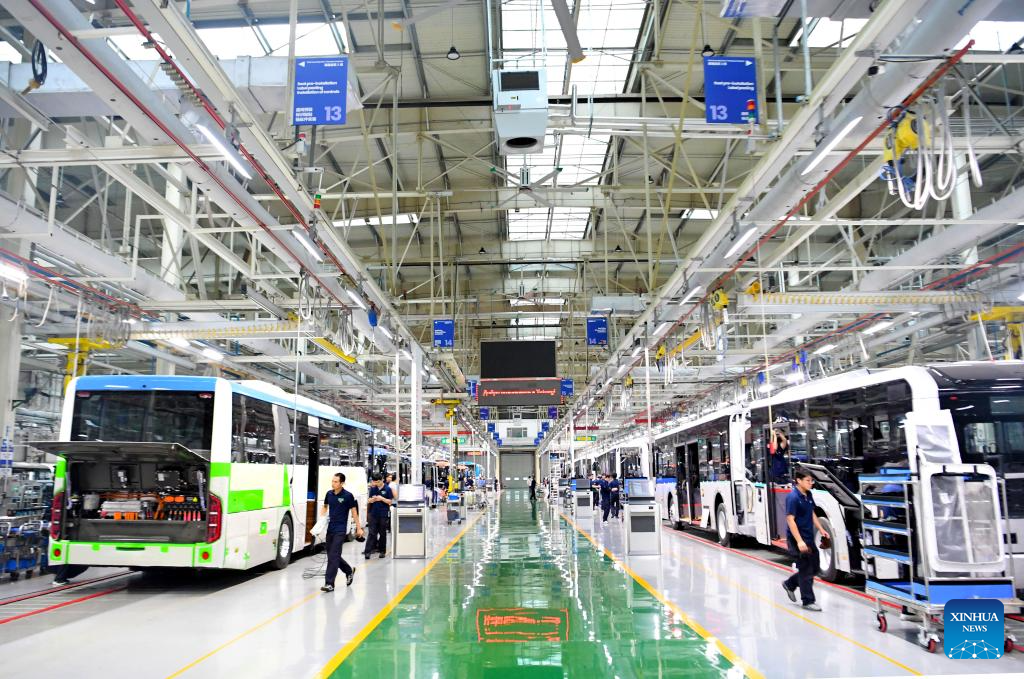
Yutong brings considerable manufacturing experience to the proposed partnership. The company reportedly sold 49,518 buses globally in 2025 and has established operations across several international markets. Its experience in CNG-powered and electric buses could provide Nigeria with access to manufacturing knowledge, vehicle technology and operational expertise that would otherwise take considerable time and investment to develop domestically.
The Federal Government says the initiative is designed to address one of the most immediate economic pressures confronting Nigerian households: the cost of transportation. For millions of Nigerians, daily mobility is a substantial component of household expenditure. Workers must travel to their places of employment, traders need to move between markets, students depend on public transport, and businesses rely on the movement of people and goods. When transport costs increase, the effect spreads across the wider economy through higher distribution expenses, increased service charges and reduced disposable income.
The proposed 40 per cent reduction in fares is therefore an important policy ambition. However, achieving it will require more than introducing buses with lower fuel costs. The economics of public transportation are determined by several factors, including vehicle acquisition costs, financing, fuel availability, maintenance, spare parts, route utilisation, fleet management, driver costs and the regulatory environment.
CNG offers a potentially lower-cost alternative to conventional petrol and diesel, but the savings must be calculated across the entire operating cycle. Operators need reliable access to refuelling infrastructure, trained technicians and affordable replacement components. Without these supporting systems, the cost advantage associated with CNG vehicles could be eroded by operational disruptions and maintenance expenses.
The government says the programme is being supported by the expansion of refuelling infrastructure through Pi-CNG & EV, the Midstream and Downstream Gas Infrastructure Fund and private sector investors. It also identifies the deployment of mobile refuelling units and additional CNG infrastructure as part of the wider programme. These investments will be critical to determining whether buses linked to the Yutong CNG bus plant can operate efficiently beyond the initial deployment.
Industrial Policy Questions Around the Yutong CNG Bus Plant
For Nigerian business leaders, however, the most important aspect of the announcement may not be the number of buses arriving in Lagos. It is the possibility of rebuilding domestic manufacturing capacity around the automotive industry.
The difference between importing finished buses and assembling vehicles locally is economically important. Local assembly can create employment for engineers, technicians, production workers, logistics operators and component suppliers. It can also generate opportunities for local companies involved in vehicle maintenance, electrical systems, tyres, batteries, fabrication, software, fleet management and after-sales services.
But assembly should not be confused with full manufacturing. A country can establish a vehicle assembly facility while importing most of the components and retaining limited domestic technological capability. The long-term value of the project will therefore depend on the extent to which it develops local suppliers, skills, engineering capacity and industrial linkages.
Nigeria has experienced similar challenges in its automotive sector. The country has historically possessed vehicle assembly operations and a domestic market large enough to attract international manufacturers. However, policy inconsistencies, infrastructure deficiencies, exchange-rate instability, high production costs and dependence on imported components have constrained the development of a competitive automotive ecosystem.
The Yutong CNG bus plant provides an opportunity to revisit these structural weaknesses. The government and its private sector partners should establish clear local-content targets, workforce development programmes, supplier-development initiatives and measurable technology-transfer commitments. The objective should be to move progressively from assembling imported kits towards developing a more integrated domestic automotive industry.
The African Market Opportunity Beyond the Yutong CNG Bus Plant
There is also a wider regional opportunity. African cities are experiencing rapid urbanisation, rising mobility demand and increasing pressure on public transportation systems. Countries across the continent are exploring cleaner buses, mass transit infrastructure and alternative energy systems. Nigeria could potentially become an assembly and servicing hub for commercial vehicles serving West and Central African markets.
Such an ambition would require competitive production costs, consistent product standards, reliable after-sales support and access to regional markets. The African Continental Free Trade Area provides a framework for deeper regional trade, although the practical benefits will depend on rules of origin, infrastructure and the removal of non-tariff barriers.
For Yutong, Nigeria offers access to a substantial domestic market and a potential gateway into the wider African mobility sector. For Nigeria, the opportunity is to attract foreign investment without becoming permanently dependent on imported technology and components.
BrandiQ Analysis: What the Yutong CNG Bus Plant Must Deliver
The proposed Yutong CNG bus plant should be assessed as an industrial development opportunity rather than merely a transport procurement arrangement. The delivery of 300 buses may improve public transportation capacity, but the more enduring economic value will come from what Nigeria builds around the investment.
Government should publish the implementation framework, local-content commitments, employment projections, financing arrangements and the timetable for assembly operations. It should also explain how the proposed fare reductions will be calculated, monitored and enforced.
The central test is whether the initiative can achieve three connected outcomes: lower transportation costs for citizens, stronger domestic industrial capacity and sustainable commercial opportunities for Nigerian businesses.
If Nigeria succeeds in linking mass transit investment with local manufacturing, skills development and regional market access, the project could become more than a bus procurement programme. It could be an important step towards rebuilding the country’s industrial base.