


The Lagos Chamber of Commerce and Industry has urged the Federal Government to review the four per cent Free-on-Board levy on exports to expand the list of exempted products, particularly those related to agricultural inputs, renewable energy, and industrial machinery.
The Chamber, during its address on the State of the Economy on Thursday in Lagos, said that the current levy, though aimed at raising revenue, was undermining export competitiveness and discouraging domestic production.
President of the Chamber, Gabriel Idahosa, said the review should align with trade facilitation and productivity goals rather than penalising producers.
“The intent to enhance revenue is understandable, but this policy undermines competitiveness, discourages manufacturing, and contradicts the diversification agenda,” he said. “We therefore call for a review of the levy to expand the list of exempted products, particularly those related to agricultural inputs, renewable energy, and industrial machinery. This review should align revenue generation with trade facilitation objectives rather than penalising producers.”
The Chamber, he noted, supports the government’s drive to mobilise more non-oil revenue but urged that fiscal reforms be technology-driven and transparent. “We caution against excessive tax increases that may weaken enterprise competitiveness,” Idahosa said. “Technology-driven revenue reform, prudent expenditure, and accountability should define our fiscal direction.”
On the broader economy, Idahosa said Nigeria’s fundamentals were showing “cautious signs of improvement” following the 2024 GDP rebasing, which placed the economy’s nominal value at N372.8tn and reduced the debt-to-GDP ratio to 39.4 per cent. He stated that real GDP grew 4.23 per cent in the second quarter of 2025, driven by an oil rebound and steady non-oil expansion.
Idahosa commended the Central Bank of Nigeria for cutting the Monetary Policy Rate to 27 per cent in September, describing it as a positive step toward stimulating lending.
He cautioned that “monetary easing alone cannot deliver growth without supportive fiscal policies, infrastructure upgrades, and security improvements.”
The LCCI president also highlighted the recent improvement in the foreign exchange market, noting that the naira appreciated 5.14 per cent between June and September 2025, while external reserves rose 13.8 per cent to $42.35bn. He attributed the gains to greater policy transparency and reduced fuel importation.
Despite these positive indicators, Idahosa warned that public debt, which climbed to N152.4tn by September, must be channelled toward capital formation and productivity. “Borrowing should be tied to measurable economic returns,” he stressed.
Addressing sectoral developments, Idahosa said the Chamber welcomed the Lagos State Electricity Law 2024 as a major milestone in decentralising the power sector but called for regulatory clarity to avoid overlap between the state and national regulators.
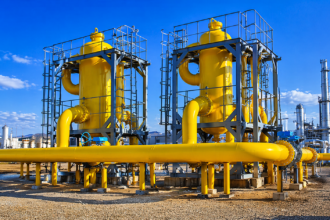
He expressed concern over the 13 per cent decline in gas production recorded in September due to vandalism and operational downtime, warning that it posed a threat to energy security.
Idahosa further urged stronger investment in the livestock and agro-industrial sectors, noting that Nigeria imported an N815bn worth of animals in the first half of 2025, resulting in a N763bn trade deficit.
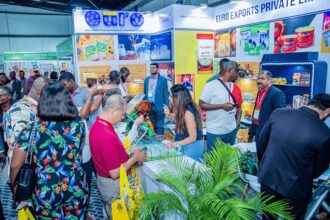
The Chamber also commended Nigeria’s successful bid to host the Intra-African Trade Fair (IATF) 2027 in Lagos, describing it as a “testament to Nigeria’s leadership in continental trade and innovation.”
Concluding, Idahosa said sustained economic recovery would depend on synergy between fiscal and monetary policy and stronger institutional credibility.
“Our collective goal must be to translate macroeconomic stability into improved living standards for citizens and competitiveness for businesses,” he said. “We must pursue stability through discipline, growth through diversification, and prosperity through partnership.”
The Nigeria Customs Service introduced the four per cent FOB as a unified charge to replace earlier import-related fees such as the 1 per cent Comprehensive Import Supervision Scheme fee and the seven per cent cost-of-collection charge. The levy, backed by statutory approval from the National Assembly, was designed to boost revenue generation and streamline trade charges.
However, the policy drew widespread criticism from manufacturers, exporters, and business groups who warned that it would raise production costs, fuel inflation, and reduce Nigeria’s competitiveness. Industry stakeholders, including the Manufacturers Association of Nigeria, argued that the extra burden would undermine efforts to diversify the economy and promote exports.
Following mounting pressure, the Federal Government suspended implementation of the levy in September 2025 to allow for wider stakeholder consultations and review of its economic impact.
The Lagos Chamber of Commerce, alongside organised private sector groups, has since urged the government to review the policy and expand the list of exempted products, particularly those linked to agricultural inputs, renewable energy, and industrial machinery.