


After using Hollywood horror properties to build its Halloween presence, Coca-Cola’s Fanta is creating its own characters, stories and entertainment world – a bold attempt to move from advertising around culture to creating cultural property of its own.
Fanta has spent the past two years getting closer to Halloween. Now it wants to own it.
The Coca-Cola brand is launching Fanta’s Haunted Universe, an original entertainment world populated by four horror-inspired characters, with a cinematic trailer and additional content, experiences and stories planned around the new property. The full Halloween campaign launches August 26.
On the surface, this looks like another seasonal campaign from a global soft-drinks brand. But the strategic ambition is considerably larger.
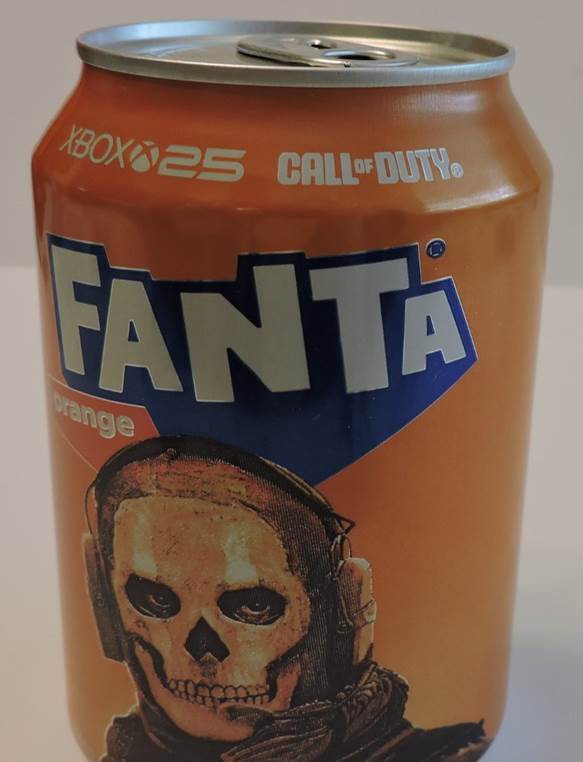
Fanta has previously collaborated with established entertainment properties, including horror characters, to give its Halloween marketing cultural relevance. The new strategy changes the relationship. Instead of continually borrowing someone else’s intellectual property, Fanta is attempting to create intellectual property of its own.
Ibrahim Khan, Fanta’s Global Vice President of Marketing, described the shift as moving from “collaborator to creator.” That phrase captures the significance of what Fanta is attempting.
From Campaign to Platform
Traditional seasonal marketing has a relatively straightforward structure. A brand identifies an important cultural moment, develops a campaign around it, promotes the campaign across media and returns to business as usual when the season ends. Fanta appears to be pursuing something different.
Halloween is being treated not simply as a promotional occasion but as a repeatable brand platform around which characters, stories, content, experiences and consumer participation can accumulate over time. That distinction matters. A campaign has a beginning and an end. A platform can develop.
The Coca-Cola Company says Fanta’s Haunted Universe will continue unfolding through additional stories, content, experiences and surprises.
Industry reporting adds context. Marketing Dive reports that Fanta’s 2025 Halloween campaign generated approximately 10 billion impressions, giving the brand evidence that Halloween can deliver substantial engagement and commercial value. Fanta is therefore not starting from zero. It is attempting to convert an already successful cultural association into something more enduring.
The Brand Wants to Become the Media
This is where the strategy becomes especially interesting. For much of advertising history, brands rented attention from media. They bought television spots, magazine pages, billboards, radio airtime and, later, digital inventory. The brand created the message; somebody else owned the environment in which the audience consumed it.
The digital economy began to change that relationship. Brands could build their own communities, channels and content ecosystems.
Entertainment marketing takes the idea further.
A sufficiently compelling brand story can itself become a destination. That is the ambition behind Fanta’s Haunted Universe. Rather than merely telling consumers why they should buy Fanta during Halloween, the brand is creating something consumers can watch, explore, play with and potentially return to. The product remains present, but it becomes part of a larger cultural experience. The danger, of course, is that the entertainment becomes more interesting than the brand. That is one of the central strategic tests Fanta will face.
Technology, but Not Technology for Technology’s Sake
The campaign also offers an interesting perspective on AI and creative production. Fanta developed the Haunted Universe with GRAiL, an entertainment studio, using technology within what Coca-Cola describes as a human-led creative process to explore ideas and bring the scale and visual ambition of the universe to life.
That qualification matters. At a time when brands are racing to demonstrate their use of generative AI, Fanta’s formulation deliberately places human creativity at the centre and technology in an enabling role. That is arguably the more interesting model.
The strategic question is not whether AI can produce a monster, a film or a character. It plainly can. The question is whether technology can help a brand develop a distinctive world that audiences actually want to inhabit. The difference between content generation and world-building is enormous.
BrandiQ Analysis
Fanta’s move connects directly to a question at the heart of contemporary brand strategy: what business is a brand really in?
A soft-drink company can define itself narrowly around beverages. But that definition places natural limits on growth. Fanta’s Halloween strategy suggests a broader interpretation of its role. Perhaps Fanta is not simply competing for share of throat. Perhaps it is competing for share of attention, imagination and cultural participation.
That does not mean the beverage becomes irrelevant. The drink remains the commercial engine. But the brand’s cultural universe can create reasons for consumers to encounter Fanta beyond the moment of purchase.
This is where brands such as LEGO, Barbie and other entertainment-oriented consumer brands offer useful precedents. The strongest examples demonstrate that intellectual property can become a multiplier for the core product rather than merely an advertising decoration. Fanta is attempting to create that multiplier around Halloween.
Its challenge will be consistency. One successful campaign does not create a franchise. Characters need distinctive personalities. Stories need development. Consumers need reasons to return. And the product must remain meaningfully connected to the world rather than becoming a logo attached to entertainment.
If Fanta can solve those problems, Halloween could become to Fanta what Christmas has become to Coca-Cola: not merely a seasonal opportunity but a proprietary cultural territory.
BrandiQ Verdict
Fanta’s real innovation is not another Halloween campaign. It is the decision to treat a cultural moment as intellectual property. That represents an important evolution in brand communication.
The strongest brands of the future may not simply interrupt culture with advertising. They may create entertainment, communities, characters and experiences that audiences voluntarily enter. Fanta is betting that a bottle of orange soda can become the entry point to a much larger world.
The strategic lesson is powerful: Don’t just advertise around culture. Find a cultural territory your brand can credibly own – and build something people want to return to.