

Does The Lion Have a Credibility Problem? Watchers Ask
The most celebrated award in global advertising has just recorded its sharpest entry decline in recent memory – and the industry is still deciding whether to read that as cause for alarm or a long-overdue correction.
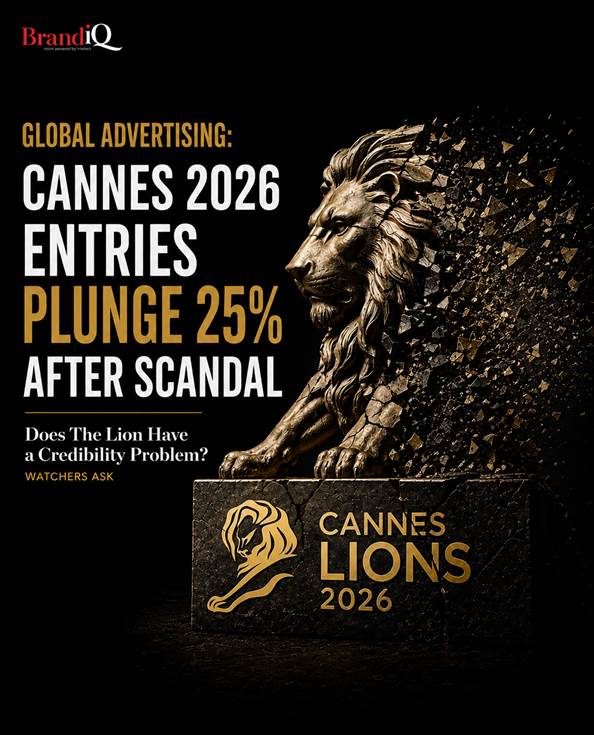
The 73rd Cannes Lions International Festival of Creativity, which opened on the French Riviera on 21 June 2026, received almost 7,000 fewer entries this year following a revamped process triggered by alleged last year’s cheating scandal. The drop amounts to a 25.5% decline compared to 2025, when the festival received 26,900 submissions – a rise of just 0.5% year on year.
The trigger for the upheaval was unambiguous. In 2025, a string of high-profile scandals at the festival led to withdrawn Lions, executive departures, and client backlash. The controversy began when DM9’s Grand Prix-winning campaign for Whirlpool Consul was found to include AI-manipulated footage from a CNN Brasil broadcast.
The industry’s response was swift and structural. In July 2025, Cannes Lions announced new “Global Integrity Standards” to bring more accountability to advertising’s most prestigious awards. The revamped framework introduced a dual-layer fact-checking system using both AI and human review, mandatory senior sign-offs on entries from both agency and client, clear rules around synthetic media, and a new Integrity Council to oversee escalated cases. Agencies found to have submitted deliberately misleading work now face bans of up to three years.
To operationalise these changes, the Informa-owned organisation increased its Cannes Lions operational staff by 60%. A dedicated email address – awardsintegrity@canneslions.com – was also launched to handle concerns arising from this year’s festival. There will be an additional trained observer in the live judging rooms, tasked with monitoring the flow of conversation to ensure it is fair, balanced, and non-political.
Cannes Lions CEO Simon Cook has been candid about the stakes involved. “Creativity is only valuable if it’s credible,” Cook said. “And credibility must be earned, not assumed.” On the entry decline, Cook framed 2026 as a structural inflection point rather than a crisis. “Given the seismic shifts we’re witnessing in the industry right now, 2026 feels like it will be remembered as a reset year for many reasons – especially following mass disruption. History tells us that the festival, and the awards in turn, mirror that disruption. It naturally has an impact – on the industry at large, and on the institutions that serve it.”
Cook was equally resolute about the new standards not being decorative. “I think in the very nature of setting all of this up and putting it in place, if we were to not use it, it would kind of be falling at the last hurdle,” he said. Crucially, the new integrity standards are forward-looking: “The new integrity standards apply from 2026 onwards. Our focus is upholding the integrity of the benchmark under these evolved and strengthened standards.”
Industry reaction has been mixed but broadly supportive. Agencies have described the new entry rules as “burdensome but necessary,” with the tightened process adding significant administrative demands around fact-checking and client sign-off. To help entrants navigate the changes, Cannes Lions published a comprehensive Integrity Handbook in November 2025.
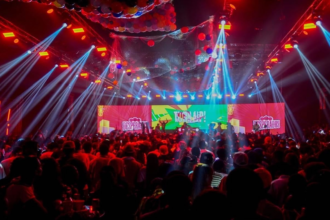
Despite the entry decline, the 2026 festival is proceeding at full pace. Shortlists have been announced across major categories – including Design, Digital Craft, Direct, Entertainment, Film Craft, Media, PR, and Social & Creator – and the first Lions of the 2026 festival were awarded on opening night.
The Analysis: What the Cannes Entry Collapse Means for Brands, Agencies, and the Business of Creativity
A Crisis of Institutional Credibility
The Cannes Lions has long occupied a peculiar position in the brand communications ecosystem – simultaneously celebrated as the gold standard of creative excellence and quietly suspected of being gameable by sophisticated, well-resourced agencies with the budgets to craft award-specific work rather than genuine commercial campaigns. The 2025 scandal did not create that suspicion; it confirmed it.
The DM9/Whirlpool Consul case was not an isolated lapse. Industry watchers believe it was symptomatic of a structural incentive problem that runs through the entire awards industry: the prize for winning is so commercially valuable – in terms of talent attraction, new business pitches, and media positioning – that the temptation to engineer award-worthy entries, rather than simply enter genuinely effective work, becomes institutionally irresistible.
According to agency sources, a 25.5% entry drop is not, therefore, simply a statistical footnote. It is the market speaking. Agencies that built their Cannes strategies around the old, lower-scrutiny environment have recalibrated. The ones that have withdrawn are not necessarily the most dishonest; they may simply be the most rational – recognising that the cost-benefit equation of entry has changed fundamentally.
What This Means for the Value of a Lion
Paradoxically, the entry decline may enhance rather than diminish the value of winning. Awards derive their brand equity from scarcity and perceived rigour. A Lion won under the new integrity framework – with dual-layer fact-checking, mandatory client endorsement, and AI verification – carries an implicit statement that its work was independently validated, not merely crafted for a jury. For brands investing in creative communications, that provenance matters.
This is not unlike what happens in other credentialling systems when they tighten their standards. Short-term, there is disruption and noise. Medium-term, the credential becomes more, not less, prestigious, because the barrier to obtaining it is demonstrably higher and more transparent.
The AI Question at the Heart of It All
It is no coincidence that the scandal which triggered this reset involved AI-manipulated media. The advertising industry is navigating a moment of profound technological disruption in which the tools available to fabricate compelling creative work have outpaced the institutional mechanisms for verifying it. The 2025 Cannes scandal was, at its core, a story about what happens when generative AI meets an under-policed awards system.
The new integrity standards – with their explicit rules on synthetic media and AI usage -represent the first serious attempt by a major creative institution to build an accountability architecture for the AI era. Whether those standards prove robust will depend on the sophistication of the verification technology deployed and the willingness of the Integrity Council to act against major agencies, not just smaller, less powerful entrants.
Implications for African and Emerging Market Agencies
For agencies operating in markets like Nigeria, this shift carries specific implications. African agencies have historically struggled to compete at Cannes not because of a deficit of creative talent, but because of the significant cost of entry relative to the revenues generated by most African market campaigns, combined with limited institutional support for international awards participation.
The new environment cuts both ways. On one hand, the additional administrative burden of the new entry requirements – senior sign-offs, mandatory client endorsements, detailed fact-checking documentation – adds cost and friction that will disproportionately affect smaller agencies with leaner operations. On the other hand, the crackdown on fabricated or embellished case studies potentially levels a playing field on which African agencies, who have typically entered genuine campaign work rather than purpose-built award entries, may have been systematically disadvantaged.
The story being told at Cannes 2026 is ultimately a story about brand authenticity – about whether the most prestigious brand in global advertising can rebuild trust after a self-inflicted credibility crisis. That is a story every brand strategist, every marketing director, and every agency leader should be following closely. The Lions are not just a barometer of creative quality; they are a mirror held up to the values of the industry itself.
What that mirror reflects in the coming days will tell us a great deal about where brand communications is heading.
Reporting draws input from coverage by Ad Age, Campaign Live, and Adweek.