

By BrandiQ Analyst
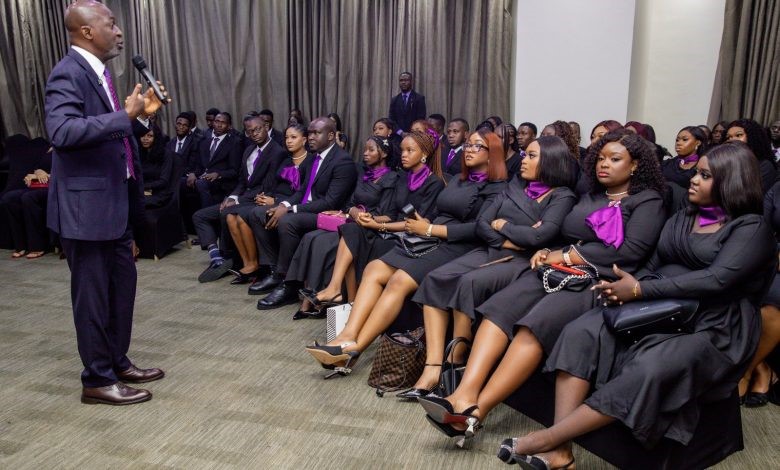
Polaris Bank has inducted 58 new hires into its workforce through its flagship Polaris Graduate Intensive Training (PGIT) and Polaris Tech Ignite Programme (PTIP), reinforcing a long-term strategy anchored on talent development, digital capability, and institutional culture.
Selected from a pool of over 10,000 applicants, the cohort represents the top 0.58% – a statistic that signals not just competitiveness, but the bank’s deliberate investment in elite human capital as a driver of growth.
Talent as Strategy: Beyond Recruitment to Capability Building
In an era where banking is rapidly converging with technology, Polaris Bank’s graduate programmes are positioned less as onboarding pipelines and more as strategic talent incubators.
The PGIT and PTIP frameworks reflect three critical priorities:
- Future-Ready Skills: Equipping recruits with competencies across banking operations, digital systems, and emerging technologies
- Leadership Grooming: Identifying high-potential individuals early and aligning them with long-term institutional goals
- Cultural Integration: Embedding values, ethics, and performance discipline from entry level
This approach aligns with a broader industry shift where talent is no longer a support function but a core competitive advantage.
CEO Mandate: Learn, Adapt, Evolve
Addressing the graduates, Managing Director/CEO Kayode Lawal delivered a message that reflects the realities of modern financial services: continuous disruption demands continuous learning.
His emphasis on adaptability underscores a defining transition in the sector – from traditional banking models to AI-enabled, data-driven financial ecosystems.
The implication is clear: technical competence is no longer static; it must evolve at the speed of technology.
Integrity as Currency: Reframing the Banking Value Proposition
Beyond skills, the CEO’s remarks placed strong emphasis on character – particularly integrity – as the foundation of a sustainable banking career.
This reinforces a critical truth in financial services:
Banks do not just manage money; they manage trust.
In a market where reputational risk can erode value faster than financial loss, institutions are increasingly repositioning ethics as a strategic asset, not just a compliance requirement.
Human Capital Meets Digital Transformation
The integration of PGIT (banking-focused) and PTIP (technology-focused) signals Polaris Bank’s recognition of a key industry convergence:
- Banking is becoming technology-led
- Customer experience is increasingly digital-first
- Competitive differentiation is driven by innovation and agility
By deploying these graduates across retail, digital, and customer experience functions, the bank is effectively aligning its talent pipeline with its transformation agenda.
Youth Empowerment and the Nigerian Opportunity
At a macro level, the initiative reflects a broader socio-economic imperative: harnessing Nigeria’s youth population as a productive asset.
With high unemployment and a rapidly evolving digital economy, structured programmes like PGIT and PTIP serve as:
- Pathways to meaningful employment
- Platforms for skills development at scale
- Catalysts for industry-wide talent elevation
For the financial services sector, this is not just corporate responsibility – it is ecosystem building.
BrandiQ Insight
Polaris Bank’s graduation of 58 new hires is more than a ceremonial milestone – it is a strategic signal.
It highlights how forward-looking institutions are redefining growth through people, not just products.
In the emerging African banking landscape, the winners will be those who can successfully integrate:
- Talent and technology
- Ethics and execution
- Learning and leadership
Because ultimately, the future of banking will not be built by systems alone – but by people equipped to evolve with them