

By using this site, you agree to the Privacy Policy and Terms of Use.
Accept
BrandiQBrandiQBrandiQ
  • Brand & Marketing
  • Industry News
  • Market Intelligence
  • Business & Economy
  • Technology & Digital
Reading: Coal Re-emerges as Strategic Lifeline for African SMEs Amid Escalating Fuel Prices
Share
0

No products in the cart.

Notification Show More
Font ResizerAa
BrandiQBrandiQ
0
Font ResizerAa
Search
  • Brand & Marketing
  • Industry News
  • Market Intelligence
Have an existing account? Sign In
Follow US
© 2026 Brand IQ. All Rights Reserved.
Business & Economy

Coal Re-emerges as Strategic Lifeline for African SMEs Amid Escalating Fuel Prices

BrandiQ Analyst
Last updated: March 31, 2026 11:03 pm
BrandiQ Analyst
March 31, 2026
Share
4 Min Read
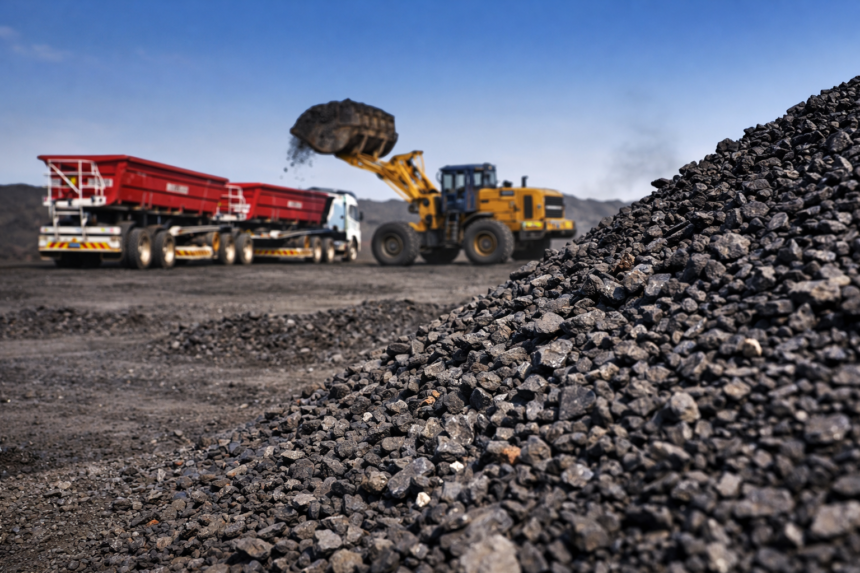
Africa’s coal reserves
SHARE

Africa’s small and medium-sized enterprises (SMEs) are facing mounting cost pressures as global crude oil volatility continues to disrupt fuel markets, pushing diesel-dependent economies toward a critical inflection point.

The ongoing Gulf crisis has triggered sharp fluctuations in Brent crude prices, rising from $81 per barrel on March 3 to $112 on March 12, before easing to $98 on March 25, 2026. For African economies heavily reliant on diesel-powered electricity, these swings are translating into rising operational costs, supply instability, and shrinking business margins—particularly for SMEs.

In this context, coal-fired power generation is re-entering the policy and investment conversation as a domestic, financeable and stabilising energy alternative.

Countries such as Nigeria, Zimbabwe, Botswana and Uganda possess substantial coal reserves, offering an opportunity to reduce reliance on imported fuels while establishing more predictable and cost-efficient power systems.

Escalating Fuel Costs Deepen SME Vulnerability

Diesel remains the default power source for many African SMEs due to unreliable grid infrastructure. However, recent price surges have intensified financial strain.

In Nigeria, fuel prices have climbed to over ₦1,000 per litre in March 2026, representing a 39.5% increase since February, making it one of the highest increases globally. In Zimbabwe, diesel prices have surged to $2.18 per litre, while petrol exceeds $2 per litre – the highest across the Southern African Development Community (SADC). Similar volatility persists in Uganda and Botswana.

Compounding the challenge are supply disruptions linked to geopolitical tensions around the Strait of Hormuz, further constraining access to imported fuels.

Even in South Africa, Africa’s largest economy, persistent loadshedding and grid limitations have pushed businesses toward diesel alternatives, amplifying exposure to global fuel shocks.

Coal as a Strategic Alternative for Business Continuity

Africa’s coal reserves – estimated in the hundreds of billions of tons – present a viable pathway to energy cost stabilisation. Nigeria alone holds approximately 9.8 billion cubic meters (bcm) of coal reserves, while Zimbabwe has 502 million cubic meters (mcm), Botswana 1.6 bcm, and Uganda 800 mcm.

For SMEs, access to affordable and reliable electricity is critical to survival and growth. Coal-fired power generation offers a lower-cost, domestically controlled alternative capable of supporting manufacturing, trade, and service industries.

Beyond cost savings, coal-based systems enable more predictable long-term planning, improved business resilience, and reduced exposure to foreign exchange volatility.

According to NJ Ayuk, Executive Chairman of the African Energy Chamber:
“When African businesses are being crushed by imported fuel costs, using domestic coal to keep factories running and SMEs alive is not a step backward—it is a rational act of economic self-defense.”

AEW 2026 Reframes the Coal Debate

The role of coal in Africa’s future energy mix will be revisited at African Energy Week 2026, taking place in Cape Town from October 12–16.

The event will move beyond ideological debates to examine practical applications of coal, including:

  • Clean coal technologies
  • Efficiency improvements
  • Hybrid energy systems
  • Financing models for scalable deployment

As energy security, industrialisation, and affordability return to the forefront of policymaking, AEW 2026 is expected to drive pragmatic dialogue on how coal can support productive sectors that cannot rely on intermittent or high-cost power sources.
You Might Also Like

Africa’s Digital Economy Enters ‘Compute Era’ as Cloud and AI Demand Surges – IFC
Champion Breweries Opens N15.91bn Rights Issue
Africa’s Skills Crisis: World Bank Warns of Deepening Labour Mismatch Threatening Growth, Jobs and Productivity
Milken Institute and Motsepe Foundation Announce Winners of the $2 Million Milken-Motsepe Prize in Artificial Intelligence (AI) and Manufacturing
African Energy Bank Set for September Launch, as Africa Seeks Greater Control of Energy financing 
Share This Article
Facebook Whatsapp Whatsapp LinkedIn Telegram Email Copy Link Print
What do you think?
Love0
Sad0
Happy0
Sleepy0
Angry0
Dead0
Surprise0
Wink0
Previous Article Estevão Pale Mozambique Energy Minister Estevão Pale to Attend Angola Oil & Gas (AOG) 2026 Amid Strategic Liquefied Natural Gas (LNG) Push
Next Article coca-cola Coca-Cola Commits R17.6bn to South Africa, Deepening Market Leadership and Local Impact
Leave a Comment

Leave a Reply Cancel reply

Your email address will not be published. Required fields are marked *

Salesforce Braze acquisition for AI-powered marketing
Salesforce Agrees to Acquire Braze in $5.66 Billion Deal to Strengthen AI-Powered Marketing
Technology & Digital
Stagwell AI unified marketing portfolio for enterprises and SMEs
Stagwell Launches Unified AI Marketing Portfolio for Enterprise Clients and Small Businesses
Industry News
Ai nigeria
OpenAI Expands ChatGPT Advertising to Nigeria and 25 Other Markets
Brand & Marketing
Publicis LiveRamp deal and FTC conditions on advertising competition
FTC Sets Conditions for Publicis’s $2.2 Billion LiveRamp Acquisition to Protect Advertising Competition
Industry News
Advertise

You Might Also Like

pmi

Africa’s $360bn Infrastructure Pipeline Faces 57% Talent Gap, PMI Warns

March 18, 2026
Mandilas

Mandilas Recommits to Nigerian Economic Developmentt

December 17, 2025
african mining week

African Mining Week 2026 to Drive Policy Alignment as Africa Unlocks $8.6 Trillion Mineral Opportunity

April 1, 2026
EV Large-Scale Charging Hub

Nigeria’s EV Push Gains Momentum as Firm Launches Large-Scale Charging Hub in Abuja

May 11, 2026
Global Trade

World Bank’s $112bn Private Capital Push: What It Means for Africa’s Investment Future

September 21, 2026

Lasaco Assurance Introduces Safe Start to Aid Mothers

November 5, 2025

Africa50 Secures Fresh $50m as Global Investors Back Africa’s Green Infrastructure Future

August 7, 2026
Nigeria’s Port Reset

Nigeria’s Port Reset: Why the Upgrade of Onne, Rivers, Delta and Calabar Matters to Business

September 29, 2026

Subscribe to BrandiQ Newsletter

Subscribe to our newsletter to get our latest articles instantly! Don't worry, we don't spam.
Brand IQ

BrandiQ is Africa’s leading digital platform for brand strategy, business innovation, marketing insights, and data-backed intelligence shaping African markets.

  • About Us
  • Contact Us
  • Privacy Policy
  • Terms & Conditions

Copyright 2013 – 2026 BrandiQ. All Rights Reserved

Welcome Back!

Sign in to your account

Username or Email Address
Password

Lost your password?