

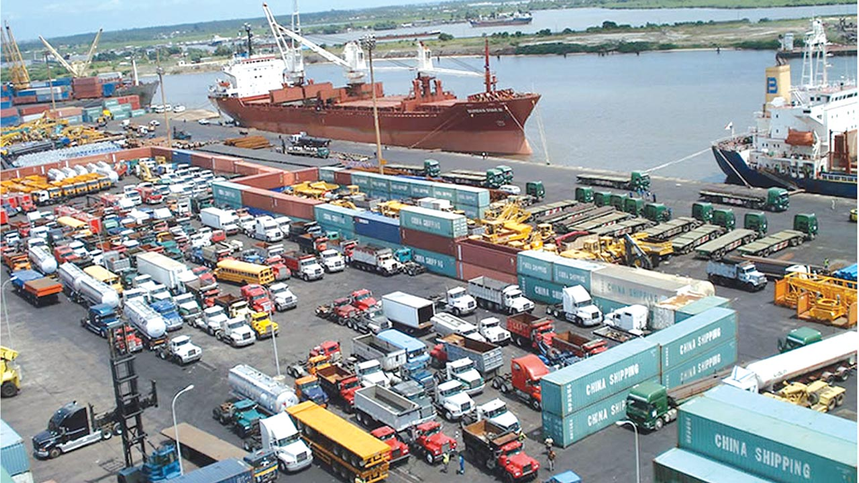

The Federal Government’s decision to modernise four eastern ports could do more than improve maritime infrastructure. If executed properly, it could begin to redraw Nigeria’s logistics map, reduce the cost of moving goods and give businesses outside Lagos a more direct connection to international trade.
For decades, Nigeria’s commercial geography has had a curious maritime imbalance. The country’s economy is national, but much of its international cargo infrastructure has been concentrated around Lagos. Manufacturers in the South-East, exporters in the Middle Belt, businesses in the Niger Delta and traders serving large regional markets have often had to organise their supply chains around gateways that are geographically distant from where their goods are produced or consumed.
The Federal Government now wants to change that equation.
The approval of a comprehensive modernisation and upgrade of Onne, Rivers, Delta and Calabar ports, announced by the Minister of Marine and Blue Economy, Adegboyega Oyetola, represents another step in an emerging attempt to build a more distributed Nigerian port system. The programme follows earlier approvals for the modernisation of Apapa and Tin Can Island ports in Lagos. The stated objective is not simply to rehabilitate four ageing facilities but to create additional gateways through which international cargo can enter and leave the country.
That distinction is important. Port infrastructure is rarely just about ships and containers. It is part of the cost structure of an economy.
The Cost of a Port Is Paid Far Beyond the Port
When a vessel waits, a manufacturer can wait for raw materials. When cargo clearance is slow, a distributor may carry additional inventory. When a container takes longer to reach its destination, transport, warehousing, demurrage and financing costs can accumulate. Eventually, some portion of those costs finds its way into the price paid by businesses and consumers.
This is why the government’s stated objective of reducing vessel turnaround times and making cargo movement more predictable deserves attention from the wider business community. The minister has argued that modernisation should make the movement of goods more cost-effective and strengthen regional connectivity.
The underlying economic proposition is straightforward: a port is competitive not merely when a ship can berth, but when goods can move efficiently from ship to factory, warehouse, farm, market or final consumer.
That is why port modernisation cannot be evaluated by cranes, quay walls and dredging alone. Its economic value ultimately depends on what happens beyond the terminal gates.
Breaking the Lagos Concentration
The most consequential element of the announcement may therefore be geographical. Nigeria does not necessarily need every port to compete with Lagos for the same cargo. It needs a system in which different gateways can serve different economic corridors efficiently.
Onne, for example, already possesses strategic importance in the eastern logistics and oil-and-gas economy. The NPA said in August that investments in infrastructure, berth expansion and an electronic call-up system were strengthening Onne’s role as an export and logistics hub for eastern and northern markets.
Calabar has a different geographical proposition. Rivers and Delta ports have their own industrial and regional catchments. Their commercial significance will increase if infrastructure improvements are accompanied by dependable road, rail, inland-waterway and warehousing connections.
The government itself is framing the programme in these terms. Oyetola has described the desired system as one in which ports, roads, railways, inland waterways and other transport infrastructure operate as an integrated logistics network.
That is the right economic lens. A modern port connected to an inefficient hinterland is simply a modern bottleneck.
The Real Opportunity May Be for Exporters
The conversation about Nigerian ports has historically been dominated by imports. But the larger economic prize may lie in exports.
Nigeria has spent years discussing the need to diversify away from crude oil. That requires farmers, manufacturers and processors to reach foreign markets at competitive cost. A producer can make a high-quality product and still be uncompetitive if transporting it from the factory or farm to an overseas customer is too expensive, slow or unpredictable.
The NPA has already been linking eastern-port investment with efforts to strengthen non-oil exports. Its Export Process Terminals are intended to consolidate activities such as cargo stuffing, documentation, packaging and certification, while the authority has been pursuing greater automation through the National Single Window.
This suggests that the port upgrade should be understood as part of a larger supply-chain reform rather than as a construction programme.
For an exporter in the South-East, for example, the relevant question is not simply whether Calabar or Onne has a refurbished berth. It is whether the exporter can move a product from factory to port, complete documentation without unnecessary friction, load it efficiently and get it onto an international vessel at a predictable cost. That is the difference between infrastructure and economic infrastructure.
A New Investment Map
There is also an investment implication. When logistics become more predictable, businesses can begin making different decisions about where to locate factories, warehouses, distribution centres and processing facilities. Logistics infrastructure therefore has the potential to influence industrial geography.
A more functional eastern port network could strengthen commercial corridors connecting the ports with the South-East, South-South and parts of the North. It could also encourage logistics operators, freight forwarders, warehouse developers, technology companies and other supply-chain businesses to invest closer to emerging cargo corridors.
This is one reason the government’s simultaneous pursuit of existing-port rehabilitation and new deep-seaport development is significant. The Federal Government has identified projects including Ibom, Bakassi, Agge, Gateway, Ondo and Bonny, alongside the modernisation of existing ports.
But more ports do not automatically create a better port system. They create capacity. The economic benefit appears only when cargo follows.
Infrastructure Is Necessary. It Is Not Sufficient.
This is where the government’s ambition faces its most important test. Nigeria has no shortage of infrastructure announcements. The harder task is turning approved projects into functioning economic systems.
Port users need predictable tariffs, efficient customs processes, reliable electricity, functioning roads, secure waterways, digital documentation, transparent regulation and competitive terminal services. Shipping companies need confidence that vessel calls will be commercially viable. Cargo owners need confidence that their goods will move without unpredictable delays and costs.
Recent government reporting suggests that port reform is already extending into these areas. The minister has highlighted digitalisation, regulation, security and hinterland connectivity alongside physical infrastructure. The government has also pointed to improvements in the performance of Lagos ports, including their ranking among the world’s most improved container ports between 2020 and 2025.
Those developments are encouraging, but they also underline an important principle: modernisation is not a single project. It is an operating system.
The Business Test Is Predictability
For Nigerian businesses, the most valuable outcome of the port programme may not be a spectacular new terminal. It may be something much less visible: predictability.
A manufacturer can plan around a known logistics cost. An exporter can quote an international customer with greater confidence. A retailer can manage inventory more efficiently. A shipping company can schedule vessels more reliably. A logistics operator can invest in capacity knowing that cargo volumes are less dependent on a single congested gateway.
Predictability reduces the amount of money businesses must keep aside for uncertainty. That has an economic value of its own. The World Bank’s historical documentation of Nigeria’s port system illustrates how costly congestion can become: during an earlier period of severe port congestion, importers faced substantial demurrage and freight surcharges. The lesson remains relevant even though the historical circumstances were different. Port inefficiency does not remain inside the port; it propagates through the economy.
BrandiQ Analysis: Nigeria Is Trying to Build a Network, Not Just More Ports
The significance of the latest approval lies in its potential to change the architecture of Nigerian commerce. For years, the dominant question has been how to improve individual ports. The emerging question is broader: how should Nigeria’s ports work together as a national logistics network?
That shift is economically important. A network provides resilience that a single dominant gateway cannot. If cargo can move efficiently through several regional ports, businesses have more options. Regional economies become better connected to global markets. Investment does not have to follow the same geographic path.
But decentralisation must be commercially rational. Government can modernise infrastructure; it cannot command cargo into economically inefficient routes. Shipping lines, terminal operators, manufacturers, exporters and logistics companies will ultimately determine which gateways thrive.
This is why the quality of execution will matter more than the announcement itself. The government has been discussing eastern-port modernisation for some time. In April 2026, it said procurement had commenced for the modernisation of Warri, Port Harcourt, Onne and Calabar, following earlier approvals for Lagos. The latest announcement therefore represents an evolution of an existing programme rather than an entirely new idea.
The next stage is to demonstrate that approval becomes procurement, procurement becomes construction, construction becomes operational capacity, and operational capacity becomes cheaper and more predictable trade.
BrandiQ Takeaway
Nigeria’s port challenge is ultimately a business-cost challenge. The modernisation of Onne, Rivers, Delta and Calabar could help redistribute cargo, strengthen regional economies and improve access to international markets. But its real economic value will be determined by what happens between the quay and the customer.
If ports are modernised while roads remain unreliable, if digital systems do not communicate, if cargo clearance remains unpredictable or if shipping lines do not find sufficient commercial incentives to call at regional gateways, the infrastructure will underperform.
If, however, port modernisation is combined with efficient regulation, digital trade systems, reliable hinterland connections, competitive terminal operations and growing export capacity, Nigeria could begin to move from a port-centred logistics model to a genuinely integrated national logistics network.
That is the larger business story behind the four-port approval. The objective is not simply to make Onne, Rivers, Delta and Calabar better ports. It is to make Nigeria a more efficient place through which goods can move.