


By using this site, you agree to the Privacy Policy and Terms of Use.
Accept
BrandiQBrandiQBrandiQ
  • Brand & Marketing
  • Industry News
  • Market Intelligence
  • Business & Economy
  • Technology & Digital
Reading: Nigeria’s EV Push Gains Momentum as Firm Launches Large-Scale Charging Hub in Abuja
Share
0

No products in the cart.

Notification Show More
Font ResizerAa
BrandiQBrandiQ
0
Font ResizerAa
Search
  • Brand & Marketing
  • Industry News
  • Market Intelligence
Have an existing account? Sign In
Follow US
© 2026 Brand IQ. All Rights Reserved.
Business & Economy

Nigeria’s EV Push Gains Momentum as Firm Launches Large-Scale Charging Hub in Abuja

Augustine Tom
Last updated: May 11, 2026 9:15 am
Augustine Tom - Digital Marketing Consultant
May 11, 2026
Share
4 Min Read
EV Large-Scale Charging Hub
SHARE

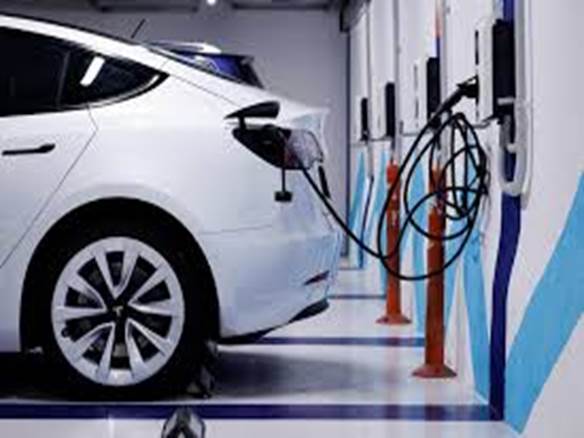
Possible Electric Mobility has unveiled what it describes as Africa’s largest electric vehicle charging hub in Abuja, marking a major milestone in Nigeria’s emerging clean transportation sector.

According to the company, the facility has the capacity to charge more than 1,000 electric vehicles daily and is designed to support electric buses and commercial fleet operations at scale.

The development comes amid growing policy support from the Nigerian government aimed at accelerating electric mobility adoption, including duty waivers on electric vehicles and mass transit buses.

Founder and Chief Executive Officer of Possible Electric Mobility, Mosope Olaosebikan, said the investment goes beyond charging infrastructure.

“This is not just about infrastructure. It is about building the system that enables electric mobility to scale in Nigeria,” he said.

The company operates an integrated model combining vehicle financing, charging infrastructure, and fleet maintenance services to simplify the transition for transport operators.

Industry analysts say large-scale charging infrastructure remains one of the most critical requirements for widespread EV adoption across African cities.

The company also disclosed plans to expand its charging infrastructure network across Nigeria and other parts of West Africa.

BrandiQ Analysis

The Abuja charging hub reflects the beginning of a potentially significant economic and industrial transition across Africa’s transportation ecosystem.

Globally, the electric vehicle revolution is no longer driven solely by environmental activism. It is increasingly being shaped by economics, industrial policy, energy security, and technological competition.

China, the US, and Europe are currently competing aggressively for dominance across the EV value chain including:

  • Battery production
  • Charging infrastructure
  • Rare earth minerals
  • Vehicle manufacturing
  • Clean energy systems

Africa’s role within this transition has largely been viewed through the lens of mineral extraction, particularly lithium, cobalt, graphite, and manganese.

However, projects such as Nigeria’s Abuja charging hub suggest the continent may increasingly participate not only as a supplier of raw materials, but also as a consumer and infrastructure market for clean mobility systems.

For Nigeria, the implications are especially significant.

Transportation costs remain one of the largest inflation drivers in the economy. Electric mobility could eventually reduce fuel dependency, lower operational transport costs, and reduce pressure on foreign exchange linked to fuel imports.

The expansion of EV infrastructure could also stimulate:

  • New manufacturing ecosystems
  • Battery services
  • Renewable energy investments
  • Technical workforce development
  • Green financing markets

For global investors, Nigeria and Africa increasingly represent long-term growth opportunities within sustainable infrastructure and climate technology markets.

The challenge, however, remains electricity reliability.

Without significant improvements in power generation and grid stability, EV adoption across Africa may face structural limitations. This creates an interesting paradox: the success of Africa’s EV future may ultimately depend on broader investments in energy infrastructure and renewable power systems.

Still, the Abuja hub signals that Africa’s clean transport transition is no longer theoretical. It is beginning to move from policy discussions into physical infrastructure deployment.


You Might Also Like

German Firms Target Nigeria’s €222bn Food Market in Strategic Trade Push
Turkish Airlines Seals Landmark Chinese Financing Deal
Eleganza Unveils Strategy to Deepen Market Reach
Heirs Energies Commits $10m to Entrepreneurship as Growth Strategy
Global Oil Firms Eye Nigeria’s 2025 Licensing Round
Share This Article
Facebook Whatsapp Whatsapp LinkedIn Telegram Email Copy Link Print
What do you think?
Love0
Sad0
Happy0
Sleepy0
Angry0
Dead0
Surprise0
Wink0
ByAugustine Tom
Digital Marketing Consultant
Augustine Tom is a professional web designer, SEO specialist, digital marketer, business developer, consultant, trainer, speaker, and author who has worked across diverse industries and markets. He writes on branding, business growth, digital strategy, innovation, and emerging market trends for BrandiQ, drawing from extensive experience in consulting, training, and brand development across different regions and business environments.
Previous Article AI-Powered Agriculture Akwa Ibom Coalition Pushes AI-Powered Agriculture as Africa Races Toward Smart Farming Economy
Next Article Cocoa Sunbeth’s Multi-Million Dollar Agro Processing Bet Signals Africa’s Shift From Commodity Exporter to Industrial Producer
Leave a Comment

Leave a Reply Cancel reply

Your email address will not be published. Required fields are marked *

Africa Launches the First Pan-African Pact for Insurance Inclusion
Business & Economy
Wema Bank, EIB Global Sign €50 Million Facility to Boost Women- and Youth-Led Enterprises 
Brand & Marketing
Maltina’s Nourishment Tour: See What Happens Inside  
Brand & Marketing
Why Brands Should Build Agency Partnerships, Not Supplier Lists, says Penquin Executive
Industry News
- Advertisement -

You Might Also Like

World Bank Empowers West Africa’s Power Revolution

June 4, 2026
coca-cola foundation

Coca-Cola Foundation & TechnoServe: Recycling as Brand Purpose and Economic Strategy

March 27, 2026

NADF, IDH, BOA Partner to Support Women Agripreneurs

November 19, 2025
Dimension Data

Dimension Data Nigeria Completes $15m Bond Programme to Boost Digital Infrastructure

March 6, 2026
REGENT MFB

Regent MFB Crosses N10bn MSME Lending Milestone

December 23, 2025
UAE

UAE’s $1bn AI Fund Signals New Growth Cycle for Nigeria’s Telecom and Digital Infrastructure Market

March 20, 2026
perception tax

The Perception Tax: Africa’s Most Expensive Misconception

March 24, 2026
dangote honeywell

Dangote Honeywell Petrochemical Deal: How New Refinery Expansion Could Boost Nigeria’s Economy, Strengthen the Naira and Cut Imports

April 27, 2026

Subscribe to BrandiQ Newsletter

Subscribe to our newsletter to get our latest articles instantly! Don't worry, we don't spam.
Brand IQ

BrandiQ is Africa’s leading digital platform for brand strategy, business innovation, marketing insights, and data-backed intelligence shaping African markets.

  • About Us
  • Contact Us
  • Privacy Policy
  • Terms & Conditions

Copyright 2013 – 2026 BrandiQ. All Rights Reserved

Welcome Back!

Sign in to your account

Username or Email Address
Password

Lost your password?