

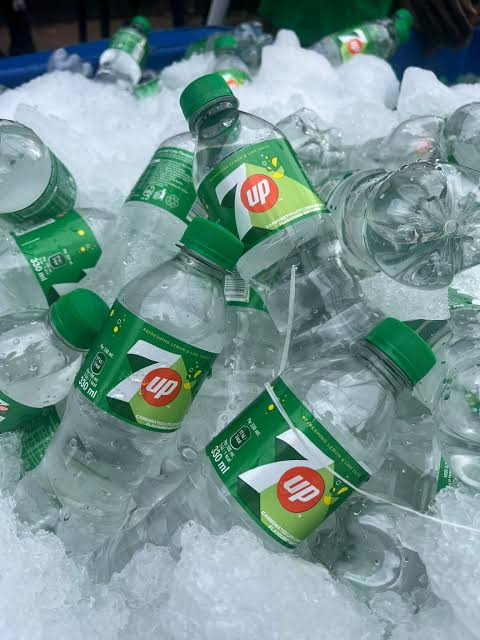

The temporary packaging change in the Seven-Up teaser campaign has triggered consumer speculation, giving the beverage manufacturer an opportunity to build anticipation before revealing the purpose of the initiative.
Seven-Up Bottling Company has introduced yellow-capped bottles across selected products in its beverage portfolio as part of a teaser campaign intended to generate public curiosity about an upcoming initiative.
The change affects selected bottles of Pepsi, Mirinda, 7UP, Teem and Supa Komando. The company has confirmed that the yellow caps are genuine and form part of temporary packaging being used in selected regions. It has not yet disclosed the full purpose of the initiative.
The unusual packaging attracted attention after consumers noticed the yellow caps on bottles in shops and began speculating about their meaning. The company subsequently added to the anticipation through a post on its official Instagram account announcing that “something exciting is coming to you.”
The teaser campaign illustrates a familiar marketing technique: withholding selected information to encourage curiosity and discussion before a larger announcement.
How a Teaser Campaign Works
A teaser campaign is designed to create awareness of an upcoming development without immediately explaining every detail. Brands may use unusual packaging, short videos, cryptic messages or changes to familiar visual elements to prompt consumers to ask questions and share their interpretations.
The strategy can be useful when the unexplained element is sufficiently distinctive to attract attention. In this case, the yellow caps are visible at the point of purchase, allowing consumers to encounter the campaign during ordinary shopping rather than solely through paid advertising.
The physical presence of the product can also stimulate online conversation. Consumers who notice the packaging may photograph it, discuss it with friends or post questions on social media, extending the campaign’s reach beyond the original retail setting.
However, curiosity is only the first stage of a successful teaser campaign. The eventual reveal must provide a meaningful explanation and deliver on the expectations created by the teaser.
The Importance of the Reveal in a Teaser Campaign
A teaser that attracts attention but leads to an underwhelming announcement can weaken consumer confidence. If the eventual offer is confusing, irrelevant or perceived as exaggerated, the attention generated during the teaser period may not translate into stronger brand preference.
For SBC, the challenge will be to connect the temporary packaging with a clear consumer benefit or brand objective. That could involve a promotion, a new initiative or another form of engagement, but the company has not yet publicly confirmed the details. It would therefore be premature to speculate about the mechanics or commercial value of the forthcoming announcement.
The campaign also involves several well-known beverage brands. Any initiative spanning multiple products needs to preserve clarity about which products are included, where the temporary packaging appears and how consumers can participate if the campaign involves an offer.
Measuring Teaser Campaign Effectiveness
The success of a teaser campaign should not be assessed solely through social-media comments or the number of people asking questions. These indicators can demonstrate attention, but they do not establish whether the campaign has improved brand performance.
More useful measures would include changes in brand awareness, consumer understanding after the reveal, participation rates if an offer is involved, retail sales and the incremental value generated relative to campaign costs.
Retail execution matters as well. If the yellow-capped products appear inconsistently or consumers receive conflicting explanations, the teaser campaign may generate confusion rather than positive engagement.
A Lesson in Brand Communication
SBC’s approach shows how a physical product can become a communication channel in its own right. Packaging is often treated as a stable identifier, but temporary design changes can also attract attention and signal that something is happening around the brand.
Such tactics work best when they are supported by a well-planned sequence: create curiosity, deliver the reveal, explain the benefit and give consumers a clear next step. Experience-led approaches are becoming common among drinks brands, from Tiger Beer’s Manchester United “Uncage Party” to Fearless Energy Drink’s Felabration partnership, and heritage can also become a story, as Nigerian Breweries at 80 shows.
BrandiQ Takeaway: SBC’s yellow-cap teaser campaign demonstrates the potential of packaging-led teasers to generate attention without immediately relying on conventional advertising. The real test will be the reveal. Curiosity can earn a consumer’s attention, but a clear proposition and credible value are needed to turn that attention into meaningful engagement.