


Retail giant accuses sportswear brand of infringing its iconic tri-colour identity, highlighting the growing commercial value of brand assets in the global marketplace
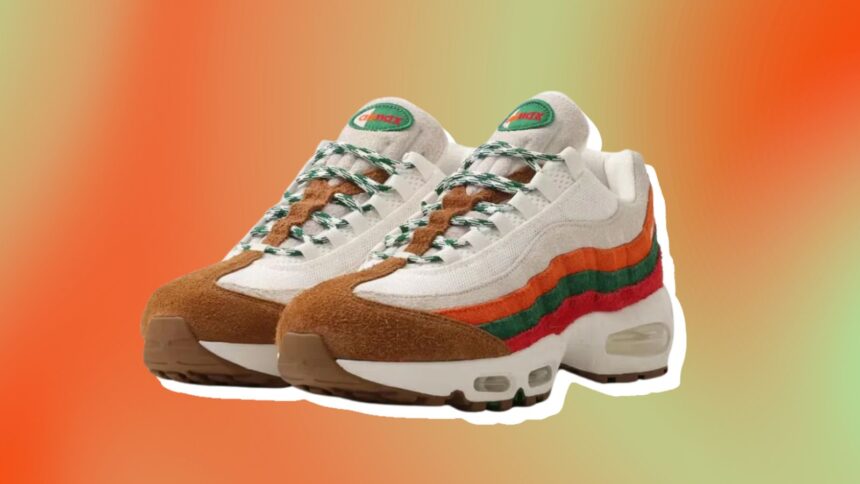
Convenience retail giant 7-Eleven has filed a trademark infringement lawsuit against Nike, alleging that the sportswear company’s forthcoming Air Max 95 sneaker unlawfully imitates the retailer’s distinctive orange, green and red branding, escalating a dispute that underscores the increasing commercial importance of brand identity in the global economy.
The lawsuit, filed in the U.S. District Court for the Northern District of Texas, seeks to block Nike’s planned release of the sneaker, recover damages and require the recall of any products already distributed.
According to court filings, 7-Eleven argues that Nike’s upcoming Air Max 95 features a “confusingly similar imitation” of its long-established tri-colour branding, which the retailer says consumers have associated with the company for decades.
The complaint also notes that the planned release was scheduled to coincide with 11 July (7/11), the date widely recognised in the United States as “7-Eleven Day”, when participating stores celebrate their annual Free Slurpee Day promotion. 7-Eleven contends that the timing increases the likelihood of consumer confusion regarding a possible commercial relationship between the two companies.
In its filing, the retailer states that it has used the orange, green and red colour combination for nearly four decades across store signage, advertising, merchandise, footwear and other branded products, and that it owns multiple trademark registrations protecting the distinctive design.
The company further alleges that media reports and online product listings have already referred to the sneaker as the “7-Eleven” Air Max, reinforcing its argument that consumers could mistakenly assume the footwear was officially licensed or endorsed by the retailer.
According to the complaint, 7-Eleven attempted to resolve the matter before initiating legal proceedings but proceeded with litigation after discussions failed to produce an agreement.
The retailer is asking the court to prohibit Nike from manufacturing, advertising and selling the disputed Air Max 95 colourway. It is also seeking the recall and destruction of the footwear, recovery of profits derived from its sale and additional monetary damages permitted under applicable law.
The lawsuit also points to 7-Eleven’s history of officially licensed collaborations with consumer brands, arguing that previous partnerships have reinforced public expectations that products bearing its distinctive branding are authorised by the company.
At the time of publication, Nike had not publicly responded to the allegations.
BrandiQ Analysis
The Case Is About More Than a Sneaker
At first glance, the dispute appears to concern the colour scheme of a single shoe. In reality, it highlights one of the most valuable assets in modern business: brand identity.
For global companies, colours, logos, design elements and distinctive visual identities are no longer merely aesthetic choices. They represent intellectual property that can embody decades of investment in reputation, customer recognition and commercial goodwill.
Increasingly, these assets are defended with the same determination as patents and proprietary technologies.
Colour Has Become Intellectual Property
The lawsuit illustrates how visual branding has evolved into a strategic business asset. Consumers frequently recognise brands through colours before they read names or logos. Over time, consistent use of a distinctive visual identity can create powerful mental associations that become central to brand value.
The legal question in this case is not whether Nike produced a successful sneaker. Rather, it is whether the design is sufficiently similar to 7-Eleven’s established branding to create consumer confusion regarding origin, sponsorship or endorsement.
Whatever the court ultimately decides, the case demonstrates how valuable distinctive brand identifiers have become.
Brand Equity Requires Active Protection
Another significant aspect of the dispute is the retailer’s willingness to pursue legal action before the product reaches the market. This reflects a broader reality of modern brand management.
Trademark owners are often expected to actively protect their intellectual property. Failure to challenge alleged infringements can weaken exclusive rights over time and create uncertainty about ownership. For multinational organisations, legal enforcement has therefore become an integral part of brand governance rather than merely a reactive legal exercise.
Lessons for African Brands
The case offers an important lesson for businesses across Africa. Many organisations invest heavily in advertising, product development and customer acquisition but pay comparatively little attention to protecting their intellectual property.
Distinctive brand assets – including names, logos, colours, packaging and visual identities – can become valuable commercial resources when consistently managed and legally protected. As African brands increasingly expand into regional and international markets, strategic management of intellectual property will become just as important as marketing itself.
The Bigger Picture
The dispute between 7-Eleven and Nike reflects the growing intersection of branding, intellectual property and competitive strategy. In today’s economy, corporate value is created not only through products but also through the intangible assets that shape consumer perception.
Whether the case is ultimately resolved through litigation or settlement, it reinforces a central principle of modern brand management: The strongest brands are built over decades, and because they represent enormous commercial value, they are increasingly defended with equal strategic determination.