

Nigeria’s ambition to reduce dependence on imported medical products has received a significant boost following a €50 million financing agreement between the Bank of Industry and EIB Global, the development arm of the European Investment Bank.
The deal, announced on the sidelines of the Nigeria–EU Ministerial Summit in Abuja, is designed to catalyse local production of vaccines, pharmaceuticals, and diagnostic tools—marking a critical step in repositioning Nigeria within Africa’s healthcare value chain.
From Import Dependency to Industrial Capability
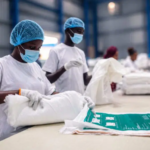
At the heart of the agreement is a dedicated €50 million credit line targeted at domestic healthcare manufacturers, providing long-term “patient capital” to support capacity expansion, technology upgrades, and compliance with international production standards.
For Nigeria, where a significant share of medical supplies is still imported, the facility represents more than financing—it is a strategic intervention aimed at building industrial resilience and health sovereignty.
Managing Director of the Bank of Industry, Olasupo Olusi, framed the partnership as a turning point in Nigeria’s economic positioning.
“This partnership marks a pivotal step in Nigeria’s journey from being a major importer of essential health commodities to becoming a competitive producer within regional and global value chains,” he said.
Aligning with Africa’s Vaccine Independence Agenda
The investment also aligns with the African Union’s long-term objective of producing 60 per cent of the continent’s vaccines locally by 2040—a goal that has gained urgency in the aftermath of global supply chain disruptions experienced during the COVID-19 pandemic.
By strengthening domestic manufacturing capacity, Nigeria is positioning itself not just as a consumer market, but as a regional production hub capable of serving West Africa and beyond.
Global Gateway Meets Local Industry
The initiative forms part of the European Union’s Global Gateway strategy, which aims to mobilise sustainable investments in infrastructure and human development across emerging markets.
For European partners, the deal represents a dual opportunity: supporting public health outcomes while embedding African markets more deeply into global production networks.
Vice President of the European Investment Bank, Ambroise Fayolle, emphasised the developmental impact of the collaboration.
“I am pleased to announce this partnership with the Bank of Industry to improve public health and daily lives in Nigeria. By financing the development and local manufacture of essential medicinal and nutritional products, we are improving access to safe, affordable, and high-quality treatments,” Fayolle stated.
He added that the initiative would strengthen supply chain resilience and reaffirm the EIB’s long-term commitment to Africa.
Financing Scale, Building Systems
European Commissioner for International Partnerships, Jozef Sikela, highlighted the role of the facility in enabling scale and reducing import dependence.
“This investment strengthens local manufacturing of medical products in Nigeria, enabling companies to access finance and scale production. We are supporting Nigeria to produce more of what it needs domestically while building stronger healthcare systems and regional value chains,” Sikela said.
The facility is being deployed under the Human Development Accelerator programme, in partnership with the Gates Foundation, further reinforcing its focus on long-term system development rather than short-term intervention.
Industrial Policy Meets Public Health
For Nigeria, the agreement sits at the intersection of industrial policy and public health strategy.
Olusi noted that the initiative aligns with the broader economic agenda of President Bola Tinubu, particularly in mobilising long-term capital to drive resilience, job creation, and sectoral transformation.
Beyond healthcare, the Bank of Industry continues to channel financing into agriculture and other productive sectors, strengthening value chains in areas such as cocoa and dairy to improve livelihoods and economic diversification.
Unlocking SME Potential in Healthcare Manufacturing
A key focus of the €50 million facility is the empowerment of small and medium-sized enterprises, which are expected to play a central role in building Nigeria’s healthcare manufacturing ecosystem.
By enabling SMEs to meet global quality standards, the programme seeks to bridge a longstanding gap between local production capacity and international competitiveness.
Policy and Institutional Backing
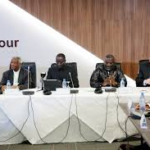
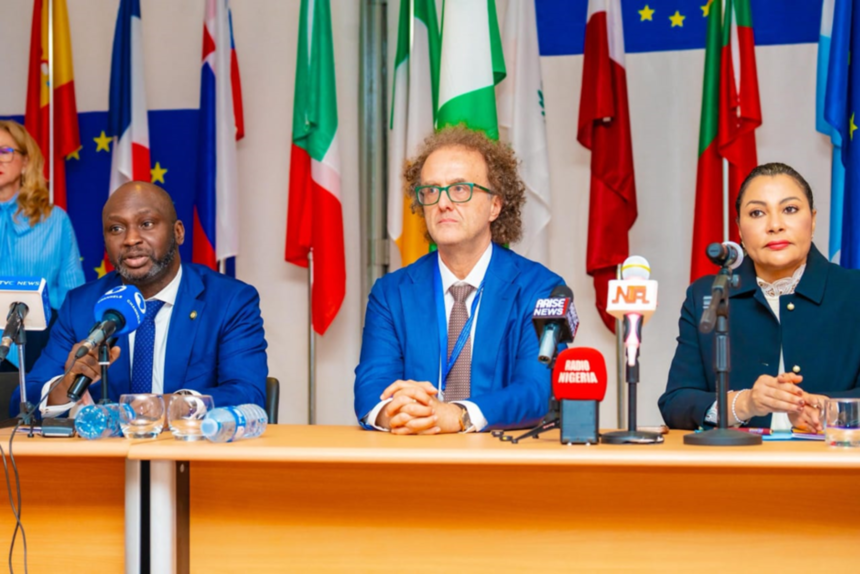
Stakeholders present at the signing, including Minister of Budget and Economic Planning Abubakar Bagudu and European Union Ambassador to Nigeria Gautier Mignot, described the agreement as a major milestone in advancing sustainable financing and industrial development.
BrandiQ Insight
The BOI–EIB partnership is not just a financing deal – it is a strategic bet on Africa’s healthcare industrial future.
If effectively deployed, it could catalyse a shift from import dependence to locally anchored pharmaceutical production, strengthening both economic resilience and public health outcomes.
For Africa, the long-term opportunity lies in moving up the value chain – from distribution to manufacturing, and ultimately to innovation-driven healthcare ecosystems capable of competing globally.