

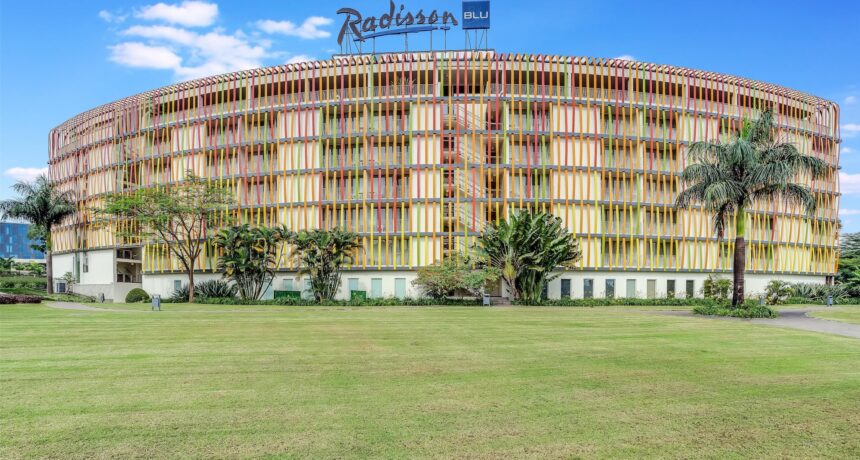

As Radisson Blu Hotel & Convention Centre, Kigali marks its tenth anniversary, its legacy extends beyond hospitality to nation branding, business tourism and Rwanda’s economic transformation
When the Radisson Blu Hotel & Convention Centre, Kigali opened its doors in 2016, it represented far more than the launch of another luxury hotel. It was a strategic investment in Rwanda’s ambition to position itself as Africa’s premier destination for business tourism, international conferences and high-level diplomacy. Ten years later, that ambition appears increasingly realised.
Celebrating its tenth anniversary under the theme “Celebrating a Decade of Excellence, Innovation and Community Impact,” the landmark property has become one of Rwanda’s most recognisable hospitality assets and an important pillar of the country’s Meetings, Incentives, Conferences and Exhibitions (MICE) strategy. Over the past decade, the hotel and convention centre has hosted heads of state, multinational corporations, international organisations, global sporting events, cultural festivals and thousands of delegates from around the world, reinforcing Kigali’s reputation as one of Africa’s fastest-growing conference destinations.
The anniversary celebrations extended beyond commemorating operational success. Designed around the themes of legacy, innovation and community impact, the programme reflected the broader role the property has played in Rwanda’s economic and social development. Legacy Week featured a ten-day celebration highlighting the hotel’s contribution to national growth, while the Legacy Gala convened approximately 350 government officials, business leaders, development partners and industry stakeholders. The accompanying KCC Impact Programme showcased a series of sustainability and community initiatives designed to demonstrate the hotel’s continuing commitment to responsible hospitality.
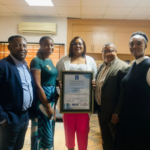
Among the initiatives marking the anniversary were the planting of one hundred trees, community engagement with SOS Children’s Villages, a Youth Career Day aimed at nurturing future hospitality professionals, employee wellness activities and recognition of long-serving staff members. The celebrations also included the launch of a documentary entitled “10 Years of Impact,” chronicling the property’s evolution and highlighting its contribution to tourism, employment, international conferences and Rwanda’s wider economy.
According to Sandra Kneubühler, Managing Director for Sub-Saharan Africa at Radisson Hotel Group, the anniversary reflects not only the dedication of employees and the confidence of partners but also Rwanda’s strategic vision for developing a globally competitive hospitality sector. She noted that the Group remains committed to supporting the country’s tourism ambitions, developing local talent and creating lasting value for surrounding communities.
Similarly, Nice Uwase, Acting General Manager of Radisson Blu Hotel & Convention Centre, Kigali, said the milestone provided an opportunity to celebrate past achievements while focusing on future growth through continued investment in people, partnerships and guest experiences.
After a decade of operation, the Radisson Blu Hotel & Convention Centre has evolved beyond its original commercial purpose. It now occupies a central place within Rwanda’s national development narrative as both an internationally recognised events venue and a symbol of the country’s economic transformation.
BrandiQ Analysis
The tenth anniversary offers an opportunity to assess the broader strategic significance of the property beyond conventional hospitality metrics. Its contribution should be understood within the context of nation branding, economic diplomacy and experience-led economic development. Rwanda recognised early that attracting conferences, investment forums and international institutions requires more than efficient airports and good roads. It also requires globally competitive venues capable of hosting complex international events to world-class standards. The Radisson Blu Hotel & Convention Centre has become one of the principal physical assets supporting that national strategy.
The property’s evolution also illustrates the growing economic importance of the MICE industry across Africa. Business tourism generates substantially higher economic value than leisure tourism because delegates typically spend more on accommodation, transport, restaurants, retail, entertainment and professional services. Conferences also stimulate investment conversations, policy dialogue, knowledge exchange and commercial partnerships that extend well beyond the duration of individual events. Every successful international conference therefore creates economic value both directly and indirectly, making convention infrastructure an increasingly important component of national competitiveness.
Equally significant is the role of hospitality as soft power. Rwanda has carefully positioned itself as a country defined by efficiency, safety, innovation and good governance. International visitors often experience these national attributes through hospitality establishments before engaging with any other aspect of the economy. Hotels, convention centres and conference venues therefore become practical expressions of national identity. In this sense, Radisson Blu Kigali functions not merely as a commercial enterprise but also as a strategic instrument of Rwanda’s international image.
The anniversary programme’s emphasis on sustainability, youth development and community engagement reflects another important transformation within the global hospitality industry. Increasingly, successful hotel brands are evaluated not solely by occupancy rates or financial performance but also by their environmental stewardship, workforce development and social contribution. By integrating tree planting, youth career development and community partnerships into its anniversary celebrations, the property aligns itself with broader Environmental, Social and Governance (ESG) expectations that increasingly influence investor confidence, customer loyalty and brand reputation.
Perhaps most importantly, the property demonstrates the relationship between vision and consistency. Rwanda’s emergence as one of Africa’s leading conference destinations did not occur because of a single event or infrastructure project. It reflects years of coordinated investment in aviation, security, digital infrastructure, conference facilities, tourism promotion, visa policies and institutional capacity. The Radisson Blu Hotel & Convention Centre has become one visible manifestation of that long-term national strategy.
Lessons for Nigeria
Nigeria possesses one of Africa’s largest hospitality markets and hosts numerous business events each year, yet it has not fully leveraged business tourism as a strategic instrument of national economic development. Lagos, Abuja and several state capitals have the market size, corporate presence and international connectivity to compete more aggressively for regional and global conferences. Achieving this, however, requires greater coordination between government, tourism authorities, convention bureaux, airlines, hospitality operators and the private sector.
Rwanda’s experience demonstrates that successful business tourism is not built around hotels alone. It is built around an integrated national proposition that combines infrastructure, efficient public institutions, security, seamless visitor experiences and consistent international marketing. Nigeria already possesses many of these assets individually. The challenge is integrating them into a coherent national MICE strategy capable of attracting more international conventions, exhibitions and corporate events. As Africa’s largest economy seeks to diversify beyond hydrocarbons, business tourism represents an underutilised opportunity for investment promotion, job creation and global influence.
BrandiQ Verdict
The Radisson Blu Hotel & Convention Centre, Kigali’s tenth anniversary is ultimately not just a hospitality milestone. It is evidence of how strategic infrastructure can reinforce national ambition. Over the past decade, the property has helped transform Kigali from an emerging capital into one of Africa’s most respected destinations for international conferences and business events. Its legacy demonstrates that hotels can become more than places to stay; they can become platforms for economic diplomacy, nation branding and sustainable development. For African countries seeking to strengthen their global competitiveness, Rwanda’s experience offers a valuable lesson: destination leadership is built not simply by attracting visitors, but by creating experiences that continuously strengthen a nation’s reputation long after delegates return home.