


As mining, manufacturing and industrial businesses confront rising demands for productivity, safety, sustainability and digital transformation, Electra Mining Africa is positioning itself as more than an exhibition: it is becoming a marketplace for the technologies, skills and partnerships that could shape Africa’s next industrial era.
Africa’s industrial future will not be determined by natural resources alone. The ability to extract, manufacture, transport and process those resources more efficiently – and increasingly with the help of automation, artificial intelligence, robotics and digital systems – will determine how much economic value African economies are able to capture. Against that backdrop, Electra Mining Africa 2026, scheduled for 7–11 September at the Johannesburg Expo Centre in Nasrec, Johannesburg, is bringing together more than 1,000 predominantly local exhibitors alongside international companies, industry organisations, technical specialists and business decision-makers.
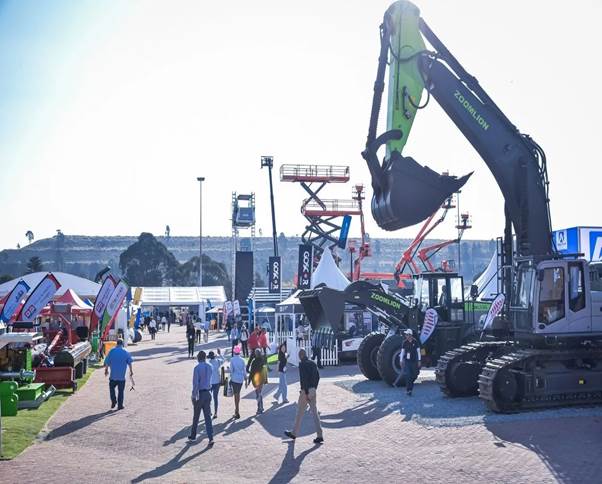
The scale of the exhibition reflects the changing technological requirements of African industry. Electra Mining Africa has expanded its footprint by 4,000 square metres to a record 44,000m² of net exhibition space, spread across six indoor exhibition halls and expanded outdoor display areas. The exhibition brings together six complementary sectors – mining, manufacturing, automation, electrical and power, transport and related engineering – creating an environment in which technologies that were traditionally viewed as separate are increasingly presented as parts of a connected industrial system.
That integration matters. A modern mine, factory or industrial operation does not depend on machinery alone. It depends on the ability of machines, software, energy systems, people, data and logistics to work together. The technologies being showcased at Electra Mining Africa -from artificial intelligence and robotics to digital manufacturing, predictive maintenance, automation and advanced engineering – therefore point to a broader transformation in the meaning of industrial productivity.
From machinery to intelligent industry
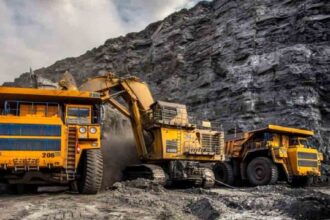
The exhibition’s significance lies partly in this movement from conventional industrial equipment towards increasingly intelligent and interconnected operations. Visitors will encounter large-scale mining equipment and industrial machinery alongside automation systems, AI, robotics, digital manufacturing, predictive-maintenance technologies, power solutions and advanced engineering services. Pumps, valves, welding and fabrication equipment, safety solutions, personal protective equipment, tools, components and specialist industrial services complete an ecosystem in which technology is increasingly expected to deliver measurable operational outcomes.
For African businesses, the attraction is not technology for its own sake. Industrial operators face practical challenges involving productivity, safety, energy consumption, equipment reliability, operational efficiency and sustainability. Technologies such as predictive maintenance, for example, can potentially help businesses identify equipment problems before they become costly failures, while automation and robotics can change how repetitive or hazardous tasks are performed. Digital systems can also provide managers with better information for making operational decisions.
This makes the exhibition as much about business transformation as technology. The question confronting industrial leaders is increasingly not whether a technology is sophisticated, but whether it solves a real problem, generates an acceptable return and can operate effectively within Africa’s particular infrastructure, skills and cost environment.
A marketplace for African industrial ambition
Electra Mining Africa has also become an important commercial meeting point. At the previous edition, industry professionals from 58 countries were represented, according to the supplied material, demonstrating the exhibition’s international reach and its potential role in connecting manufacturers, technology suppliers, distributors, buyers and decision-makers.
For exhibitors, such gatherings provide an opportunity to demonstrate products, strengthen relationships with existing customers, identify prospective buyers and develop distribution partnerships. For visitors, the value lies in being able to compare competing solutions, speak directly with technical specialists and examine both internationally recognised technologies and locally developed solutions designed for African operating conditions.
This commercial dimension is particularly important because Africa’s industrial transformation will require more than imported technology. It will require partnerships, local capabilities, distribution networks, skills and businesses capable of adapting technologies to local conditions. The exhibition therefore becomes a meeting place not merely for products but for industrial ecosystems.
Beyond the exhibition floor
The event’s programme also recognises that technology without knowledge and skills is unlikely to produce sustainable transformation. Free technical seminars hosted by the Southern African Institute of Mining and Metallurgy (SAIMM) will address operational challenges and emerging technologies, while the Society for Automation Instrumentation Mechatronics and Computer Engineering (SAIMC) will host specialist workshops focused on automation and mechatronics.
The wider programme extends into leadership, professional development and workforce development. WiMSA’s Women in Mining workshop will address leadership, opportunity and professional development, while the Lifting Equipment Engineering Association of South Africa (LEEASA) will host its two-day National Conference. The new SA Institution of Mechanical Engineering (SAIMechE) Skills and Career Hub is particularly significant because it connects industrial technology with the question of whether Africa possesses the human capital required to operate and develop it.
That question will become increasingly important as AI, robotics and automation penetrate industrial operations. The industrial transformation ahead is not simply a story about machines replacing people. It is also about people acquiring the skills to design, operate, supervise, maintain and govern increasingly sophisticated systems.
The Geological Society of South Africa Explorers Pitch, meanwhile, gives student teams an opportunity to present mineral exploration projects to an expert industry panel. Such initiatives underline the longer-term relationship between industrial innovation, education and the development of the next generation of technical talent.
Innovation must prove its value
The New Products and Innovation Awards provide another window into the changing industrial landscape. Adjudicated by the South African Capital Equipment Export Council (SACEEC), the awards assess entries against criteria including innovation, engineering excellence, research and development, product quality, technical expertise and practical value to industry.
That final criterion—practical value—is perhaps the most important. African industry does not need technological spectacle. It needs solutions that can survive real operating conditions, reduce costs, improve productivity, enhance safety and create measurable value. The strongest industrial technologies will therefore be those capable of moving from demonstration to deployment.
Charlene Hefer, Portfolio Director at Montgomery Group, the organisers of Electra Mining Africa, captures this broader purpose: “Industrial businesses are facing increasingly complex challenges that cannot be solved in isolation.” She says the exhibition brings together “the technologies, expertise and industry relationships” that can help organisations make informed decisions, identify practical solutions and build partnerships for long-term growth.
BrandiQ Analysis: Africa’s industrial technology test is implementation
The deeper significance of Electra Mining Africa is that it illustrates a fundamental shift in the African technology conversation. For years, discussions about digital transformation have often centred on consumer technologies – mobile money, e-commerce, social platforms, fintech and digital services. Those developments remain important, but Africa’s next phase of technological transformation will increasingly be judged by what technology does to the productive economy.
Mining, manufacturing, energy, logistics and construction are where technology can influence the productivity of physical capital at scale. AI that predicts equipment failure, robotics that improves workplace safety, automation that increases manufacturing precision, digital systems that reduce downtime and energy technologies that lower operating costs can ultimately affect the competitiveness of entire industries.
This is where the concept of the Fourth Industrial Revolution becomes more than a fashionable phrase. The real transformation occurs when digital intelligence becomes embedded in physical production. Sensors generate data; connectivity moves the data; AI interprets it; software informs decisions; automated systems execute some of those decisions; and humans remain responsible for managing the wider system.
For Africa, however, there is an important qualification. Technology adoption cannot be separated from infrastructure. AI and automation require reliable electricity, connectivity, computing capacity, cybersecurity, technical skills and appropriate regulatory frameworks. A highly sophisticated industrial technology operating inside an unreliable infrastructure environment may produce far less value than its specifications suggest.
The same applies to AI. The presence of AI on an exhibition floor does not necessarily mean that African industry has entered an AI-powered future. The real question is whether companies have the data, digital infrastructure, skills and governance mechanisms required to deploy AI responsibly and effectively.
There is also an economic question. Industrial technology must eventually pass the African return-on-investment test. Businesses operating under high energy costs, expensive financing, infrastructure constraints and skills shortages cannot simply replicate the technology strategies of large industrial economies. They need technologies whose economics make sense within their own operating environments.
That makes exhibitions such as Electra Mining Africa strategically important. They allow African businesses to move beyond abstract discussions about technological disruption and examine actual products, suppliers, applications and partnerships. The most consequential conversations may therefore happen not during the headline demonstrations, but between a mine manager and a technology supplier, a manufacturer and an automation specialist, or an educator and an industrial employer discussing the skills that the next decade will require.
The bigger industrial opportunity
Electra Mining Africa arrives at a moment when Africa needs to convert technological possibility into productive capacity. The continent possesses enormous mineral resources, a growing industrial base and increasingly sophisticated technology markets, but the economic value of these assets depends on the efficiency with which they can be connected to production, infrastructure, finance, skills and markets.
The exhibition’s 44,000m² footprint is therefore more than a measure of physical scale. It is a snapshot of an industrial economy in transition – from machines operating in isolation towards connected systems; from reactive maintenance towards predictive operations; from manual processes towards automation; and from traditional production models towards increasingly data-driven industry.
The real measure of Africa’s industrial technology future will not be how impressive the machines look on the exhibition floor. It will be how effectively African businesses take those technologies into mines, factories, power systems, logistics networks and workplaces – and turn innovation into productivity, competitiveness and economic value.