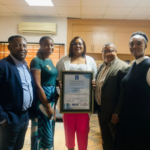


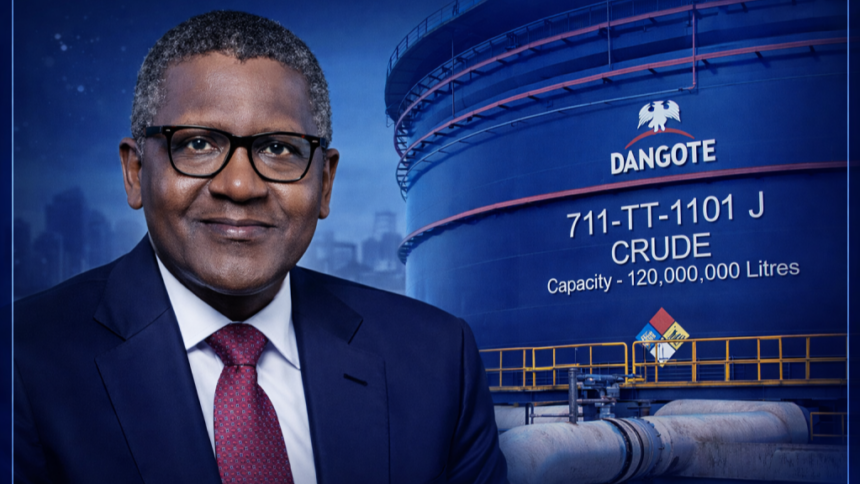

There are IPOs that raise money, and there are IPOs that raise a flag. On Monday in Lagos, Aliko Dangote made clear which one he intends to run. Signing the registration documents for the Dangote Petroleum Refinery and Petrochemicals (DPRP) public offer, Africa’s richest man did not lead with the transaction’s ₦2.15 trillion size or its $49 billion implied valuation. He led with a promise that his own drivers, cooks, and household staff would be able to own a piece of it. “This is the IPO for the people,” he said. “This is why we say that this is democratising.”
The Report
Dangote Petroleum Refinery and Petrochemicals is targeting 10 million retail investors for its ₦2.15 trillion initial public offering; a figure transaction advisers say represents roughly 20 times Nigeria’s current retail participation benchmark. The offer comprises 4.1 billion ordinary shares priced at ₦525 each, and is scheduled to open on September 14 and close on October 13, ahead of a planned listing on the Main Board of the Nigerian Exchange (NGX) in November.
The structure is deliberately built for mass participation. With a minimum subscription of just 10 shares, an investor can enter the offer for ₦5,250, roughly the cost of a modest weekly grocery run in Lagos. Chuka Eseka, Managing Director of Vetiva Capital Management, one of the transaction’s lead advisers, said the distribution would run entirely through electronic channels, banks, fintech platforms, and stockbrokers, without requiring investors to be physically present. He described it as the first Nigerian capital markets offer built specifically for digital subscription at this scale, allowing participation “from wherever they are” through a Bank Verification Number-linked process designed for both speed and security.
The scale of the ambition is easiest to see against the market’s own history. Advisers cited Nigeria’s current retail participation record at 131,000 investors in a single offer. The new target of 10 million represents a jump of roughly 76 times that figure, considerably larger than the “20 times” benchmark advisers used in their own framing, a discrepancy worth noting, since the two numbers appear to be measuring different baselines: one a single-offer participation record, the other likely a broader estimate of Nigeria’s total active retail investor base.
Dangote himself was explicit that raising capital was not the primary purpose of the offer. “If we want to raise money, we know how to raise money, and that’s why we have a limit,” he said, noting that had fundraising been the goal, the company would have floated a larger stake, roughly 20 percent of the company by his own estimate, rather than the narrow slice on offer now. The signed prospectus values the offer at approximately $1.6 billion against an implied company valuation of about $49 billion, meaning the shares on sale represent only around 3 percent of DPRP’s total equity. The offer includes an over-allotment option allowing the company to accept up to an additional 30 percent in demand, and a retail loyalty incentive under which qualifying investors who hold their shares for a prescribed period may receive up to two bonus shares.
The offer also carries Sharia-compliance certification, following an independent assessment of the refinery’s activities and products against Islamic finance standards, a detail transaction advisers say widens the pool of eligible investors both within Nigeria and across other African and Gulf-adjacent markets.
Dangote Refinery Chief Executive David Bird used the ceremony to confirm that the company’s planned expansion, from current refining capacity toward 1.4 million barrels per day, is fully funded, engineered and procured, with completion targeted for 2028, alongside plans to widen the refinery’s product range and build distribution infrastructure into other West African markets. “This is not just a refinery and petrochemical complex,” Bird said. “This is truly a pan-African energy platform.” Bird also disclosed that an earlier private capital raise, seeking $1 billion from private investors, drew demand of $3.7 billion, of which the company accepted $2.5 billion and returned $1.2 billion, evidence, he said, of the level of institutional appetite already validated well before this public offer was structured.
Dangote used the signing ceremony to trace the refinery’s origins, recalling a five-year search for a site that included three years and eight months at Olokola before the project moved to the Lekki Free Zone, a transition marked by community resistance in which, he said, a company associate, Mr. Dishi, lost his life amid conflict with residents before the company gained full access to the land. He credited former Lagos governors Babatunde Fashola and Akinwunmi Ambode, and current governor Babajide Sanwo-Olu, with supporting the project’s development. Framing the refinery as a continental rather than purely national asset, Dangote invoked imagery stretching from Guinea’s Simandou mines to Ethiopia’s Amhara farmland to Namibia’s Walvis Bay fisheries, and pointed to the Dangote Group’s expansion plans in Ethiopia, Kenya, Tanzania and Namibia as evidence of a wider industrialisation push under the group’s “Vision 2030” mantra.
Sotubo Oladele, Chief Executive of Stanbic IBTC Capital, one of the offer’s joint managers, offered the most measured line of the day: the real test, he said, will be whether the market can actually deliver the targeted investor numbers once the offer opens.
The BrandiQ Analysis
Strip away the ceremony, and this transaction is best understood as two offers layered inside one prospectus: a narrow, conventional equity float representing roughly 3 percent of a $49 billion company, and a much larger, more ambitious project in financial nation-building, one that treats shareholder count as the headline metric rather than capital raised.
The math behind the “20 times” claim does not fully add up, and that gap is itself informative. Advisers cited 131,000 as Nigeria’s current single-offer retail participation record, then set a target of 10 million, a jump of roughly 76 times, not 20. The more plausible explanation is that the “20 times” figure benchmarks against Nigeria’s total active retail investor base across the entire market, commonly estimated in the few-hundred-thousand range, rather than any single offer’s participation record. Whichever the intended comparison, presenting two ambitious but inconsistent multipliers in the same breath suggests the framing was chosen more for its rhetorical force, both numbers sound impressive, than for internal precision. For a transaction pitched explicitly around transparency and disclosure, that is a detail auditors and financial journalists should press on before the offer closes.
The valuation-to-float ratio reveals the real capital-markets story. A $1.6 billion raise against a $49 billion valuation is a free float of roughly 3 percent, extraordinarily narrow for a company aiming simultaneously for ten million shareholders. Narrow floats combined with enormous shareholder counts tend to produce thin, volatile secondary-market trading once the euphoria of the IPO settles, since a large number of small retail holders trading a small pool of available shares can move the price sharply on relatively modest volume. Investors attracted by the populist framing should understand that broad ownership and liquid, stable trading are not the same thing, and this structure optimises heavily for the former.
Dangote’s own words confirm the transaction is not primarily a financing exercise, which changes how it should be judged. His statement that the company “would have offered 20 percent of the company” if fundraising were the goal, paired with Bird’s disclosure that a prior private raise attracted $3.7 billion in demand against a $1 billion target, indicates DPRP could likely have raised its required capital privately, at lower transaction cost and complexity, without a mass retail offer at all. That the company chose the more complex, retail-heavy route instead signals the offer’s primary value to Dangote is reputational and political: converting a single family-controlled industrial asset into a broadly held national one, ahead of continued expansion into Ethiopia, Kenya, Tanzania and Namibia where the “African industrialist” narrative carries direct commercial value.
The scale of $49 billion deserves to be measured against Nigeria’s entire stock market, not just against the offer itself. Nigeria’s total stock market capitalisation has fluctuated in a range not dramatically larger than DPRP’s standalone implied valuation. A single listing of this size, even at a 3 percent float, introduces meaningful concentration risk into NGX index construction and trading dynamics, and raises a governance question worth tracking closely: how much influence will one family-controlled company’s single stock exert over the exchange’s headline indices and the portfolios of funds that track them.
The Sharia-compliance certification and digital, BVN-linked subscription process are the most durable innovations here, regardless of how the shareholder-count target performs. Both lower genuine structural barriers, religious and logistical, that have historically excluded segments of the population from Nigerian capital markets participation. If the digital subscription infrastructure works at scale, it will likely outlive this specific offer as a template other Nigerian issuers adopt, independent of whether DPRP actually reaches ten million shareholders.
The ultimate test is the one Oladele named openly: conversion, not intention. Populist IPO framing is not unique to Dangote; Saudi Aramco’s 2019 listing used remarkably similar national-pride language while maintaining an even narrower free float. The historical pattern in comparable retail-heavy privatisation and listing exercises, from British Gas’s 1986 “Tell Sid” Campaign onward, is that headline participation targets are announced with confidence and then quietly revised downward against actual subscription numbers once the offer window closes. Whether DPRP’s ten million target becomes a genuine watershed in African retail capital markets participation, or a memorable number from a signing ceremony that the final subscription count falls well short of, will be known within weeks of the September 14 opening, not months.