
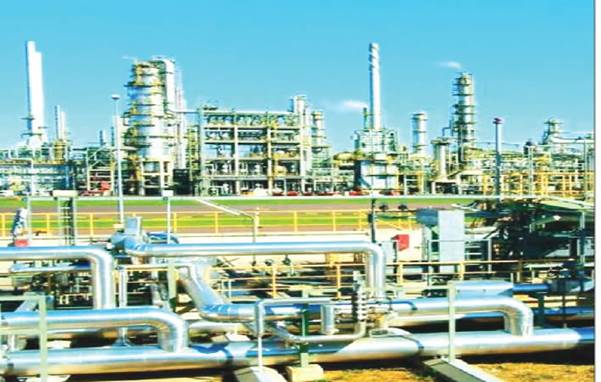

Proposed $17bn East African refinery signals new era for African industrialisation, energy security and global supply chains
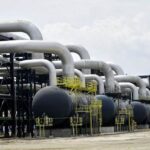
Aliko Dangote is once again attempting to redraw Africa’s industrial future. Barely a year after the successful operational launch of the 650,000 barrels-per-day Dangote Refinery in Lagos, Africa’s richest businessman is now considering Kenya as the preferred destination for a proposed $15bn to $17bn refinery project in East Africa.
The proposed refinery, expected to process 650,000 barrels of crude oil daily, could become one of the largest industrial investments ever contemplated in East Africa and may fundamentally alter regional energy trade, geopolitical influence, and investor flows across the continent.
Speaking in an interview with the Financial Times, Dangote disclosed that Kenya’s coastal city of Mombasa currently holds strategic advantages over Tanzania’s Tanga port, which was previously considered for the project.
“I am leaning more towards Mombasa because Mombasa has a much larger, deeper port,”
Dangote reportedly said, while also emphasising Kenya’s larger consumer market and stronger commercial potential.
A Strategic Shift in Africa’s Energy Politics
The proposed investment comes at a pivotal moment for Africa’s energy and industrial landscape.
Global supply chain disruptions, geopolitical tensions in the Middle East, and recurring instability around the Strait of Hormuz have exposed the vulnerabilities of countries that rely heavily on imported refined petroleum products. East African nations currently import most of their fuel requirements, making the region highly exposed to external price shocks and supply disruptions.
Dangote’s move therefore goes beyond a business expansion. Analysts say it reflects a broader continental shift toward energy sovereignty, industrial self-sufficiency, and regional value addition.
The success of the Lagos refinery has already started changing perceptions about Africa’s industrial capabilities. For decades, many African countries exported crude oil while importing refined fuel at higher costs, creating structural trade imbalances and exposing their economies to foreign exchange pressures.
The Lagos refinery disrupted that model.
Now, the proposed East African refinery could trigger a second wave of regional industrial transformation.
Why Kenya Matters
Kenya’s emergence as the likely destination carries important geopolitical and economic implications.
Unlike many African economies, Kenya possesses several strategic advantages attractive to long-term industrial investors:
- Stronger logistics infrastructure
- Access to the Indian Ocean trade corridor
- A relatively diversified economy
- Expanding consumer markets
- Regional financial influence within East Africa
- Strategic access to landlocked neighbouring economies
Mombasa’s deep seaport also provides critical commercial advantages for crude imports and refined product exports across East and Central Africa.
Equally important is Kenya’s positioning as a gateway into the East African Community market, which offers access to more than 300 million consumers.
For international investors, the refinery proposal signals that East Africa may be entering a new phase of industrial-scale infrastructure development capable of attracting global capital beyond traditional extractive industries.
Implications for Global Investors
The proposed refinery project sends a strong signal to institutional investors, sovereign wealth funds, commodity traders, infrastructure financiers, and energy companies worldwide.
Several investment implications are emerging.
Africa’s Refining Gap Is Becoming a Major Opportunity
Africa remains one of the world’s most under-refined energy regions despite possessing substantial crude oil reserves. This imbalance has created enormous opportunities in:
- Refining infrastructure
- Petrochemicals
- Logistics and shipping
- Energy trading
- Storage facilities
- Aviation fuel supply
- Fertiliser production
- Industrial manufacturing ecosystems
Dangote’s expansion strategy demonstrates growing confidence that African industrial infrastructure can generate globally competitive returns.
Energy Security Is Becoming an Investment Theme
The recent disruptions linked to Middle East tensions have renewed global interest in regional energy resilience.
Countries and investors are increasingly prioritising supply chain localisation rather than excessive dependence on distant external markets. The refinery proposal aligns with this broader global trend.
Analysts say future capital flows may increasingly favour projects that strengthen regional self-sufficiency in strategic sectors such as energy, food systems, logistics, and digital infrastructure.
African Private Capital Is Gaining Global Influence
The refinery project also represents a deeper transformation within Africa’s private sector itself.
Historically, large-scale infrastructure projects across Africa were dominated by governments, multilateral institutions, or foreign corporations. Dangote’s expansion signals the growing emergence of African private capital as a major force capable of executing globally significant industrial projects.
This could reshape how global investors assess African entrepreneurial capacity and long-term infrastructure risk.
Tanzania, Kenya and the Battle for Industrial Dominance
The refinery proposal has already exposed growing competition among African economies seeking to attract transformative industrial investments.
Reports of diplomatic tensions between Kenya and Tanzania following public discussions around the refinery underscore how strategic such investments have become.
For African governments, the Dangote refinery proposal offers a broader lesson:
Industrial capital increasingly flows toward countries capable of providing:
- Regulatory stability
- Policy consistency
- Infrastructure support
- Investment protection
- Efficient logistics systems
- Clear energy frameworks
Dangote himself stressed that no refinery can survive without government support and protection against unfair import competition from heavily subsidised global suppliers.
This highlights one of the central debates shaping industrial policy globally: balancing free trade with strategic domestic industrial protection.
What This Means for Nigeria
For Nigeria, Dangote’s East African expansion carries both symbolic and economic significance.
The operational success of the Lagos refinery has already strengthened Nigeria’s energy security, reduced dependence on imported fuel, and improved regional export potential.
Now, Dangote’s ambition to replicate the model internationally elevates Nigeria’s position within Africa’s industrial ecosystem.
It also reinforces a larger narrative increasingly gaining attention globally: that Africa’s future economic transformation may be driven less by governments alone and more by large-scale private industrial ecosystems capable of competing internationally.
Dangote’s planned expansion of the Lagos refinery from 650,000 barrels per day to 1.4 million barrels per day within the next 30 months further signals confidence in Africa’s long-term energy demand despite the global transition toward cleaner energy systems.
The Global Economic Context
The proposed refinery project arrives at a time when the global economy itself is undergoing structural transformation.
Energy markets are being reshaped simultaneously by:
- Geopolitical instability
- Decarbonisation pressures
- Supply chain fragmentation
- AI-driven industrial systems
- Rising commodity nationalism
- Competition for strategic infrastructure
Within this environment, Africa’s large consumer markets, youthful population, and underdeveloped industrial base are increasingly attracting long-term strategic interest from global investors.
The Dangote refinery expansion may therefore represent more than a petroleum investment. It may signal the rise of a new African industrial doctrine built around regional integration, infrastructure sovereignty, and continental value addition.
BrandiQ Intelligence
The proposed Kenya refinery project is not simply about oil. It is about power, industrial influence, supply chain control, and Africa’s place within the future global economy.
For decades, Africa largely exported raw materials while importing refined products, industrial goods, and technological systems at premium costs. Dangote’s refinery strategy challenges that model directly.
If successful, the project could accelerate a wider continental push toward industrialisation, deepen intra-African trade under the African Continental Free Trade Area framework, and strengthen Africa’s bargaining power within global energy markets.
More importantly, it signals to global investors that Africa may no longer be content remaining merely a supplier of raw commodities. The continent increasingly wants to control processing, pricing, logistics, and industrial value chains itself.