

Nigeria’s infrastructure deficit has once again taken centre stage, with the Minister of Finance and Coordinating Minister for the Economy, Olawale Edun, disclosing a $14bn annual investment gap – an urgent funding shortfall that continues to shape the country’s development trajectory.
Edun made this known in Lagos during the signing of the 2026–2028 partnership agreement between Nigeria and the Islamic Development Bank Group, represented by its head, Anasse Aissami, at the IsDB Group Day in Nigeria.
Framing the gap as both a challenge and an opportunity, the minister emphasised that bridging the $14bn deficit requires a deliberate pivot toward strategic partnerships capable of unlocking large-scale, transformative infrastructure projects. Central to this effort is the Federal Government’s Renewed Hope Infrastructure Development Fund, positioned as a key vehicle for mobilising capital into critical sectors.
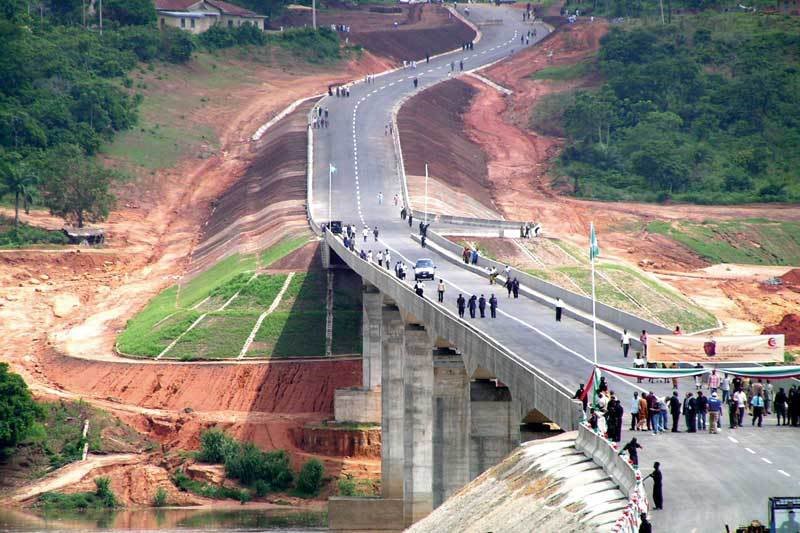
According to Edun, the partnership with the Islamic Development Bank Group is designed to drive financing across priority areas including roads, rail, ports, energy, agriculture, and digital infrastructure – sectors widely regarded as the backbone of economic productivity and national competitiveness.
“Our strategic partnership with IsDB is to move our priorities to action through scalable, large-scale, transformative projects and initiatives. We have a very important alignment and partnership with IsDB, and it is anchored on two strategic pillars: sustainable infrastructure for economic transformation.
“We are addressing in Nigeria many estimates, one of which is that there is a $14bn annual infrastructure investment gap, and that is being addressed through initiatives such as the Renewed Hope Infrastructure Fund. There are major highways, ports, and rail projects that are being undertaken.
“With IsDB support, we are advancing energy access, renewable power, transport and logistics mobilisation, agriculture productivity and food security, and digital infrastructure, innovation, automation and creative industries,” he said.
Beyond physical infrastructure, the collaboration extends into human capital development, with planned investments in health, education, and social impact programmes—underscoring a broader, more integrated approach to national development.
Edun reiterated the government’s commitment to ensuring that infrastructure expansion translates into tangible socio-economic outcomes, including job creation, poverty reduction, and improved living standards. With Nigeria’s population growth accelerating infrastructure demand, he noted the urgent need to scale investments while strengthening social protection systems.
The initiative also aligns with the Federal Government’s declaration of 2026 as the Year of Social Development, a policy thrust aimed at driving inclusive growth through targeted programmes and economic participation.
“2026 is Nigeria’s Year of Social Development through initiatives such as the World Development Programme aimed at bringing up to 10 million Nigerians into productive economic activities with a strong emphasis on jobs and private sector participation. The reason is that this growth has to be sustainable, inclusive, and rapid. This will be achieved through innovative and ethical financing.
“In Nigeria, 2026 has been declared the Year of Social Development, and through programmes such as the World-Based Development Programme, whereby millions are identified in the 774 local governments and 8,809 wards, individuals involved in small, medium and micro enterprises are to be supported and empowered to be more productive to take advantage of our good land and domestic market to produce more and sell more to the Africa-wide market.
“We continue to lead the way in the use of Sukuk and other Islamic finance instruments, particularly for infrastructure delivery, and we are looking to expand this approach to securitising public assets, leveraging blended finance and de-risking private investment in housing, digital services, and the creative economy. Our objective is to position Nigeria as a leading hub for innovative and Islamic finance in Africa. We are up there in terms of financial capacity and capital market, and we intend to grow on that to take a leading role.”
In a significant policy shift, the minister acknowledged the limitations of public financing, noting that government resources account for only a fraction of the economy. This reality is driving a transition toward private sector-led investment models, supported by innovative financing instruments such as Sukuk, asset securitisation, and blended finance structures.
“We are looking at the fact that public financing has its limitations. The government only has so much. In fact, the government is only 10 per cent of the economy; 90 per cent of this economy is the private sector.
“So we need to move from reliance on public to private capital-led growth; from traditional borrowing to innovative financing instruments; from risk exposure to risk sharing and de-risking mechanisms. In simple terms, Nigeria is repositioning itself as a destination for scalable, bankable investment,” Edun added.
The evolving strategy reflects a broader ambition to reposition Nigeria as an attractive investment destination, supported by ongoing macroeconomic reforms aimed at stabilising the economy. According to Edun, these reforms – including the removal of longstanding distortions – are beginning to yield results, with early signs of moderating inflation and improving investor confidence.
For business leaders and brand strategists, the implications are far-reaching. Infrastructure is not merely a public sector concern; it directly shapes market access, supply chain efficiency, cost structures, and ultimately, customer experience. As Nigeria recalibrates its financing model, the intersection of policy, capital, and infrastructure delivery will define the next phase of economic growth—and the competitive landscape for brands operating within it.