


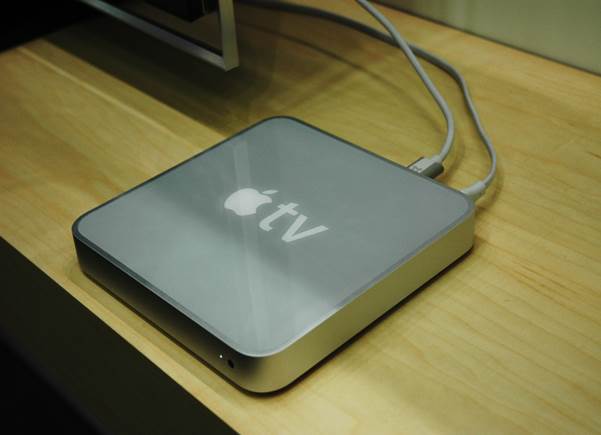

Code references suggest Apple is preparing Siri AI for Apple TV, but the bigger question is whether the company is preparing a new device – or another upgrade cycle in which AI becomes a reason to buy new hardware.
Apple’s artificial-intelligence strategy appears to be moving beyond the smartphone, computer and wearable into the living room. References reportedly discovered in Apple’s tvOS 27 software code suggest that Siri AI may be coming to Apple TV, although Apple has not publicly confirmed when the feature will arrive or which existing devices will support it. The development is significant because Apple’s next-generation Siri, unveiled at WWDC26, is designed to be substantially more capable than the traditional voice assistant, with personal-context awareness, broader knowledge and the ability to perform actions across applications.
The immediate evidence comes from the software rather than from Apple itself. The technology publication Macworld reported in June that tvOS 27 beta code contained Apple Intelligence-related references, while 9to5Mac subsequently reported additional references to Apple’s next-generation Siri experience in the tvOS ecosystem. The reports do not establish precisely how Siri AI would operate on Apple TV, but they strengthen the case that Apple is preparing its television and smart-home platforms for the technology.
The timing is particularly interesting because Apple did not prominently feature Apple TV when it introduced Siri AI at WWDC26. Apple described the new assistant as deeply integrated into iPhone, iPad, Mac, Apple Watch and Vision Pro, while its broader WWDC announcement covered tvOS 27 as part of the company’s next generation of operating systems. Apple said Siri AI would initially be available in beta to users with supported devices later in the year.
The apparent omission of Apple TV now looks less like an abandonment of the platform than a possible staging strategy. Apple may be waiting for hardware capable of supporting the more demanding AI architecture. That possibility has been reinforced by reporting that current Apple TV hardware may not have the processing capability required for Apple Intelligence, while new Apple TV and HomePod hardware has been widely expected.
The hardware question could be more important than the software
For consumers, the most consequential question is therefore not simply whether Siri AI is coming to Apple TV. It is whether existing Apple TV owners will get it.
Apple’s current television hardware is considerably older than the AI architecture it is now attempting to deploy across its ecosystem. Reports indicate that existing Apple TV models are unlikely to support the full Siri AI experience because of hardware limitations, making a new generation of Apple TV hardware a plausible requirement. The public tvOS 27 beta released in July initially did not include Siri AI, even though it introduced other software improvements.
This distinction matters because Apple’s AI strategy is increasingly becoming a hardware strategy as well. Apple Intelligence is not simply another cloud service that can be switched on across every existing product. Apple says its next-generation architecture uses on-device foundation models together with Private Cloud Compute, creating hardware and processing requirements that influence which products can participate.
That creates a familiar but increasingly important commercial dynamic in consumer technology: software innovation can become a catalyst for hardware replacement.
A television streaming box that already delivers Netflix, Apple TV+, YouTube and other services may be difficult to sell on faster animations or incremental interface improvements. AI provides a more compelling proposition. If Siri can understand what is on screen, remember context, search across content and control connected devices conversationally, the Apple TV begins to move from being merely a streaming accessory towards becoming an intelligent interface for the home.
From remote control to conversational television
The potential transformation is substantial. Imagine a viewer asking Siri to find “something like the film we watched last Saturday, but shorter and suitable for the children”, rather than navigating menus and streaming-service interfaces. Or asking the television to identify an actor, explain a scene, adjust the lighting and order something related to what is being watched.
These possibilities are consistent with the broader direction Apple has already established for Siri AI. Apple says the new assistant can understand personal context, interact with information across applications, answer questions using broad world knowledge and perform system-wide actions.
The television could therefore become another endpoint in what Apple has described as a more unified computing environment. The strategic attraction is obvious: if Siri behaves consistently across an iPhone, Mac, Watch, Vision Pro and television, the value of the Apple ecosystem increases because each device becomes part of the same intelligent environment.
This is where the reported “One Siri” ambition becomes commercially important. The assistant itself becomes the connective tissue between Apple’s hardware categories rather than merely a feature attached to individual products.
BrandiQ Analysis: Apple is not just adding AI to television
The deeper story is not Siri’s arrival on Apple TV. It is the continuing transformation of AI from a product feature into an ecosystem strategy.
For years, consumer electronics companies competed largely through specifications: processor speed, screen quality, camera resolution, battery life and storage. AI is changing the basis of competition. The winning product may increasingly be the one that understands the user’s context and coordinates the devices around him or her.
Apple is particularly well positioned for this because it controls the operating systems, hardware, applications and increasingly the intelligence layer that connects them. The strategic advantage is not simply having a better voice assistant. It is having an assistant that knows the user’s devices, preferences and digital environment.
That is powerful brand architecture.
Apple’s greatest competitive asset has always been the relationship between its products rather than any single product in isolation. Siri AI could deepen that relationship by making the ecosystem feel intelligent rather than merely interconnected.
The Apple TV therefore becomes strategically more interesting. It could become a household AI interface, connecting entertainment, smart-home controls and personal computing through a conversational layer.
But AI could also create Apple’s next upgrade dilemma
There is a less comfortable side to the story. Apple has built enormous brand equity around longevity, integration and the perception that buying an Apple product is a relatively safe long-term investment. If consumers discover that meaningful AI capabilities require a new processor or new hardware, the company will have to balance technological progress against customer expectations.
This is particularly important for products such as Apple TV, where consumers may not perceive an immediate need to replace a perfectly functional device. A new processor becomes much easier to sell if the consumer believes that the old device cannot participate in the next generation of computing.
That makes AI a potential upgrade engine.
But it also creates a brand communication challenge. Apple will have to explain why the limitation is technological rather than merely commercial. The distinction will matter to a customer who bought an Apple TV expecting years of software support.
The company has already demonstrated that Apple Intelligence availability depends on hardware. Its official compatibility requirements exclude many older devices, reinforcing the idea that the AI transition is partly a generational hardware transition.
The living room may become the next AI battleground
The significance extends beyond Apple. Amazon, Google and other technology companies have spent years trying to establish intelligent assistants as interfaces for the connected home. Apple has historically had enormous consumer reach but has been slower to turn its television and smart-home products into a truly intelligent platform.
Siri AI could change that.
If Apple succeeds in bringing contextual intelligence to the television, the TV screen may become one of the most important interfaces through which consumers interact with AI. The living room is particularly attractive because it combines entertainment, commerce, communication and increasingly smart-home control.
For marketers, this raises an intriguing possibility. Advertising and branded content could eventually become more conversational and contextual. Instead of searching for a film, programme or product through menus, consumers may increasingly ask an AI assistant to recommend something. The question then becomes: who gets recommended, and according to what logic?
That takes the AI discussion beyond convenience into questions of platform power, discoverability, data, commercial influence and governance.
BrandiQ Verdict
The reported Siri AI references in tvOS 27 should therefore be treated as strong evidence of preparation, not yet as a confirmed consumer launch. Apple has not publicly announced that Siri AI will arrive on Apple TV in the form suggested by these reports, and the available evidence does not yet establish whether existing Apple TV hardware will support it.
But the direction of travel is increasingly clear. Apple is attempting to turn Siri from a voice command utility into an intelligent layer connecting its ecosystem. If Apple TV becomes part of that architecture, the television could evolve from a passive entertainment terminal into an AI-controlled gateway to the digital home.
For Apple, that would be more than a software upgrade. It would strengthen the strategic logic of owning multiple devices around the consumer.
For consumers, however, the unanswered question remains crucial: will AI make the Apple TV they already own more valuable – or give Apple another reason to sell them a new one?
That question may ultimately determine whether Siri AI becomes Apple’s next great ecosystem advantage or simply another milestone in the industry’s accelerating cycle of AI-driven hardware upgrades.