


On an April evening in Lagos, a familiar corporate ritual was quietly rewritten. What might once have been a conventional brand activation became something far more deliberate: a carefully constructed cultural moment. At the Balmoral Convention Centre, Desperados Beer, in partnership with Roadblock Party, staged an immersive rave that reveals how brand building in Nigeria is shifting from visibility to experience.
This was not merely a party. It was an argument about the future of marketing.
From Advertising to Experience
For decades, alcohol brands in Nigeria relied on a predictable formula: television commercials, billboards, celebrity endorsements, and periodic nightlife sponsorships. The objective was reach. The metric was recall.
But as younger consumers migrate from passive media to participatory culture, that model is losing its force. What Desperados executed in Lagos reflects a different strategic logic. It is not enough to be seen; brands must now be felt, lived, and shared.
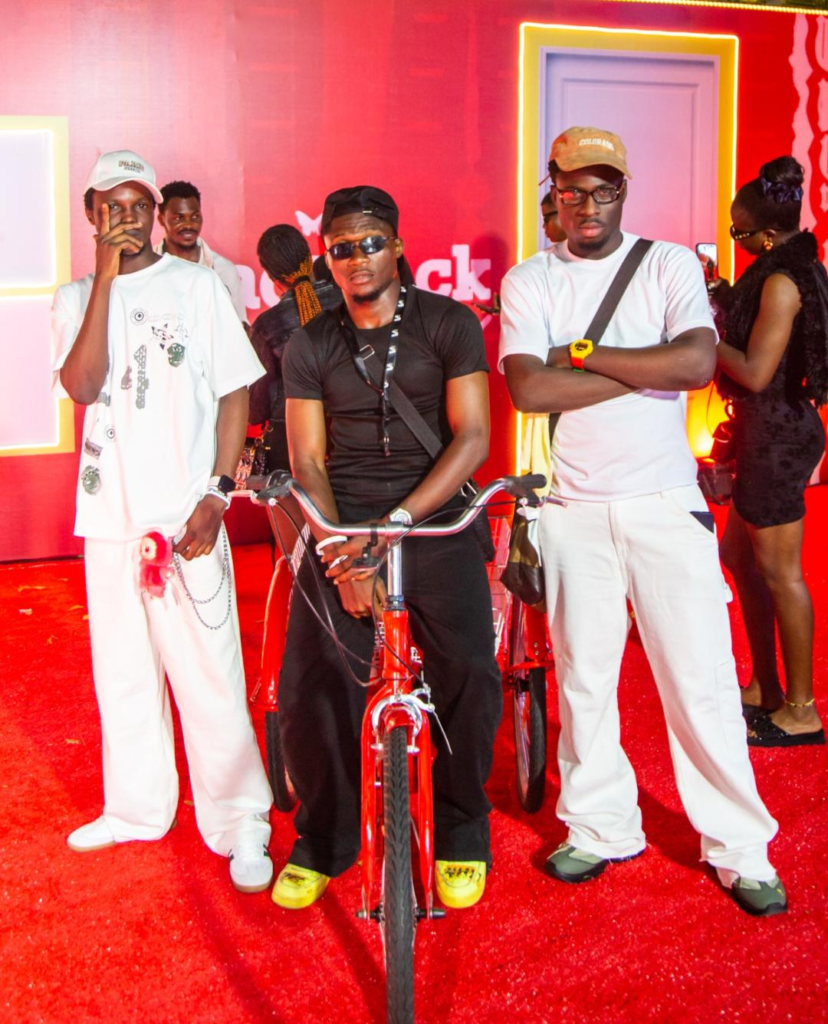
The Roadblock Party embodied this transition. From the outset, the aesthetic was tightly controlled. Guests arrived dressed in coordinated “all-white” and “all-black” themes, transforming the venue into a visual installation as much as a social gathering. This was not accidental styling. It was brand choreography.
Inside, the experience unfolded in layers. A tattoo studio offered spontaneous self-expression. Music was continuous, not episodic. The environment encouraged participation rather than observation. In effect, the brand receded into the background while shaping every foreground interaction.
The Architecture of Cultural Relevance
At the centre of the experience was music, still the most powerful cultural currency among young Nigerians. A rotating lineup of DJs, including DJ Neptune and DJ Spinall, sustained momentum deep into the night. But even this was more than entertainment. It was infrastructure.
Music here functioned as a unifying language, binding a fragmented audience into a shared emotional rhythm. In doing so, it enabled what traditional advertising rarely achieves: collective immersion.
The presence of Gideon Okeke as host added a layer of narrative continuity. His role was less about celebrity appeal and more about energy management, guiding the audience through transitions and sustaining anticipation.
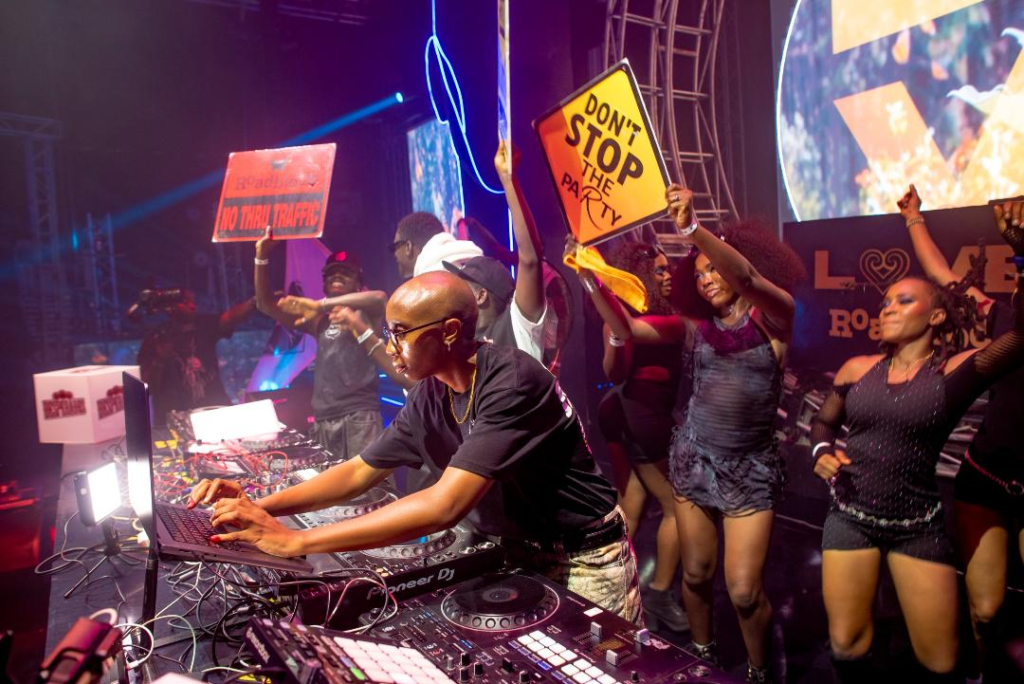
Yet the most telling feature of the night was not the performances themselves, but the mechanisms of participation built around them.
Participation as Strategy
One of the standout moments was the “Next Rated DJ” competition, a talent pipeline embedded within the event. Emerging DJs were invited to submit sets, remix tracks, and compete for visibility. The eventual winner, DJ Frizzy, walked away with both a cash prize and cultural validation.
This is a subtle but important shift. Rather than importing relevance through established celebrities, the brand is co-creating it with its audience. It is turning consumers into contributors.
Similarly, incentives for creative dressing, including vouchers and merchandise, were not mere giveaways. They were behavioural nudges, encouraging attendees to perform the brand’s ethos of boldness and individuality.
In this sense, the event operated as a social laboratory. It tested how far a brand can go in shaping not just what people consume, but how they present themselves and interact with one another.
The Psychology of Belonging
What Desperados appears to understand, perhaps more clearly than many of its competitors, is that Gen Z consumption is deeply psychological. It is less about product attributes and more about identity formation.
Young consumers are not simply buying drinks. They are buying into communities, narratives, and moments that reflect who they believe they are or aspire to be.
The Roadblock Party tapped into this dynamic by creating a temporary community defined by shared codes: dress, music, language, and behaviour. Within that space, individuality was encouraged, but within a curated framework.
This balance between freedom and structure is what makes such experiences powerful. Too much control stifles expression. Too little dissolves coherence. The success of the event lay in managing that tension.
Implications for Brand Strategy in Nigeria
The Lagos rave is part of a broader shift in African marketing, where brands are increasingly positioning themselves as cultural producers rather than mere advertisers.
Three implications stand out.
First, events are becoming primary media channels. In an environment where digital attention is fragmented, physical experiences offer depth of engagement that screens cannot replicate. A single well-executed event can generate more authentic content and social amplification than weeks of paid advertising.
Second, community is replacing audience. Traditional marketing speaks to people. Experiential branding invites them in. The difference is not semantic; it is strategic. Communities generate loyalty, advocacy, and organic growth.
Third, culture is now the battleground. Brands that succeed are those that embed themselves within the rhythms of music, fashion, and social interaction. Those that remain outside these ecosystems risk irrelevance.
The Economics of Experience
There is, of course, a cost to such ambitions. Experiential marketing is resource-intensive. Venues, talent, production, logistics, and curation all require significant investment.
Yet the returns are increasingly measurable, if not always in immediate sales. Social media amplification, user-generated content, and long-term brand affinity provide a different kind of capital. One that compounds over time.
For a brand like Desperados, the objective is not just to sell more beer in the short term, but to position itself as the default choice within a specific cultural segment. That is a longer game, but a more defensible one.
A Template for Expansion
The decision to extend the Roadblock Party to other cities, including Port Harcourt and Owerri, suggests that this is not a one-off experiment but a scalable model.
The challenge will be maintaining authenticity while expanding reach. What feels organic in Lagos may feel contrived elsewhere if not carefully adapted to local nuances.
But if executed well, the model offers a blueprint for how brands can build national presence through decentralised cultural touchpoints rather than uniform campaigns.
A New Grammar of Branding
What unfolded in Lagos is part of a larger transformation in how brands communicate. The grammar is changing.
Where once the emphasis was on messaging, it is now on moments. Where once brands sought attention, they now seek participation. Where once campaigns were episodic, they are now continuous, embedded within the fabric of everyday culture.
Desperados’ collaboration with the Roadblock Party illustrates this evolution with unusual clarity. It shows that in contemporary Nigeria, relevance is no longer declared. It is experienced.
And in a market defined by youth, creativity, and constant reinvention, that may be the only form of branding that endures.