


Industry leaders say effective execution, stronger governance and investor confidence are essential to unlocking Nigeria’s energy potential and accelerating economic growth
Nigeria’s leading energy experts have called on the Federal Government to shift its focus from announcing reforms to implementing them effectively, warning that the country’s vast energy resources will continue to deliver limited economic value unless policy execution improves.
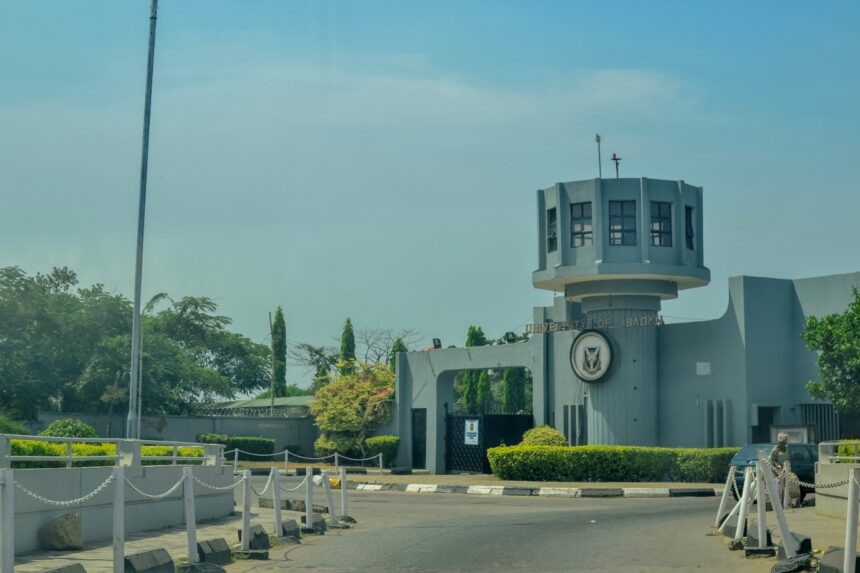
The call was made at the Annual Personality Lecture organised by the Centre for Petroleum, Energy Economics and Law (CPEEL), University of Ibadan, where academics, policymakers and industry leaders examined Nigeria’s transition towards a more competitive energy market under the theme, “Nigeria’s Transition to Competitive Energy Markets: Lessons from Reform and the Road Ahead.”
Delivering the keynote address, Chief Financial Officer of Seplat Energy Plc, Eleanor Adaralegbe, said Nigeria has made significant progress in introducing reforms across the energy sector but must now demonstrate greater commitment to implementation. “Reform creates opportunities, but execution creates value,” Adaralegbe said.
She argued that effective governance, policy consistency and investor confidence remain fundamental to building a competitive energy sector capable of supporting long-term economic growth. According to her, governance provides the institutional foundation required to attract investment, strengthen market confidence and sustain industry development.
Adaralegbe described Nigeria’s vast natural gas reserves as one of the country’s greatest economic assets, noting that gas could become a major driver of industrialisation, electricity generation and manufacturing if supported by the right investment climate.
She also highlighted Nigeria’s youthful population, expanding capital markets and strategic geographic position as competitive advantages capable of transforming the country into one of Africa’s leading energy investment destinations.
The Seplat executive identified increased crude oil production, effective implementation of the Federal Government’s Decade of Gas initiative and improved investment frameworks as key priorities for repositioning the sector. She further called for stronger collaboration between government, private investors and industry operators to accelerate progress in electricity generation, gas utilisation and industrial development.
Speaking at the event, the Vice-Chancellor of the University of Ibadan, Professor Kayode Adebowale, represented by Professor Peter Obutte, described the annual lecture as an important platform for advancing national conversations around energy policy and sustainable development.
Chairman of the occasion, Emeritus Professor Uche Isiugo-Abanihe, expressed concern that Nigeria continues to struggle with inadequate electricity supply despite its abundant natural resources.
He urged policymakers to ensure that recommendations emerging from academic and industry engagements are translated into practical government action. “We must ensure that the ideas generated from academic and industry discussions do not remain on paper but are translated into practical solutions that can reach policymakers and relevant government agencies,” he said.
Earlier, Director of CPEEL, Professor Olugbenga Falode, noted that Nigeria continues to experience persistent energy poverty despite possessing some of Africa’s largest oil and natural gas reserves.
According to him, addressing the country’s energy challenges requires closer collaboration among engineers, economists, legal experts, policymakers and industry practitioners. He reaffirmed the Centre’s commitment to promoting research, policy engagement and strategic partnerships that support sustainable energy development in Nigeria.
BrandiQ Insight
Nigeria’s energy challenge is no longer about policy. For more than two decades, Nigeria has introduced numerous reforms across the petroleum, gas and electricity sectors. Successive governments have announced new policies, enacted legislation and established regulatory institutions designed to modernise the country’s energy industry.
Yet millions of Nigerians continue to experience unreliable electricity supply, high energy costs and limited access to modern energy services. This suggests that Nigeria’s greatest challenge is no longer policy formulation. It is implementation.
Execution Is the Real Competitive Advantage
Eleanor Adaralegbe’s observation that “reform creates opportunities, but execution creates value” captures one of the most important lessons in economic governance. Policies create the framework for investment. Execution determines whether those investments generate measurable economic outcomes.
Investors evaluate countries not only on the quality of their policies but also on regulatory consistency, institutional credibility and the ability of governments to implement reforms predictably. Without disciplined execution, even well-designed policies struggle to attract long-term capital.
Natural Gas Remains Nigeria’s Strategic Opportunity
The emphasis on natural gas is particularly significant. As the global energy transition accelerates, natural gas is increasingly recognised as a transitional fuel capable of supporting industrialisation while reducing dependence on higher-emission energy sources.
Nigeria possesses one of the world’s largest proven natural gas reserves. If effectively developed, these resources could expand electricity generation, stimulate manufacturing, improve energy security and strengthen export earnings.
However, achieving those outcomes will depend on sustained investment, infrastructure development and policy certainty.
Energy Is Fundamentally an Economic Competitiveness Issue
Reliable energy extends far beyond electricity generation. It influences manufacturing productivity, agricultural processing, digital infrastructure, healthcare delivery, education, logistics and the overall cost of doing business.
Countries with dependable energy systems generally attract greater industrial investment, create more employment opportunities and achieve stronger long-term economic growth. Improving Nigeria’s energy sector is therefore central to enhancing national competitiveness.
The Bigger Picture
The discussions at the University of Ibadan reinforce a growing consensus among industry leaders. Nigeria’s energy future will not be determined by the number of reforms announced but by the effectiveness with which those reforms are implemented.
As the country seeks to diversify its economy and strengthen industrial development, the quality of governance, regulatory certainty and institutional execution will become as important as the country’s abundant oil and gas resources.
Ultimately, Nigeria’s greatest energy resource may not simply be its hydrocarbons – it may be its ability to convert policy ambition into practical economic outcomes