


What This Mean to the Global Economy
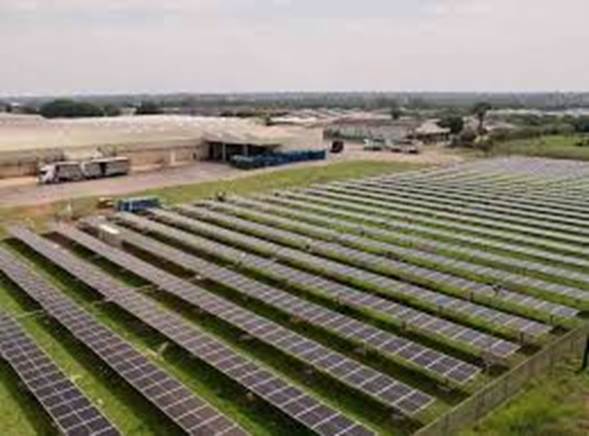
Daystar Power Group has strengthened its renewable energy partnership with Nestlé through the installation of 6.884 megawatts (MW) of solar power capacity across four manufacturing facilities in West Africa, underscoring the growing role of clean energy in the continent’s industrial transformation.
The solar installations, now operational in Côte d’Ivoire, Ghana and Senegal, represent one of the most significant corporate renewable energy deployments in the region’s food and beverage sector. According to Daystar Power, the projects comprise 3,447 kilowatts peak (kWp) across two facilities in Abidjan, Côte d’Ivoire, 2,547kWp at Nestlé’s manufacturing plant in Tema, Ghana, and 890kWp at the company’s facility in Dakar, Senegal.
The projects bring the total solar capacity installed by Daystar Power for Nestlé across the four facilities to nearly seven megawatts. Commenting on the development, Daystar Power Group Chief Executive Officer, Yischai Beinisch, described the milestone as a reflection of the growing partnership between both organisations. “Nearly 7 megawatts across four Nestlé facilities is a number we are proud of,” Beinisch said.
The company noted that the installations are designed to improve energy reliability, strengthen operational resilience and contribute to lower greenhouse gas emissions in line with Nestlé’s global sustainability commitments.
Nestlé Central and West Africa Region Chief Executive Officer, Samer Chedid, said the investment reflects the company’s commitment to responsible growth and long-term sustainability.
“This investment reflects our commitment to building a business that not only grows but does so responsibly. By advancing solar energy projects in Ghana, Côte d’Ivoire, and Senegal, we are embedding sustainability into our growth, reinforcing our role as a force for good, creating long-term value for communities, and ensuring that our footprint actively contributes to a cleaner, more resilient future,” Chedid stated.
For Daystar Power, which operates across Nigeria, Ghana, Côte d’Ivoire, Senegal and Togo, the project reinforces its position as one of Africa’s leading providers of solar-hybrid energy solutions for commercial and industrial customers.
Beyond Sustainability: A Strategic Business Decision
While the announcement aligns with global environmental goals, its significance extends far beyond corporate sustainability reporting.
Across Africa, energy remains one of the most significant barriers to industrial competitiveness. Manufacturers continue to grapple with unreliable electricity supply, rising fuel costs and operational disruptions caused by inadequate power infrastructure. As a result, many businesses rely heavily on diesel-powered generators, increasing production costs and exposing themselves to fuel price volatility.
The Daystar-Nestlé partnership highlights a growing shift among multinational corporations operating in Africa. Renewable energy is increasingly being viewed not merely as an environmental obligation but as a strategic business asset capable of reducing costs, improving efficiency and strengthening long-term competitiveness.
In practical terms, solar energy is becoming a tool for managing operational risk.
The Emergence of Africa’s Corporate Renewable Energy Market
The project also illustrates the rapid emergence of a new energy investment frontier across the continent: commercial and industrial renewable energy.
Historically, renewable energy investments in Africa were largely concentrated in government-led utility projects designed to feed national electricity grids. However, a new trend is gaining momentum as corporations increasingly take direct responsibility for securing their own energy supplies.
Large manufacturers, telecommunications companies, mining firms and logistics operators are investing in independent energy solutions that reduce dependence on often unreliable public power systems.
This shift is creating a rapidly expanding market for solar developers, battery storage providers, infrastructure investors and climate-finance institutions. It also demonstrates that Africa’s energy transition is no longer solely dependent on government action; the private sector is becoming a major driver of renewable energy deployment.
Strengthening Africa’s Manufacturing Competitiveness
Reliable and affordable energy remains one of the most important ingredients for industrial growth. High electricity costs have historically undermined Africa’s ability to compete with manufacturers in Asia, Europe and other emerging markets.
By integrating solar energy into its manufacturing operations, Nestlé is positioning itself to achieve greater operational stability while reducing exposure to rising energy costs. Such investments have the potential to improve productivity, enhance supply chain resilience and support more competitive pricing.
The broader implication is that renewable energy could become a critical enabler of Africa’s industrialisation agenda. As countries pursue deeper regional integration through the African Continental Free Trade Area (AfCFTA), access to reliable and affordable energy will increasingly determine which industries and economies emerge as regional production hubs.
Energy efficiency may therefore become as important to competitiveness as labour costs, logistics infrastructure and market access.
Climate Finance Finds a New Growth Engine
Another important dimension of the Daystar-Nestlé initiative is its relevance to climate finance.
For years, discussions around climate funding in Africa focused primarily on governments seeking financial support for large-scale renewable energy projects. Increasingly, however, multinational corporations are becoming direct beneficiaries and drivers of green investment.
Corporate renewable energy projects are attractive to investors because they combine measurable environmental benefits with predictable commercial returns. They create opportunities for green bonds, sustainability-linked loans, ESG investment funds and carbon-reduction financing mechanisms.
As more African businesses adopt renewable energy solutions, the continent could witness a significant increase in private-sector climate investment, reducing reliance on public financing while accelerating the pace of the energy transition.
Reducing Dependence on Imported Fossil Fuels
The installations also carry important macroeconomic implications for African economies.
Many countries across the continent spend substantial amounts of foreign exchange importing diesel and other petroleum products to support industrial activities. Every additional megawatt of solar power reduces dependence on imported fuel and helps protect businesses from fluctuations in global oil prices.
Over time, widespread adoption of renewable energy across industrial sectors could contribute to stronger energy security, improved trade balances and reduced pressure on foreign exchange reserves.
For economies that frequently experience currency volatility and fuel-related inflation, such benefits could prove particularly valuable.
Why Global Investors Are Paying Attention
The global energy transition is creating new investment opportunities, and Africa is increasingly being recognised as one of the most promising growth markets.
Despite possessing some of the world’s highest solar irradiation levels, the continent remains significantly underserved in renewable energy infrastructure. This creates substantial opportunities for investors seeking exposure to long-term growth sectors linked to sustainability and energy security.
Projects such as the Daystar-Nestlé partnership send a strong signal to international investors that African renewable energy markets are maturing. They demonstrate growing corporate demand, improving project viability and increasing alignment between environmental objectives and commercial interests.
As global capital continues to flow towards sustainable investments, Africa’s corporate renewable energy sector is likely to attract increasing attention from infrastructure funds, development finance institutions and private equity investors.
A Blueprint for Africa’s Energy Future
The significance of Daystar Power’s latest deployment lies not merely in the number of solar panels installed or megawatts generated. Rather, it reflects a broader transformation underway across Africa’s industrial economy.
The project demonstrates how clean energy is evolving from a sustainability initiative into a business imperative. It highlights the growing role of private-sector leadership in driving the continent’s energy transition and provides a practical model for manufacturers seeking to improve competitiveness while reducing environmental impact.
If replicated across industries and markets, similar investments could accelerate industrial growth, strengthen energy security and position Africa as an increasingly important participant in the global clean-energy economy.
In that sense, Daystar’s solar expansion for Nestlé may represent more than a successful corporate energy project; it may offer a glimpse into the future of African industrial development itself.