

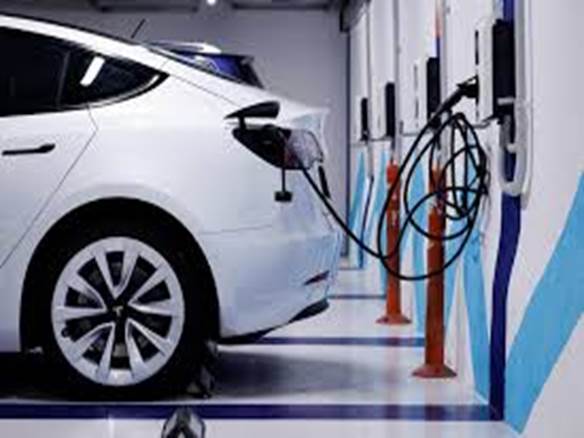

Possible Electric Mobility has unveiled what it describes as Africa’s largest electric vehicle charging hub in Abuja, marking a major milestone in Nigeria’s emerging clean transportation sector.
According to the company, the facility has the capacity to charge more than 1,000 electric vehicles daily and is designed to support electric buses and commercial fleet operations at scale.
The development comes amid growing policy support from the Nigerian government aimed at accelerating electric mobility adoption, including duty waivers on electric vehicles and mass transit buses.
Founder and Chief Executive Officer of Possible Electric Mobility, Mosope Olaosebikan, said the investment goes beyond charging infrastructure.
“This is not just about infrastructure. It is about building the system that enables electric mobility to scale in Nigeria,” he said.
The company operates an integrated model combining vehicle financing, charging infrastructure, and fleet maintenance services to simplify the transition for transport operators.
Industry analysts say large-scale charging infrastructure remains one of the most critical requirements for widespread EV adoption across African cities.
The company also disclosed plans to expand its charging infrastructure network across Nigeria and other parts of West Africa.
BrandiQ Analysis
The Abuja charging hub reflects the beginning of a potentially significant economic and industrial transition across Africa’s transportation ecosystem.
Globally, the electric vehicle revolution is no longer driven solely by environmental activism. It is increasingly being shaped by economics, industrial policy, energy security, and technological competition.
China, the US, and Europe are currently competing aggressively for dominance across the EV value chain including:
- Battery production
- Charging infrastructure
- Rare earth minerals
- Vehicle manufacturing
- Clean energy systems
Africa’s role within this transition has largely been viewed through the lens of mineral extraction, particularly lithium, cobalt, graphite, and manganese.
However, projects such as Nigeria’s Abuja charging hub suggest the continent may increasingly participate not only as a supplier of raw materials, but also as a consumer and infrastructure market for clean mobility systems.
For Nigeria, the implications are especially significant.
Transportation costs remain one of the largest inflation drivers in the economy. Electric mobility could eventually reduce fuel dependency, lower operational transport costs, and reduce pressure on foreign exchange linked to fuel imports.
The expansion of EV infrastructure could also stimulate:
- New manufacturing ecosystems
- Battery services
- Renewable energy investments
- Technical workforce development
- Green financing markets
For global investors, Nigeria and Africa increasingly represent long-term growth opportunities within sustainable infrastructure and climate technology markets.
The challenge, however, remains electricity reliability.
Without significant improvements in power generation and grid stability, EV adoption across Africa may face structural limitations. This creates an interesting paradox: the success of Africa’s EV future may ultimately depend on broader investments in energy infrastructure and renewable power systems.
Still, the Abuja hub signals that Africa’s clean transport transition is no longer theoretical. It is beginning to move from policy discussions into physical infrastructure deployment.