
A partnership connecting payment technology to everyday consumption could help popularise contactless payments in Nigeria. But convenience alone will not guarantee adoption.
The next phase of Nigeria’s digital payments competition may be decided not in banking halls or fintech applications, but at the restaurant counter, where a customer wants to pay for a meal and leave without unnecessary delay.
That is the commercial logic behind a new partnership between CashAfrica, a Nigerian contactless-payment infrastructure provider, and Chicken Republic, one of the country’s established quick-service restaurant brands. Announced in October 2026, the arrangement is designed to bring mobile tap-to-pay transactions to more than 350 Chicken Republic outlets across Nigeria, beginning with 54 branches in Lagos before extending to the remaining locations across 25 states.
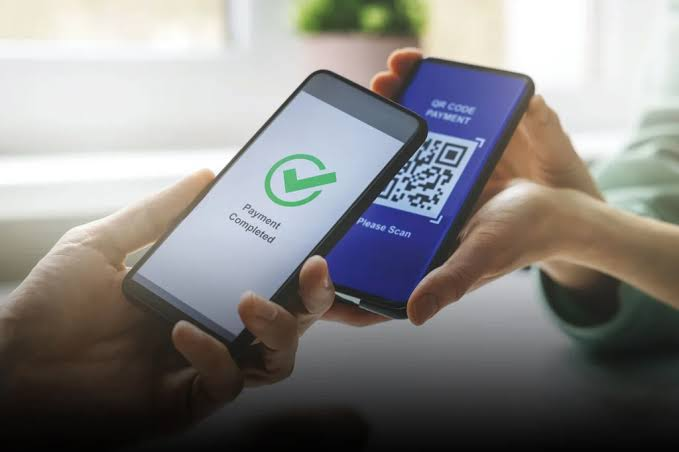
The idea is straightforward. Instead of initiating a bank transfer, navigating a payment application or inserting a card into a terminal, a customer with a compatible device can tap to make a payment through a supported point-of-sale system. CashAfrica says its infrastructure is designed to process contactless transactions in approximately one second and supports compatible iOS and Android devices. The company has also stated that customers will not pay a separate fee for using the service, while merchants pay transaction fees determined by volume.
The partnership matters because it places payment technology inside an established consumer habit. People already visit quick-service restaurants to buy meals. CashAfrica does not need to persuade them to adopt an entirely new shopping behaviour; it needs to make a familiar transaction easier.
That is a potentially valuable distribution strategy. Yet the commercial significance extends beyond the speed of a payment. It concerns how financial technology companies build scale, how retailers improve the customer experience and how the infrastructure of everyday commerce may evolve.
From digital payment availability to everyday adoption
Nigeria has a substantial digital-payments ecosystem, with bank transfers, cards, QR codes, mobile applications and other electronic payment options available to consumers. The challenge for contactless payments is therefore not simply to introduce another technology. It is to persuade consumers and merchants that tapping a compatible device offers a sufficiently useful advantage over methods they already know.
The distinction is important. A payment method can be technically available without becoming a routine part of consumer behaviour. Customers must know how to use it, trust that the transaction has succeeded and feel confident that the process is secure. Merchants must also be satisfied that the technology works reliably, that fees are commercially reasonable and that transaction failures do not create disputes at the counter.
The CashAfrica–Chicken Republic partnership addresses one obstacle by embedding the technology within a large retail network. Chicken Republic provides the customer-facing environment; CashAfrica provides the payment infrastructure. Banks and fintechs using CashAfrica’s application programming interfaces can then connect compatible payment services to participating outlets.
The arrangement illustrates a broader principle in financial technology: distribution can be as important as invention. A payment startup may develop a capable product, but widespread adoption requires access to merchants, customers and the systems that process transactions. A retail partnership can help bridge that gap.
For Chicken Republic, the potential benefit is a more convenient checkout experience. For CashAfrica, the opportunity is to make contactless payments visible to consumers who may not otherwise seek out the technology. For banks and fintechs, the partnership may provide another way to extend payment functionality through existing customer relationships.
Whether these benefits materialise will depend on actual use. The announcement establishes the planned reach of the partnership, not the number of customers who will adopt tap-to-pay or the extent to which it will reduce queues and transaction times.
Why the restaurant counter matters
Consumer technology becomes commercially valuable when it solves a problem that occurs frequently enough to influence behaviour. Paying for food is one such routine activity. Customers may be willing to experiment with a new payment method when the process is simple and the immediate benefit is obvious.
A fast checkout can matter to a restaurant chain because waiting time is part of the customer experience. The food may be satisfactory, the price acceptable and the outlet conveniently located, but a frustrating payment process can still undermine the overall experience.
This is where payment technology intersects with brand management. Customers do not necessarily distinguish between the restaurant’s operations and the systems through which it accepts payment. If a transaction fails or takes too long, the frustration may be associated with the brand, even when the underlying problem lies with a bank, network or technology provider.
The reverse is also possible. A dependable, frictionless transaction can reinforce the impression that the brand understands its customers’ time and needs.
For Chicken Republic, therefore, the opportunity is not simply to offer a new payment option. It is to integrate that option into a consistently good customer experience.
There are, however, operational questions. Restaurants need reliable terminals and connectivity, clear confirmation that transactions have succeeded and effective procedures for resolving disputed or duplicated payments. Staff must understand the process well enough to assist customers who are unfamiliar with contactless technology.
Security also matters. Consumers may worry about unauthorised payments, device compatibility or what happens if a transaction appears to fail. The system’s authentication arrangements, applicable limits and dispute-resolution procedures will influence whether customers trust it.
A rollout across hundreds of locations creates additional complexity. Performance in an initial group of Lagos outlets will not automatically establish that the same experience can be delivered consistently across every branch and operating environment.
A partnership that could reshape payment distribution
The partnership builds on CashAfrica’s earlier work connecting contactless-payment infrastructure to existing payment terminals. Its strategy is to make the technology available through banks, fintechs and merchants rather than relying exclusively on consumers to discover a standalone product.
This infrastructure-led approach may offer a more scalable route to adoption. Consumers are more likely to encounter a payment method when it appears within familiar commercial settings. Merchants, meanwhile, may be more willing to support a technology that integrates with existing systems rather than requiring an entirely separate payment environment.
But the model must make economic sense for every participant. Merchants will consider the cost of accepting payments, the reliability of the technology and whether the service improves operations. Banks and fintechs will examine integration requirements, customer demand and the commercial value of offering the feature. Consumers will compare convenience with trust, familiarity and the alternatives already available.
The partnership’s longer-term significance will therefore depend on more than the number of outlets connected. Useful indicators would include active usage, repeat transactions, transaction success rates, customer complaints, merchant satisfaction and the cost of maintaining the service.
It will also be important to distinguish between availability and adoption. Making tap-to-pay available in 350 outlets is a distribution achievement. Demonstrating that customers use it regularly, merchants value it and transaction performance remains reliable would provide stronger evidence of commercial success.
What has changed, and why does it matter?
What has changed: Contactless-payment infrastructure is being connected to a large, familiar Nigerian restaurant network, creating a practical opportunity to move tap-to-pay beyond specialist or early-adopter settings.
Why it matters: The partnership brings together technology, distribution and customer experience. It could help CashAfrica expand its reach while giving Chicken Republic another tool for making transactions more convenient. Its wider importance lies in testing whether contactless payments can become an ordinary part of Nigerian commerce.
BrandiQ Takeaway
The future of fintech will not be determined by technology alone, but by how effectively it enters everyday life. CashAfrica’s partnership with Chicken Republic illustrates the importance of distribution, trust and customer experience in turning a payment innovation into a commercially useful service. For Nigerian businesses, the lesson is to evaluate digital tools not merely by what they can do, but by whether customers will use them repeatedly and whether the resulting experience strengthens the brand.