



At a White House-organised summit designed to keep AI “largely free of government rules,” two of the world’s most powerful tech founders made the case for more data centres, more power plants, and less regulatory friction – even as American voters turn against the very infrastructure being built in their backyards
There was a time when the world’s technology ministers gathered to discuss how governments might shape artificial intelligence. In Chapel Hill, North Carolina this week, the agenda ran the other way: two of Silicon Valley’s most influential founders told ministers how AI should shape government policy instead – and specifically, how quickly it should get out of the way.
What Happened

Photo: Mark Zuckerberg
Multiple agency reports confirm that Mark Zuckerberg and Elon Musk addressed G20 technology ministers virtually on Tuesday at a meeting convened by the White House and centred on the disruptions and opportunities of artificial intelligence. The gathering, held at the Carolina Inn in Chapel Hill and organised by White House Office of Science and Technology Policy Director Michael Kratsios alongside Commerce Secretary Howard Lutnick, is explicitly framed around keeping the AI buildout largely free of government rules and scrutiny – part of a broader US push this year, under its rotating G20 presidency, for what officials are calling the “Carolina Principles”: a commitment among governments to avoid layering new regulation onto AI deployment.
Zuckerberg, appearing by video link, argued that the data-centre buildout would require hundreds of thousands, possibly millions, of new jobs in the skilled trades, simply because demand has outpaced the available workforce. He said Meta itself cannot find enough skilled tradespeople to build the data centres it is trying to construct, and pointed to a company-run initiative, America’s Workforce Academy, aimed at training more carpenters and electricians for the task.
Musk, joining separately, focused on electricity rather than labour, warning of what he called a looming “crisis of power.” He told ministers a significant power shortfall was expected as soon as next year – not, in his words, a distant-future problem – and said his own companies were building power generation capacity alongside their data centres to compensate. Musk also argued the shortfall was handing China a competitive advantage in the AI race, and offered a bullish macroeconomic forecast: that artificial intelligence could expand the global economy by 20 to 30 percent annually, or roughly $20 trillion to $30 trillion a year.
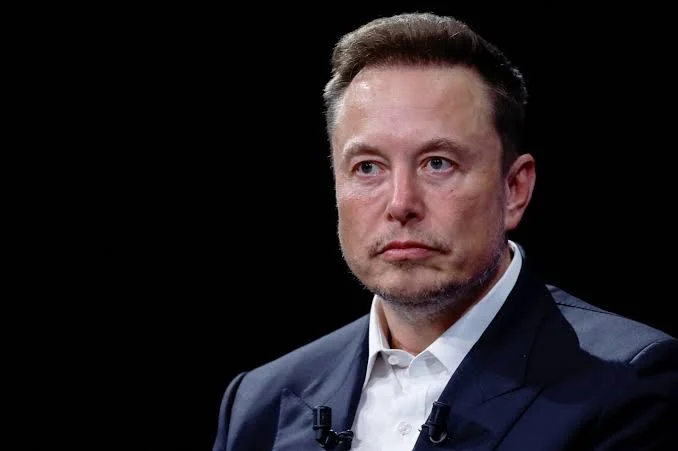
Photo: Elon Musk
Musk reserved his sharpest remarks for European regulators. With technology ministers from France, Italy and Germany, as well as EU technology chief Henna Virkkunen, seated in the room, Musk argued that genuine innovation requires an environment relatively free of regulation – one where new technologies are, by default, treated as legal rather than illegal. He described the European Union’s regulatory posture as the inverse of that principle, and said it did not stop innovation outright but slowed it considerably.
Google DeepMind chief Demis Hassabis, also appearing virtually, struck a more measured tone, telling ministers that achieving human-level AI would unleash roughly ten times the impact of the Industrial Revolution, while stressing that the opportunity had to be pursued responsibly.
The remarks landed a day after US President Donald Trump had reportedly described opponents of AI data centres as “backwards and poor,” at a moment when polling shows a majority of Americans now oppose new data-centre construction near their communities, citing rising electricity bills and noise. The debate has become a live issue ahead of this year’s US midterm elections. A small group of protesters gathered outside the Chapel Hill venue, with at least one attendee telling reporters that Musk’s advocacy for data centres ignored the lived reality of higher energy costs and a warming planet.
The two-day summit continues Wednesday, with Nvidia’s Jensen Huang and OpenAI’s Sam Altman expected to appear in person for fireside chats with Lutnick. China’s technology and science minister, Yin Hejun, represented Beijing at the gathering – a detail that underscores the geopolitical subtext running beneath the talk of skilled trades and kilowatts. The Chapel Hill meeting is one stop in a series of ministerial building toward a G20 leaders’ summit Trump will host on December 14–15 at his Trump National Doral resort in Miami.
Analysis: What This Means Beyond Washington
For BrandiQ’s readers, the value of this story is not simply that two billionaires want fewer rules – that is a permanent feature of the technology industry’s relationship with government. The value lies in what the moment reveals about how global AI infrastructure decisions are actually being made, and what that means for markets, like much of Africa, that are not in the room but will feel the consequences regardless.
First, the optics of consensus are being manufactured as policy. A summit explicitly organised to keep AI “largely free of government rules” is not a neutral forum weighing competing views – it is a stage-managed argument for a predetermined outcome, with the world’s most powerful AI builders cast as expert witnesses for their own case. Brand strategists should recognise this pattern: it mirrors how corporations elsewhere use “stakeholder engagement” or “industry consultation” processes to launder self-interested lobbying as balanced dialogue. The lesson transfers directly to African regulatory environments, where telecom, fintech, and now AI infrastructure players frequently stage similar exercises. Communications professionals advising African governments or civil society groups on AI policy should watch this playbook closely, because it will arrive locally in a similar form.
Second, the US-versus-EU regulatory framing is a false binary that African policymakers should refuse to inherit wholesale. Musk’s “default legal” argument is a coherent position, but it is also a lobbying position from a founder whose companies stand to profit directly from lighter rules. African nations building their own AI and data-governance frameworks – from Nigeria’s ongoing work on data protection and AI policy to similar efforts across the continent – do not need to choose between Silicon Valley’s deregulatory instinct and Brussels’ precautionary one. Both were built to serve their own economic interests. A distinctly African regulatory posture, one that prioritises energy equity, local job creation in the trades Zuckerberg says are scarce, and genuine data sovereignty, is a more useful reference point than either import.
Third, the power and jobs argument is itself a brand narrative worth deconstructing. Zuckerberg’s framing, a skilled-trades shortage so severe it constrains a trillion-dollar company is presented as an altruistic jobs story, but it is equally a pre-emptive answer to the local backlash driving American voters to oppose new data centres in their communities. Musk’s “crisis of power” language performs similar work: it reframes a self-created infrastructure demand as a national-security emergency that only faster, less-regulated buildout can solve. African brand and communications leaders operating in extractive or infrastructure-heavy sectors: mining, oil and gas, telecoms towers – will recognise this rhetorical move immediately, because it is the same one long used to justify fast-tracked approvals for projects with real local costs.
Fourth, and most directly relevant to BrandiQ’s compliance-minded readership: the electricity and land questions raised in Chapel Hill are coming to African markets next. Global hyperscalers are already scouting data-centre capacity across the continent, and the same tension on display in North Carolina, a mismatch between the energy a company wants to build and the energy a community can afford or tolerate, will surface here, likely without the benefit of a G20-level public debate to draw attention to it first. Any African government, utility, or private developer entering a data-centre partnership with a US hyperscaler should treat Chapel Hill as a preview: know the actual power draw being requested, know who bears the cost of new generation capacity, and do not let “AI capacity” arrive framed only as investment and jobs, without the community-facing costs also on the table from day one.
The Chapel Hill summit will likely be remembered less for what was decided – nothing was, formally – than for who was asked to speak and in what order: the builders first, the regulators as an audience. That ordering is itself the story, and it is one worth watching closely as similar rooms convene, eventually, on this continent.