

Beyond the handshake, what Apple’s Hardware-Chief succession signals about brand continuity in the AI Era
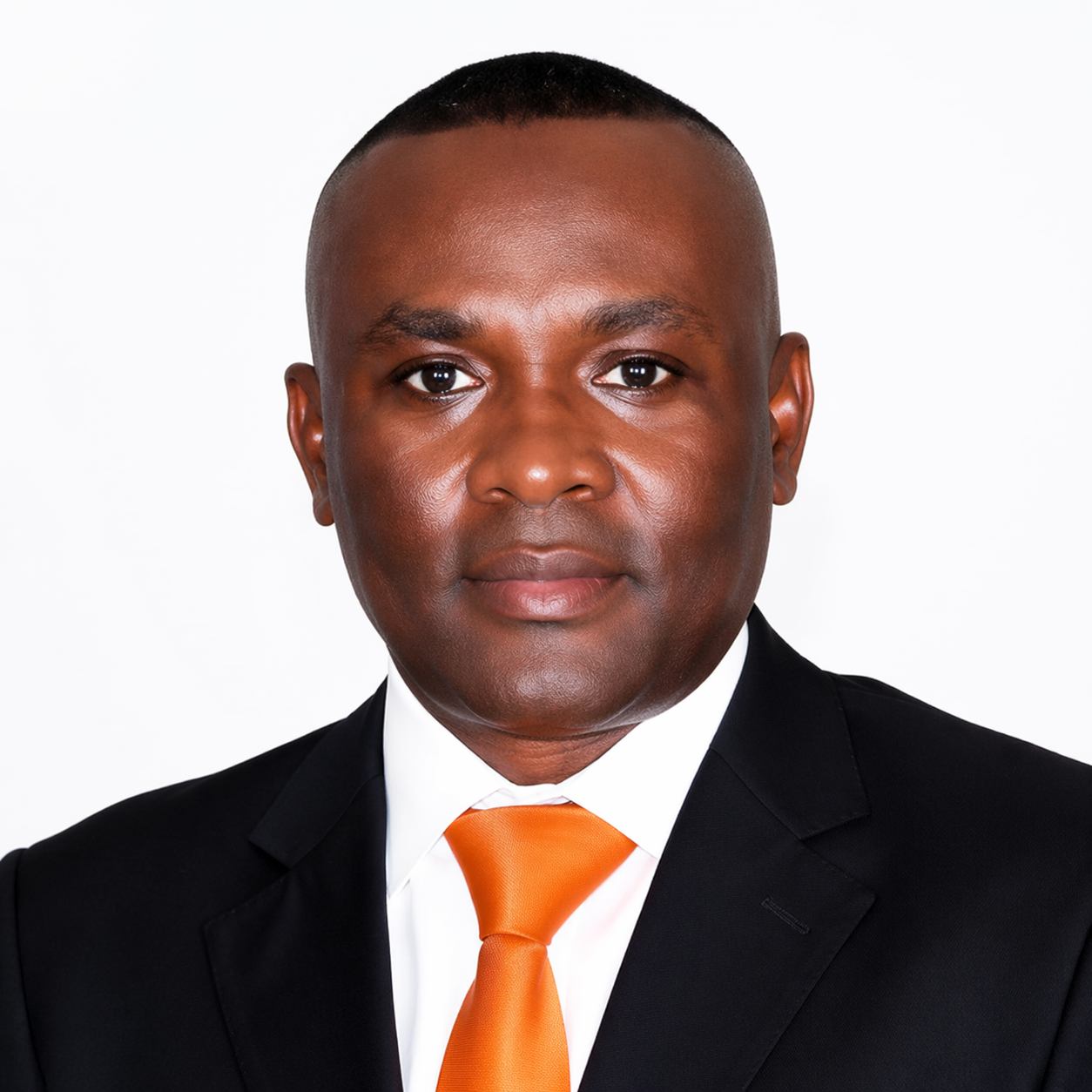
Every leadership transition at a company of Apple’s stature is, at some level, a brand decision before it is a management one. When John Ternus formally took over as chief executive on September 1, 2026, ending Tim Cook’s fifteen-year tenure, Apple was not simply replacing a person. It was making a statement about what kind of company it intends to be for the next decade – and, by extension, what its half-a-billion-dollar-a-quarter brand promise to consumers will now rest on.
The Handover, In Brief
The board approved the transition unanimously, describing it as the outcome of a long-term succession planning process, with Cook continuing to work closely with Ternus to ensure a smooth handover. Arthur Levinson, Apple’s outgoing non-executive chairman of fifteen years, shifts to lead independent director, while Ternus takes a board seat of his own. Cook does not disappear – as executive chairman, he retains responsibility for engaging with policymakers around the world – a role that becomes especially significant given the political terrain Apple must navigate.
That terrain is not incidental to the brand story. Cook is widely expected to continue helping Apple manage its relationship with President Donald Trump after moving into his new role, having spent years cultivating those ties amid Trump’s tariff war targeting Asian manufacturing hubs where Apple’s supply chain is concentrated. In effect, Apple has split what used to be a single CEO’s job into two: a statesman who protects the company’s geopolitical flank, and an operator who must now prove Apple can still out-innovate its rivals.
A Product Man for a Product Crisis
The choice of Ternus is itself a piece of brand messaging. He steps into the CEO role just as Apple begins an unusually ambitious slate of fall product launches, including the company’s first foldable iPhone and a smart display capable of recognising who is speaking and tailoring content accordingly – devices he personally spearheaded in his prior role as hardware chief. Cult of Mac’s Leander Kahney frames the pick as continuity of a philosophical lineage running through Apple’s leadership – a “product guy” ethos he traces from Steve Jobs through Cook to Ternus.
That framing matters for brand strategists watching from outside Silicon Valley. Apple’s brand has never been built primarily on financial engineering or supply-chain optimisation, even though Cook excelled at both. It has been built on the sensory experience of holding a well-made object. By elevating an engineer whose fingerprints are on the Apple Watch, AirPods, Apple Vision Pro and the in-house Apple Silicon transition, the board is signalling that it intends to re-anchor the brand narrative in craft and hardware innovation at precisely the moment competitors are winning headlines on artificial intelligence.
The AI Problem Apple Cannot Engineer Its Way Out Of
This is where Ternus inherits genuine brand risk. The narrative arc your draft correctly identifies – that AI represents the most significant industry upheaval since the original iPhone launch in 2007 – is not overstated. Apple’s own AI ambitions have struggled publicly: promised Siri upgrades slipped for nearly two years before the company unveiled a retooled version this year, one deliberately positioned around privacy and everyday usefulness rather than raw capability, in an implicit acknowledgment that it is playing catch-up to rivals who moved first and faster.
For a brand whose entire premise is “it just works,” a stumble on an entire technology category is not a minor product miss – it is a threat to the core promise. Ternus’s task is not simply to ship better AI features; it is to restore the perception that Apple’s deliberateness is a strength rather than a lag. That is a brand-repair job as much as an engineering one, and it will be judged in real time, starting with next week’s iPhone launch event at Cupertino, which Ternus will headline as his first major public moment in the role.
The Soft-Skills Test
Hardware engineering excellence does not automatically confer the relational fluency that global CEOs increasingly require. Cook’s tenure demonstrated that managing Trump-era trade friction, sustaining manufacturing relationships across Asia, and holding investor confidence during margin pressure are as central to protecting a trillion-dollar brand as any product roadmap. Ternus, by his own career path, has operated largely inside Apple’s design and engineering culture rather than in boardrooms, trade negotiations, or Washington. The decision to keep Cook on as executive chairman – explicitly tasked with policymaker engagement – is effectively an admission that this gap exists, and a structural hedge against it.
The Brand Lesson for African Marketing Leaders
For BrandiQ’s readership, the Apple transition offers a case study more relevant than its Silicon Valley setting suggests. It illustrates a principle increasingly visible across global business: succession is a brand-positioning exercise, not merely a governance formality. Boards do not only ask “who can run this company” – they ask “what does this appointment tell the market about who we still are, and who we intend to become.” Apple’s answer, in choosing an engineer over a strategist, a salesman, or a services executive, is that its brand’s future will be defended on the strength of its products, not the eloquence of its pitch.
Whether that bet succeeds will be visible within weeks, not years. The foldable iPhone and the AI-aware smart display arriving this autumn are not just product launches – they are the opening argument in Ternus’s case that Apple’s brand still means what it has always meant, even as the ground beneath the entire industry shifts.