
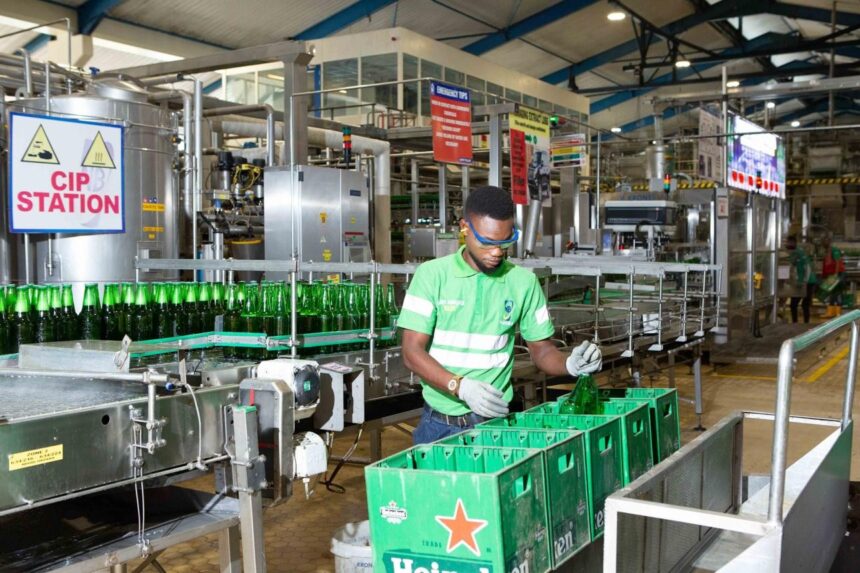

When a major consumer company rises sharply on the stock market after a bruising downturn, investors are rarely celebrating sentiment alone. They are usually rewarding evidence: stronger cash flow, lower debt, improved margins, better execution and a believable plan for surviving the next shock. That appears to be the message behind the recent performance of Nigerian Breweries Plc, whose leadership says a triple-digit rise in its share price reflects confidence in a hard-won turnaround.
For BrandiQ readers across business, marketing, finance and policy circles, the Nigerian Breweries story is bigger than one brewer. It is a case study in how large African consumer firms can recover from currency shocks, inflation pressure and weak purchasing power through strategy, pricing discipline, brand strength and balance-sheet repair.
The company’s update at its 80th pre-annual general meeting briefing suggests that after one of the most difficult periods in recent memory, the owner of some of Nigeria’s best-known beverage brands is attempting to move from survival mode to strategic growth.
The Nigerian Breweries Managing Director/Chief Executive Officer, Thibaut Boidin, gave a background of the story by acknowledging that the Nigerian operating environment remained volatile, citing inflation, foreign exchange pressures, and weak consumer purchasing power.
He said, “It’s not a secret that we’re operating in a very volatile environment, a very complex environment. (Although) In 2025, we can all recognise that the macroeconomic environment was a bit more stable than in the previous years, but we remain dependent on FX, and purchasing power remains under pressure.” From here began the story of a rebound by the brewer.
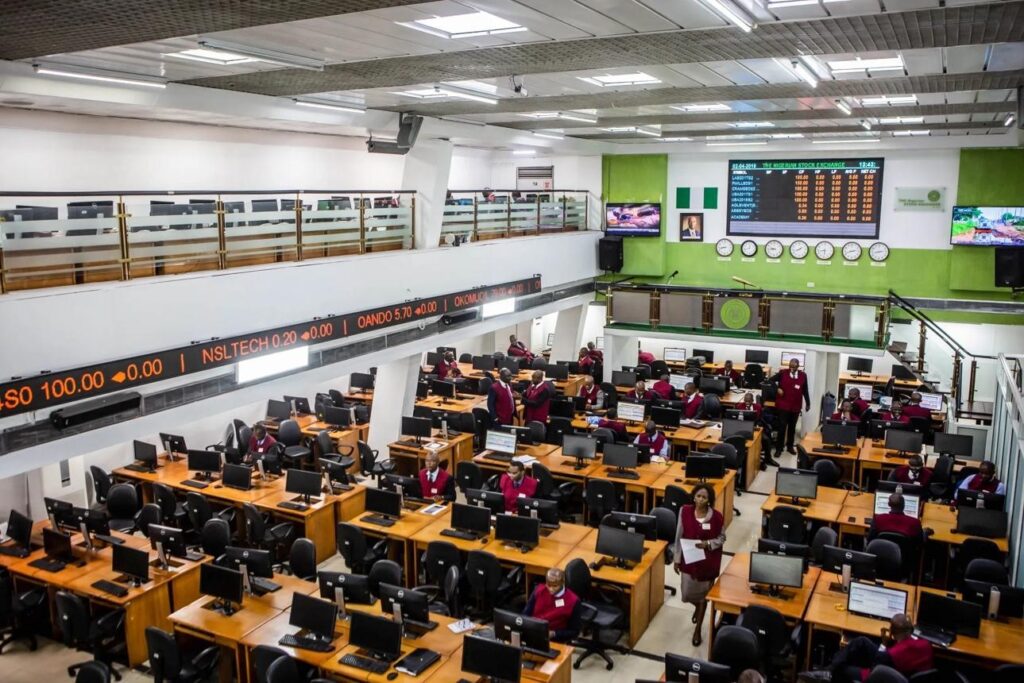
Why the Stock Market Is Rewarding Nigerian Breweries
According to company executives, Nigerian Breweries’ share price appreciated by about 135 per cent over the past year. Markets can be emotional in the short term, but over time they tend to reward firms that solve structural problems.
In this case, several signals stand out.
First, revenue growth. Group revenue reportedly rose 35 per cent in 2025. That suggests the company was able to defend volumes, improve pricing, premiumise product mix or combine all three.
Second, operating efficiency. Operating profit rose by more than 190 per cent. This is often the clearest indicator that management is doing more than passing costs to consumers. It points to tighter procurement, better plant utilisation, lower waste, smarter logistics and stronger commercial discipline.
Third, a return to net profitability. The company says net profit rebounded by 168 per cent after a prior heavy loss period. Investors like recovery stories when they appear durable.
Fourth, debt reduction. Borrowings reportedly fell from above N200bn in 2024 to around N59bn by end-2025. That is perhaps the most important number in the entire story.
Why? Because in Nigeria’s volatile macroeconomic environment, too much leverage, especially foreign currency debt, can destroy otherwise healthy businesses.
The Naira Problem and Why Debt Matters
Many Nigerian corporates suffered heavily during periods of exchange-rate adjustment. A company may be profitable operationally, but if it owes large dollar liabilities while earning mainly naira revenues, currency depreciation can crush earnings.
Nigerian Breweries says it has substantially eliminated foreign currency exposure. That matters because it reduces vulnerability to sudden FX shocks.
This aligns with a broader principle in institutional economics: firms operating in volatile policy or currency environments must build internal resilience because external systems are less predictable.
In developed markets, deep hedging markets, stable currencies and lower inflation cushion businesses. In many frontier markets, companies must self-insure through prudent treasury management, stronger cash positions and local sourcing.
That appears to be what Nigerian Breweries is now trying to do.
From Crisis to Cash Positive
Finance Director Maria Karaseva described the company as now “cash positive”. For executives and investors, this phrase carries weight. Cash-positive status means a business has breathing room. It can invest in brands, reopen plants, support distributors, fund innovation and negotiate from strength rather than distress.
This is especially significant in a consumer market where many companies face:
- weak household purchasing power
- high financing costs
- volatile energy expenses
- logistics bottlenecks
- uncertain import costs
A cash-positive brewer can play offence while weaker rivals remain defensive.
The Real Battle: Consumer Affordability
Even after a financial rebound, Nigerian Breweries faces a tougher challenge: how to grow in a market where consumers are under pressure.
The company acknowledged rising inflation, especially food inflation, as a major risk. That is crucial because beer and beverage consumption is linked to disposable income. When food, rent and transport costs rise sharply, consumers downgrade, reduce frequency or shift to cheaper alternatives.
The company says it is using revenue management tools to avoid passing all costs to consumers. That is smart strategy.
Many brands assume price increases are the only answer to inflation. But aggressive pricing in a fragile market can destroy long-term demand.
Better options include:
- pack-size innovation
- premium and value tier segmentation
- route-to-market efficiency
- promotions tied to occasions
- mix optimisation
- local raw material substitution
For marketers, this is a reminder: pricing is communication. A brand that appears insensitive during hardship can lose emotional equity.
Why Brand Strength Still Matters
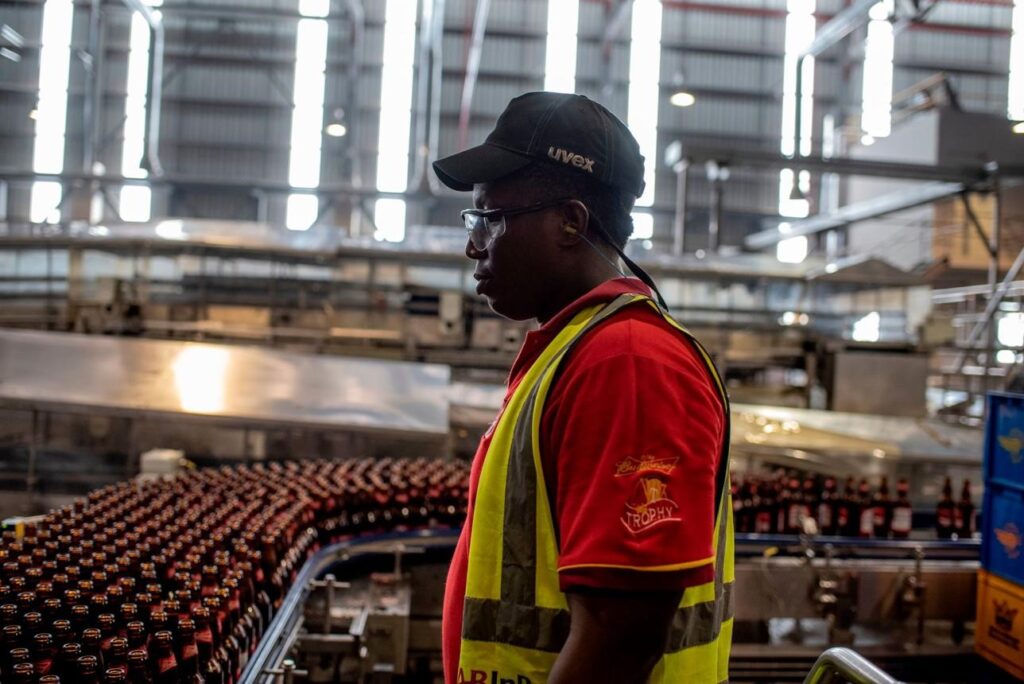
Executives cited “strength of our brands” and premiumisation as part of the rebound. That should not be overlooked.
In difficult economies, strong brands often outperform weak ones because they provide psychological reassurance. Consumers may buy less often, but when they do spend, they lean toward trusted names.
Behavioural economics calls this risk minimisation under uncertainty. When income is tight, mistakes become expensive. Known brands benefit.
For Nigerian Breweries, this means brand equity accumulated over decades can act like an invisible balance-sheet asset.
The Distell Acquisition and the Beyond Beer Strategy
The full acquisition and integration of Distell Wines and Spirits Nigeria expands the company beyond traditional beer. This is strategically sensible for three reasons.
1. Diversification of Demand: Different categories behave differently across economic cycles. Beer, spirits and wine can respond to varying income bands and social occasions.
2. Margin Opportunities: Premium spirits and wines can sometimes deliver stronger margins than mainstream beer.
3. Lifestyle Positioning: Modern beverage competition is increasingly about occasions, identity and culture, not merely liquid volume.The future winner in beverages may be the company that owns the widest profitable portfolio across celebrations, nightlife, casual refreshment and aspirational consumption.
The Middle East Crisis and Supply Chain Anxiety
Management also referenced the Middle East crisis and scenario planning around supply disruptions. That may sound distant from Nigerian breweries, but it is not.
Global conflicts can affect:
- freight rates
- fuel prices
- shipping insurance
- grain markets
- packaging inputs
- investor sentiment
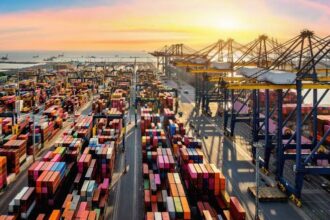
For African manufacturers dependent on imported machinery, additives or packaging, geopolitical shocks quickly become local inflation. The company says it sees no major immediate disruption and benefits from being part of the Heineken Group. That global network likely offers procurement advantages smaller local players may lack.
Why Local Sourcing Is Becoming Strategy, Not Slogan
The company says it is moving beyond rhetorical support for local sourcing into a long-term roadmap involving infrastructure and financing for smallholder farmers. This is one of the most important parts of the story. Local sourcing is often discussed as patriotism. In reality, it is risk management.
If brewers can source sorghum, cassava derivatives, maize or packaging inputs locally at scale and quality, they reduce exposure to:
- FX volatility
- import delays
- geopolitical shocks
- shipping costs
It can also create rural income, agricultural jobs and supplier ecosystems. For policymakers, this is where industrial policy should meet corporate strategy.
Why Dividends Have Not Returned
Despite profit recovery, the company says accumulated losses still keep retained earnings negative, delaying dividend resumption. This is financially prudent.
Some firms rush to resume payouts for optics. Stronger governance often means rebuilding equity first. For investors, no dividend can disappoint in the short term. But repairing the balance sheet may create larger long-term value than premature distributions.
What This Means for Nigeria’s Economy
Nigerian Breweries is more than a brewer. It is tied to agriculture, logistics, hospitality, retail, packaging, advertising, events and tax revenues.
When such a company recovers, spillovers can include:
- stronger distributor networks
- more supplier orders
- improved manufacturing confidence
- marketing spend across media sectors
- higher employment stability
- tax contribution growth
That makes c/orporate turnarounds macroeconomically relevant.
Lessons for African CEOs
The Nigerian Breweries episode offers several lessons for executives across Africa.
1. Balance Sheet Repair Comes First: Brand campaigns cannot fix dangerous leverage.
2. Price Carefully in Poor Economies: Short-term pricing gains can destroy long-term loyalty.
3. Localise Supply Chains: Global integration matters, but overdependence is dangerous.
4. Portfolio Diversification Reduces Risk: Single-category dependence is increasingly fragile.
5. Brand Equity Is an Economic Asset: Trust built over years cushions downturns.
Risks Still Ahead
The rebound is impressive, but challenges remain.
- inflation may stay stubborn
- consumer incomes remain weak
- taxes and regulation could tighten
- FX stability is never guaranteed
- competition in beverages is intense
- informal alcohol substitutes can rise in downturns
Recovery is not the same as immunity.
A Final BrandiQ View
The Nigerian Breweries story is ultimately about adaptation in an unforgiving market. It shows that in emerging economies, corporate leadership is less about smooth growth and more about resilience under repeated shocks.
The firm’s share rally suggests investors believe the worst may be over. But the real test lies ahead: can it grow volumes, preserve affordability, deepen local sourcing and rebuild shareholder returns while Nigerian consumers remain under pressure?
If it can, Nigerian Breweries will have done more than recover. It will have written a modern African playbook for how legacy market leaders survive currency crises, inflation cycles and geopolitical turbulence without losing brand relevance.
That is a lesson far more valuable than a temporary stock rally.