

A US-backed feasibility study for two large data centres in Lagos and Delta shows that Nigeria’s AI opportunity is beginning to move beyond software and into the expensive physical infrastructure on which artificial intelligence depends.
Artificial intelligence is often discussed as though it lives in the cloud. In reality, the cloud sits on buildings filled with servers, connected to fibre networks and dependent on large quantities of reliable electricity. As AI models become more computationally demanding, access to data-centre capacity is becoming an economic and strategic issue. Nigeria is beginning to position itself in that contest.
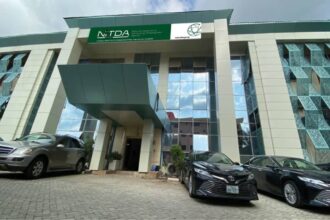
The United States Trade and Development Agency announced in September that it is funding a feasibility study for two large-scale, AI-ready data centres in Lagos and Delta states, in partnership with African investment firm INFRAGORA Global Capital. USTDA describes the proposed project as one of the most significant proposed data-centre investments in Nigeria to date.
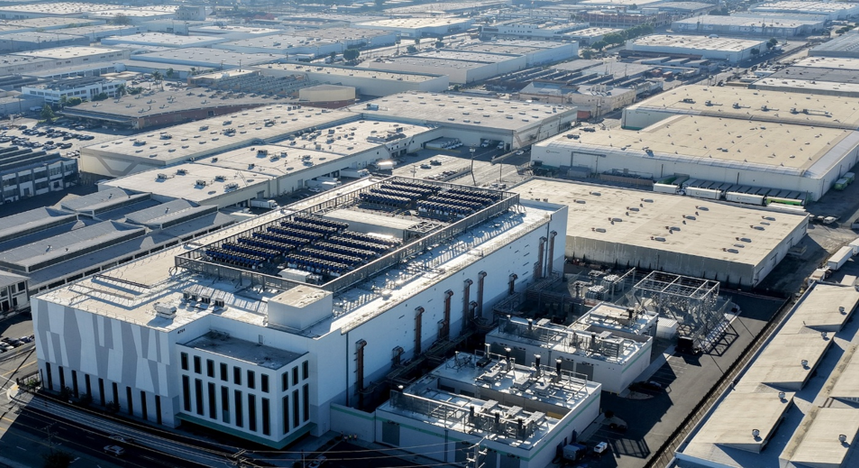
The numbers give the proposal more substance. USTDA’s project documentation says the two facilities are planned to have combined capacity of 60–70 megawatts, with room for expansion towards 100MW. The USTDA grant supporting the feasibility study is $1.87 million. The Lagos facility is planned as an AI-ready, cloud-enabled Tier IV data centre, while the Delta facility is intended to provide redundancy and disaster-recovery capability, with Tier III or Tier IV certification under consideration.
This is still a feasibility and development exercise, not a completed data-centre investment. That distinction matters. But the proposed scale signals how the economics of Nigeria’s digital economy are changing.
The country has spent years building demand for digital services. Nigerian consumers increasingly use mobile banking, fintech applications, online commerce, streaming services and digital platforms. Businesses are becoming more dependent on cloud systems. Government services are being digitised. AI adoption is beginning to spread across finance, marketing, healthcare, education and enterprise operations. All of that creates demand for computing capacity.
Yet Africa remains underrepresented in global data-centre infrastructure. USTDA says the continent hosts less than 2% of global data-centre capacity, a constraint that can force reliance on distant infrastructure and raise questions around latency, resilience and data security.
For Nigeria, this creates an unusual opportunity. The country is simultaneously a large consumer market, a major financial centre and one of Africa’s largest technology ecosystems. If it can attract sufficient investment in data centres, connectivity and energy, it could become an important regional location for cloud and AI workloads. But the word energy is crucial.
Data centres are not simply real-estate projects. Their economics depend on power reliability, network connectivity, cooling, security, fibre redundancy and access to sophisticated technical talent. AI-ready infrastructure is particularly demanding because high-performance computing generates significant power and cooling requirements.
The proposed Lagos-Delta configuration is interesting for another reason. It suggests that resilience is becoming part of the investment thesis. Two locations provide the possibility of redundancy rather than concentrating critical infrastructure in one geographic area.
That matters to banks, telecom companies, governments and multinational businesses whose operations cannot afford prolonged digital disruption.
There is also a geopolitical dimension. USTDA says the project will help create opportunities for American companies supplying AI software, cloud and data-storage infrastructure, networking, computing hardware and cybersecurity solutions. Its deputy director, Thomas R. Hardy, said Africa needs to build AI on a foundation of “trusted, secure technology”. For Nigeria, that creates both opportunity and a policy question.
The opportunity is capital, infrastructure and access to global technology. The question is how much of the resulting economic value remains in Nigeria. Data centres can create jobs, stimulate construction and attract technology companies, but the higher-value economic ecosystem requires local skills, local suppliers, local software businesses and Nigerian companies capable of building products on top of the infrastructure.
INFRAGORA describes its proposed AFRIDATA platform as a pan-African initiative combining data centres, cloud infrastructure, reliable power, technology innovation and local capacity building. That is the more ambitious proposition.
BrandiQ Analysis & Takeaway
The AI race is creating a new infrastructure hierarchy. Countries once competed to attract factories and financial capital. Increasingly, they will also compete to attract compute. For Nigerian businesses, that could become strategically important. Locally available computing can improve latency and resilience and potentially support industries that need substantial processing capacity. It may also encourage international cloud and technology companies to deepen their presence in the country.
But Nigeria should not confuse having data centres with having an AI economy. A data centre provides capacity; it does not automatically create innovation. The larger economic prize comes when infrastructure supports Nigerian businesses that build, export and scale digital products. The next phase of Nigeria’s digital economy will be built as much with concrete, fibre, power and cooling as with software.
The country’s AI ambition will ultimately depend on whether it can turn data-centre capacity into a wider technology ecosystem – and whether Nigerian companies capture meaningful value from the infrastructure being built around them.