


OPay’s Rise Signals a New Era for Financial Inclusion and Digital Commerce in Nigeria
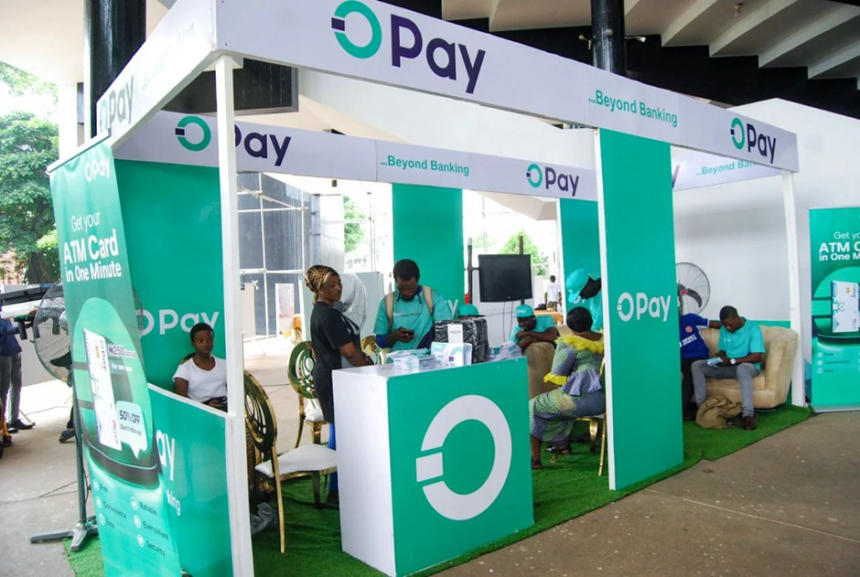
Across Nigeria’s bustling cities, rural communities, motor parks, neighbourhood kiosks, and local markets, one symbol has become increasingly visible: the Point of Sale terminal. Behind much of this transformation stands OPay, one of Nigeria’s fastest-growing fintech companies, whose rapid expansion is helping reshape how millions of Nigerians access financial services, conduct transactions, and participate in the formal economy.
Since entering the Nigerian market in 2018, OPay has evolved from a digital payments platform into a major player within the country’s financial services ecosystem. Today, the company serves more than 45 million users and over one million merchants and businesses, making it one of the largest fintech platforms in Africa.
Its growth reflects a broader transformation taking place across emerging economies, where technology is increasingly closing long-standing gaps in financial access and creating new pathways for economic inclusion.
The Financial Inclusion Challenge That Traditional Banking Could Not Solve
For decades, financial exclusion has remained one of Nigeria’s most significant development challenges. Millions of citizens, particularly those in rural communities and underserved urban areas, have historically lacked access to formal banking services. Long distances to bank branches, high account maintenance costs, documentation requirements, and inadequate infrastructure have prevented large segments of the population from participating fully in the formal financial system.
The consequences have been far-reaching. Financial exclusion limits access to savings, credit, insurance, investment opportunities, and business growth capital. It also restricts economic mobility and reduces the ability of governments to accurately capture economic activity.
OPay’s growth illustrates how digital technology is helping overcome many of these barriers. Through mobile wallets, digital transfers, agency banking, bill payments, savings products, and merchant solutions, the company has created alternative access points for millions of Nigerians who previously operated outside traditional banking structures. The result is not merely convenience. It is greater economic participation.
Why Financial Inclusion Is Becoming a Development Imperative
Globally, economists increasingly recognise financial inclusion as a critical driver of economic development. Access to financial services enables individuals to save securely, invest in education and businesses, manage risks, and participate more effectively in economic activity.
For governments, expanding financial inclusion improves economic visibility, enhances tax administration, strengthens monetary policy effectiveness, and promotes broader economic stability. OPay’s expansion therefore aligns closely with Nigeria’s long-term financial inclusion agenda.
The company’s recognition through the Central Bank of Nigeria’s Financial Inclusion Innovation Award underscores its growing contribution to one of the country’s most important economic policy objectives. By providing accessible financial services to low-income earners, artisans, traders, transport operators, and small business owners, the company is helping bridge the gap between informal economic activity and the formal financial system.
The Digital Wallet Revolution and the Future of Banking
One of the most significant aspects of OPay’s growth is the emergence of digital wallets as a viable alternative to traditional banking. Historically, banks-controlled customer access to financial services through physical branches. Today, smartphones and digital platforms are increasingly replacing brick-and-mortar banking infrastructure.
The company’s growth in monthly active users from approximately 25 million to over 39 million within a year demonstrates the accelerating adoption of digital financial services. For many Nigerians, particularly younger consumers and first-time users of formal financial services, digital wallets have become their primary financial relationship.
This shift reflects a broader global trend where fintech platforms are redefining how financial services are delivered, consumed, and experienced. The future of banking may no longer be centred around branches. It may increasingly revolve around digital ecosystems that offer speed, convenience, affordability, and accessibility.
Empowering Small Businesses Through Digital Commerce
Beyond consumer services, OPay’s impact on small and medium-sized enterprises deserves particular attention. Small businesses remain the backbone of Nigeria’s economy, accounting for a substantial share of employment and economic activity. Yet many operate within highly informal environments characterised by cash transactions, limited record-keeping, and restricted access to financial services.
Digital payment solutions help address many of these challenges. By enabling merchants to accept electronic payments, process transactions efficiently, reduce cash handling risks, and improve customer convenience, fintech platforms contribute directly to business productivity and growth.
The company’s extensive merchant ecosystem now supports businesses ranging from roadside retailers and pharmacies to restaurants, supermarkets, and transportation operators. This digitalisation of commerce is helping create a more efficient and transparent business environment.
Fintech as a Job Creation Engine
One of the less discussed but highly significant aspects of fintech growth is its contribution to employment generation. The expansion of digital financial services creates direct and indirect jobs across multiple sectors, including technology, customer support, logistics, compliance, sales, agent banking, and merchant services.
In many Nigerian communities, agency banking has emerged as a new form of entrepreneurship. Thousands of young Nigerians now generate income by providing financial services such as cash withdrawals, deposits, transfers, and bill payments through agent networks.
This model has effectively transformed financial inclusion into a source of livelihood creation. As digital finance expands, fintech companies are increasingly becoming job creators alongside their role as financial service providers.
Foreign Investment and Confidence in Nigeria’s Digital Economy
OPay’s success also reflects growing international confidence in Africa’s digital economy. The company has attracted investments from major global institutions including venture capital firms and technology-focused investors seeking exposure to Africa’s rapidly expanding fintech sector.
Such investments carry broader economic implications. They support infrastructure development, technology deployment, talent acquisition, innovation, and ecosystem growth. More importantly, they signal confidence in Nigeria’s long-term digital transformation story. In an increasingly competitive global investment environment, fintech has become one of Africa’s strongest attractions for international capital.
The Bigger Story: Fintech as Economic Infrastructure
Perhaps the most important insight from OPay’s growth is that fintech companies are evolving beyond financial service providers into providers of economic infrastructure. Just as roads facilitate the movement of goods and telecommunications networks enable communication, digital payment platforms facilitate the movement of money, commerce, and economic opportunity.
Their role extends beyond transactions. They enable entrepreneurship, support financial inclusion, promote economic formalisation, create jobs, attract investment, and strengthen participation in the digital economy. In many respects, fintech platforms are becoming foundational components of modern economic development.
Implications for Nigeria, Africa and the Global Economy
The rise of companies like OPay carries implications far beyond Nigeria. Across Africa, hundreds of millions of people remain either underbanked or completely excluded from formal financial services. The success of digital financial platforms demonstrates that technology can help accelerate inclusion faster and more efficiently than traditional banking models alone.
For Africa, fintech represents one of the continent’s most promising pathways to inclusive growth, economic empowerment, and digital transformation. Globally, Nigeria’s fintech ecosystem has emerged as one of the most dynamic in the developing world. The country’s experience is increasingly being studied as a model for how emerging markets can leverage technology to expand access to financial services at scale.
As digital payments continue to replace cash-based systems, fintech companies are likely to become even more influential actors within the global financial landscape.
BrandiQ Takeaway
OPay’s growth story is ultimately a story about economic inclusion. By bringing millions of Nigerians into the formal financial system, supporting small businesses, creating jobs, and enabling digital commerce, the company illustrates how fintech has evolved from a disruptive innovation into critical economic infrastructure.
The future of financial inclusion in Africa will not be determined solely by banks or regulators but increasingly by technology platforms capable of making financial services accessible, affordable, and relevant to everyday people. In the emerging digital economy, financial inclusion is no longer simply a social objective. It is a growth strategy, a development strategy, and a competitive advantage.