


Why Nigerian businesses and international investors must pay attention
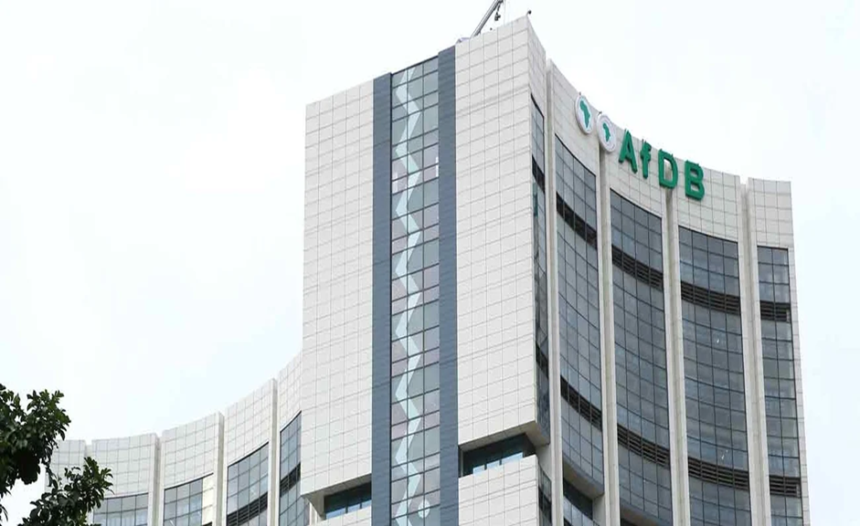
Nigeria’s economy may face renewed growth pressures by 2027 as declining global oil prices threaten external revenue inflows, according to the latest African Economic Outlook 2026 report released by the African Development Bank Group (AfDB).
The report projects that Nigeria’s economy will grow marginally from an estimated 4.0 per cent in 2025 to 4.1 per cent in 2026, driven largely by improved oil production, stronger services sector activity, and rising public investment in infrastructure. However, that momentum is expected to weaken in 2027, with growth forecast to slow to 3.7 per cent as global oil prices soften and foreign earnings decline.
The projection highlights a recurring challenge within Africa’s largest economy: despite ongoing diversification conversations, Nigeria remains heavily exposed to oil market volatility and external macroeconomic shocks.
According to the AfDB, “Growth in Nigeria, the region’s largest economy, is projected to increase marginally from an estimated 4.0 per cent in 2025 to 4.1 per cent in 2026, supported by increasing oil prices and production, growth in the services sector, and increased public investment in electricity, transport, and logistics. In 2027, growth is projected to decelerate to 3.7 per cent on account of the anticipated easing of global oil prices and thus reduced external revenue inflows.”
Nigeria’s Growth Story Remains Structurally Fragile
The AfDB’s projections reveal a deeper structural concern beyond headline GDP growth figures. While Nigeria continues to benefit from periodic oil price recoveries, the broader economy remains vulnerable to fluctuations in global commodity markets.
The bank warned that Africa’s medium-term outlook faces mounting pressure from:
- inflationary shocks
- tightening global financial conditions
- exchange rate depreciation
- supply chain disruptions
- rising fuel and fertiliser costs
For Nigeria, these pressures carry additional implications because of the economy’s dependence on oil exports for foreign exchange earnings, fiscal stability, and public financing.
Higher fuel and fertiliser costs could also affect agricultural productivity and worsen food inflation across the continent, a particularly sensitive issue for Nigeria where food inflation has remained one of the biggest drivers of household economic stress.
The AfDB noted that persistent inflationary conditions may force African central banks to maintain tight monetary policy regimes, reducing access to private sector credit and slowing broader economic activity.
Why the 2027 Slowdown Matters for Nigeria’s Business Environment
Although a projected 3.7 per cent growth rate may still appear relatively positive within a difficult global economy, the slowdown matters because Nigeria requires significantly higher growth levels to absorb unemployment pressures, reduce poverty, and sustain investor confidence.
AfDB President Dr Sidi Tah stressed that Africa would need to sustain annual growth levels of at least seven per cent over an extended period to drive meaningful job creation and poverty reduction.
Tah said, “Africa stands at a critical juncture in its development journey. Its economies continue to demonstrate remarkable resilience despite numerous concurrent challenges, such as escalating trade tensions, the intensifying effects of climate change, the effect of the COVID-19 pandemic, declining international aid and foreign direct investment, increased global and regional conflicts, and ongoing geopolitical fragmentation.”
He added, “Achieving sustained and inclusive growth will require a substantial increase in investment. Africa must raise annual growth to 7 per cent or higher, sustained over decades, to enable large-scale job creation and accelerated poverty reduction.”
For Nigeria, this raises difficult questions about whether current economic reforms are generating enough productive diversification beyond hydrocarbons.
The Real Economic Question: Can Nigeria Reduce Oil Dependence?
One of the clearest implications of the AfDB outlook is that Nigeria’s economic future may increasingly depend on how quickly it can deepen non-oil growth sectors capable of generating stable export earnings and domestic productivity.
The bank highlighted sectors such as:
- Electricity
- Transport
- Logistics
- Renewable energy
- Data centres
- Services
as critical areas for investment and economic transformation.
This aligns with growing investor interest in Africa’s digital economy, energy transition infrastructure, and logistics networks as alternative engines of growth.
The report also urged African governments to improve domestic resource mobilisation by:
- Broadening tax bases
- Digitising tax administration
- Improving transparency
- Strengthening accountability systems
These recommendations are particularly significant for Nigeria as the government continues efforts to expand non-oil revenue generation amid rising fiscal pressures.
Africa’s Economic Future Increasingly Depends on Structural Reform
Beyond Nigeria, the AfDB projects that West Africa’s growth will stabilise at 4.7 per cent in 2026 and 4.5 per cent in 2027, compared with 4.8 per cent in 2025. The bank noted that 10 of the region’s 15 countries are expected to achieve growth rates above five per cent in 2026.
At the continental level, Africa remains one of the world’s fastest-growing regions, with average real GDP growth estimated at 4.4 per cent in 2025.
However, the AfDB warned that sustaining this momentum would require deeper structural reforms, stronger financial systems, and better crisis-response mechanisms capable of shielding economies from recurring global disruptions.
The report estimated that Africa could unlock as much as $1.43tn annually by addressing inefficiencies in public investment, tax administration, and resource mobilisation. According to the bank, nearly $469bn in potential revenue remains untapped due to weaknesses in compliance systems and policy design, while more than 40 per cent of public investment is currently lost to inefficiencies.
What This Means for Investors and Businesses
For investors, the AfDB’s projections reinforce a familiar reality: Nigeria remains one of Africa’s most commercially significant markets, but also one of its most structurally volatile.
The medium-term outlook suggests that future competitiveness may increasingly depend on:
- Economic diversification
- Infrastructure investment
- Fiscal discipline
- Digital transformation
- Export competitiveness
- Macroeconomic stability
As global capital becomes more selective amid rising geopolitical fragmentation and financial tightening, African economies may need to compete more aggressively for investment by strengthening governance systems, regulatory credibility, and long-term economic resilience. For Nigeria specifically, the challenge may no longer simply be achieving growth, but achieving growth that is less dependent on the cyclical fortunes of global oil markets.