

Lagos Free Zone and CEVA Logistics have entered a strategic joint venture aimed at transforming integrated logistics services in Nigeria and strengthening West Africa’s position in global supply chains.
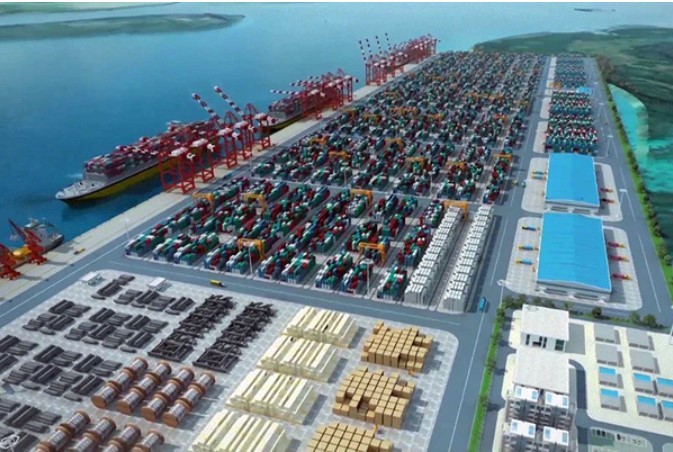
The partnership marks a significant milestone for regional trade infrastructure, creating the first warehouse within Lagos Free Zone to be operated by a global logistics leader. Located inside the free zone that hosts Nigeria’s Lekki Deep Sea Port, the new facility is expected to improve cargo movement, warehousing efficiency and market access for manufacturers, importers and exporters targeting West Africa.
The agreement has received approval from Nigeria’s Federal Competition and Consumer Protection Commission, with CEVA Logistics taking a majority stake in the newly created venture.
Why the Lagos Free Zone CEVA Logistics Deal Matters
This is more than a corporate partnership. It is a signal that Nigeria’s logistics ecosystem is entering a new phase where port infrastructure, warehousing, customs efficiency and regional trade integration are becoming increasingly interconnected.
For decades, one of the biggest obstacles to doing business in Nigeria and much of sub-Saharan Africa has been logistics friction. Delays at ports, poor warehousing capacity, congestion, customs bottlenecks and weak inland connectivity have raised the cost of trade and reduced competitiveness.
The Lagos Free Zone-CEVA Logistics alliance seeks to address those structural inefficiencies through a vertically integrated model.
That means:
- Deep sea port access through Lekki Port
- Free zone industrial infrastructure
- Modern warehousing capacity
- Faster customs movement
- Regional export access to ECOWAS markets
- Global logistics management standards
For investors and manufacturers, such integration can significantly reduce time-to-market and supply chain uncertainty.
Lagos Free Zone Targets One-Stop Industrial Ecosystem
Chief Executive Officer and Managing Director of Lagos Free Zone, Adesuwa Ladoja, said the partnership aligns with LFZ’s long-term ambition to build a complete business environment for manufacturing and trade. According to her, combining Lekki Port, industrial infrastructure and efficient logistics solutions strengthens the free zone’s ability to serve as a gateway for West Africa.
Her statement reflects a broader shift in economic development strategy. Modern industrial zones are no longer judged only by land availability or tax incentives. They are judged by how efficiently goods move. In the era of just-in-time manufacturing and regional value chains, logistics performance has become as important as electricity, labour and financing.
CEVA Logistics Expands Nigeria Bet
For CEVA Logistics, the move deepens its footprint in Africa’s largest economy and most populous consumer market. Jean-Baptiste Rambaud, Vice President, Air and Ocean Product at CEVA IMEA, said the company’s targeted investments in Nigeria reflect confidence in the country as a gateway for servicing West Africa.
That confidence is notable.
Global logistics players typically expand where they see rising trade flows, growing consumer demand and improving infrastructure conditions. CEVA’s decision suggests Nigeria remains strategically important despite macroeconomic volatility.
The company also emphasised that West Africa’s youthful and growing population makes the region an attractive future market, particularly for FMCG manufacturers.
Lekki Port Changes the Trade Equation
The emergence of Lekki Deep Sea Port is central to the story. Historically, congestion at older Nigerian ports imposed high transaction costs on importers and exporters. Vessel delays, clearance bottlenecks and inland transport challenges often undermined efficiency.
Lekki Port introduces deeper draught capacity, larger vessel handling capability and modern systems that can improve throughput.
When paired with a nearby free zone warehouse run by an experienced global logistics operator, the economics become more compelling. Goods can arrive, move quickly into storage or assembly environments, and then be distributed locally or regionally with lower friction.
Green Channel Could Become a Competitive Advantage
Lagos Free Zone also highlighted its Green Channel logistics corridor, approved by the Nigeria Customs Service in February 2026. The corridor allows cargo to move directly between Lekki Port and Lagos Free Zone in hours rather than days.
That matters enormously.
In logistics, time is money. Delays create:
- Demurrage charges
- Inventory costs
- Working capital pressure
- Stock-out risks
- Missed delivery windows
Reducing cargo transfer time from days to hours improves predictability, one of the most valuable assets in manufacturing supply chains.
Implications for Nigeria’s Economy
If executed effectively, the venture could generate broad economic benefits.
1. Manufacturing Attraction: Manufacturers often choose production locations based on logistics efficiency. Better warehousing and port integration can attract new factories.
2. Export Growth: Duty-free access to ECOWAS markets can help Nigeria-based firms scale regionally.
3. Job Creation: Logistics parks, warehousing, trucking, customs services and manufacturing all create employment.
4. Foreign Direct Investment: Global operators entering structured partnerships can improve investor sentiment.
5. Supply Chain Modernisation: Exposure to international logistics standards can lift productivity across sectors.
Institutional Economics Lens: Why Infrastructure Alone Is Not Enough: Economists such as Douglass North argued that institutions matter as much as infrastructure. A port may be modern. A warehouse may be world-class. But if regulations are inconsistent, customs process opaque, or policy unstable, efficiency gains can be diluted.
For Nigeria to maximise the benefits of the Lagos Free Zone model, it must sustain:
- Predictable trade policy
- Transparent customs systems
- FX market stability
- Security of goods movement
- Contract enforcement
- Infrastructure maintenance
Without institutional credibility, physical infrastructure cannot fully unlock growth.
Why This Matters for West Africa
Many multinational firms currently serve West Africa through fragmented supply routes. Some rely on hubs outside the region before distributing inland. If Nigeria successfully develops an efficient integrated trade corridor through Lekki Port and Lagos Free Zone, it could reposition Lagos as a preferred gateway for West African commerce. That would strengthen Nigeria’s economic influence across ECOWAS and support regional integration goals.
Risks to Watch
Despite the optimism, several risks remain: Currency volatility: FX instability can affect import costs and planning.
Road connectivity: Port efficiency must connect to inland transport networks.
Policy reversals: Sudden trade restrictions could deter investors.
Power costs: Industrial competitiveness depends on reliable energy.
Security concerns: Cargo confidence requires safe corridors.
BrandiQ Takeaway
The Lagos Free Zone and CEVA Logistics joint venture is not merely a warehouse story. It is a strategic test of whether Nigeria can convert infrastructure investment into real trade competitiveness. Africa has long suffered from the paradox of opportunity without efficiency. Large markets, abundant labour and strategic geography have too often been undermined by weak logistics systems.
This partnership points to a smarter model: combine global expertise, modern ports, free zone incentives and faster customs execution. If Nigeria sustains reform discipline, Lagos could emerge not only as a commercial capital, but as the logistics command centre of West Africa.
In the modern economy, nations do not compete only on what they produce. They compete on how fast, how reliably and how cheaply they move what they produce. That is the real significance of this deal.