


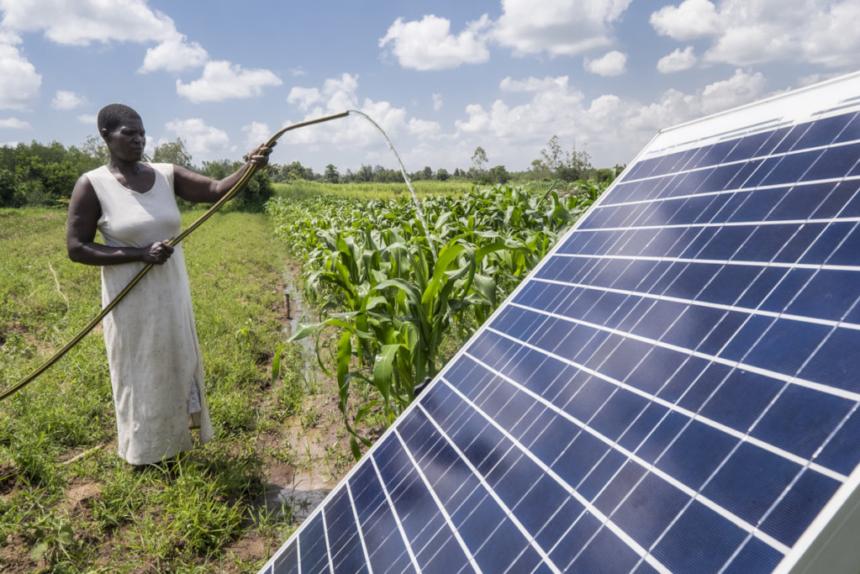

The United Kingdom’s Ayrton Fund has spent five years trying to answer a question every development financier eventually has to face: does public money spent on clean energy innovation actually reach the people it is meant to help, at a cost that justifies the spend? This week, ahead of the Ayrton-Oxford Academic Symposium at the University of Oxford, the fund published the numbers it says answer that question, and Nigerian researchers are among those featured in the results.
The Report
According to a statement released Monday, Ayrton-supported innovations have improved access to clean energy for 46 million people across emerging economies, mobilised more than £3 billion in public and private finance, and supported more than 256,000 green jobs. The figures were released ahead of the symposium, convened by the UK government’s Ayrton Fund in partnership with the Africa-Oxford Initiative, the Foreign, Commonwealth and Development Office, the Transforming Energy Access Learning Partnership (TEA-LP), and UK Research and Innovation (UKRI).
The fund describes its programmes as having built a global research and innovation network spanning 100 countries, involving 78 universities and more than 840 innovators, academics and delivery partners. That collaboration has produced 191 technology patent applications and contributed to more than 2,400 research papers, part of a broader effort to move scientific research out of laboratories and into commercially viable solutions for energy-poor communities. Independent reporting on the same announcement adds that the programme has also cut carbon dioxide emissions by more than 14 million tonnes.
Caroline Ward, Senior International Funds Manager at UKRI, said the Oxford gathering offers a chance to deepen collaboration across the clean energy value chain, bringing together universities, innovators, funders and policymakers to build more equitable partnerships and speed up the development of viable clean energy solutions. Professor Kevin Marsh, Director of the Africa-Oxford Initiative, said African researchers will play a critical role in solving global challenges around energy access and the green transition, and that translating research into on-the-ground impact requires closer collaboration between research, innovation and investment communities, building on a decade of AfOx’s work supporting African researchers and scholars.
Nigeria features directly in the programme’s results. Professor Misbahu Ladan Mohammed of Usmanu Danfodiyo University, Sokoto, said his institution’s involvement in TEA-LP helped reshape its Master of Science in Renewable Energy programme, introducing two new practical courses: Local Solutions for Energy Access, and Appliances for Off-Grid Communities. He described the past three years as evidence that partnerships like TEA-LP can drive curriculum reform faster than conventional university processes, giving students hands-on exposure to locally relevant, market-ready technologies rather than theory alone. Mohammed argued that African universities need to be treated, and to act, as active partners shaping energy research and education rather than passive recipients of external funding.
The fund’s first phase ran from 2021 to 2026 and was delivered through 40 UK-funded programmes involving more than 1,000 partners worldwide. Its second phase is now underway and will run to 2030, a timeline that lines up with continuing efforts across Nigeria and other African countries to expand decentralised renewable energy solutions in rural and off-grid areas still without reliable grid electricity.
The Analysis
Development finance announcements are often reported as a single headline figure, and this one is no exception: 46 million people reached. That number is worth taking seriously, but it is also worth doing the arithmetic the press statement does not do for you.
The leverage ratio is the most economically interesting figure in the release, and it is buried in a subordinate clause. The Ayrton Fund’s original UK government commitment was up to £1 billion over its first phase, from April 2021 to March 2026. Against that base, the programme reports having mobilised more than £3 billion in public and private finance, meaning every pound of UK public money appears to have drawn in roughly three pounds of additional capital. For a business audience evaluating public climate finance instruments generally, that ratio is the actual test of whether a government fund is functioning as a catalyst for private investment or simply as a direct subsidy. A three to one leverage ratio is respectable by international development finance standards, though it falls short of the five to one or higher ratios some multilateral climate funds claim, and independent verification of how that £3 billion was actually mobilised, rather than simply co-located with Ayrton-funded projects, would strengthen the claim considerably.
The cost per person and cost per job figures put the achievement in more grounded terms. Set against the full £3 billion in mobilised finance, the programme works out to roughly £65 mobilised per person newly connected to clean energy, and close to £12,000 in finance mobilised per green job supported. Neither figure is unusually low or high for blended finance energy access programmes in emerging markets, but both are far more useful for comparing this fund against alternative uses of the same capital than the standalone headline numbers allow. Any Nigerian policymaker or investor evaluating whether to participate in the fund’s second phase should be asking for the equivalent efficiency figures from competing clean energy finance vehicles before assuming the Ayrton model is the most cost-effective option available.
The university partnership model is the part of this story most directly relevant to Nigerian institutions, and arguably the most undervalued. Professor Mohammed’s account of TEA-LP reshaping Usmanu Danfodiyo University’s renewable energy curriculum in three years, faster than internal university reform processes typically allow, points to a genuine structural advantage of external, outcome-focused funding partnerships over purely internal academic planning cycles. For Nigerian universities and technical institutes watching this programme, the lesson is not simply that foreign funding is available, but that funding tied to specific applied outcomes, in this case off-grid appliance design and localised energy solutions, can move curricula and research output faster than funding that arrives without that structure attached.
The second phase’s continuation through 2030 is the detail worth tracking rather than the announcement itself. A first phase’s headline results are, almost by definition, a marketing document for securing a second phase’s funding and continued government commitment. The genuine test of the Ayrton model’s value will be whether its second phase, running alongside a broader UK International Climate Finance commitment, sustains or improves on the leverage ratio and cost efficiency established in its first five years, particularly as African governments and universities negotiate what role they play in shaping that next phase, rather than simply receiving its outputs.
For BrandiQ’s readers working in energy, infrastructure, and development-adjacent sectors, the practical takeaway is straightforward: treat the 46 million figures as a starting point for due diligence, not a conclusion. The ratios behind it, leverage, cost per person, cost per job, are the numbers that actually determine whether a fund like Ayrton represents good value for the public money behind it, and they are the numbers worth requesting directly from any similar programme before recommending client or institutional participation in its next phase.