
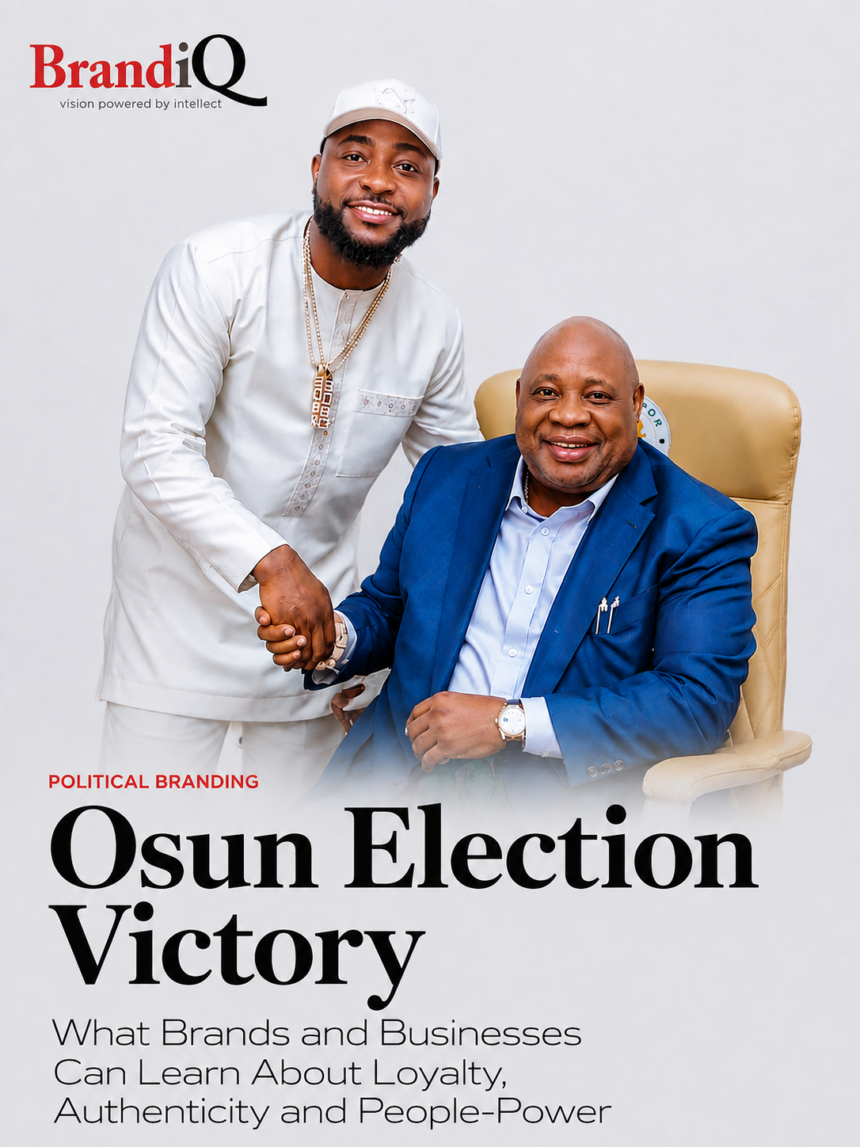

Adeleke’s re-election offers an unusually rich case study in political branding: money can buy attention, celebrity can transfer meaning, but neither can manufacture the trust, emotional affinity and collective conviction that make people act.
The most interesting lesson from the 2026 Osun governorship election may have little to do with party politics. It is a lesson about brands and people. On August 15, voters in Osun were presented with a contest in which the incumbent governor, Ademola Adeleke of the Accord Party, faced the candidate of the governing All Progressives Congress, Munirudeen Bola Oyebamiji. The APC had built a formidable national campaign structure around the election, describing the poll as a “must-win” contest and a test of its readiness for 2027. Its campaign council was chaired by Imo State Governor Hope Uzodimma, with the Senate President Godswill Akpabio and Speaker Tajudeen Abbas among the co-chairmen.
Yet when the votes were counted, Adeleke prevailed. The final result announced by the Independent National Electoral Commission gave him 511,067 votes against Oyebamiji’s 444,815, a winning margin of 66,252 votes. The result is politically consequential, but it is even more interesting as a case study in influence. It demonstrates that power, resources and visibility are not the same thing as persuasion. In political markets, as in commercial markets, the organisation with the largest machinery does not necessarily own the strongest relationship with its audience.
That distinction deserves attention from corporate Nigeria. Companies routinely spend enormous amounts on advertising, promotions, influencers, sponsorships and distribution in the belief that sufficient market pressure will produce consumer action. But consumers, like voters, retain agency. They can listen to the message, accept the incentive and still make a decision based on something deeper: accumulated experience, trust, identity, affiliation and belief.
The First Lesson: People Are Not Transactions
The Osun contest was accompanied by allegations of widespread vote-buying. Reports before the election alleged that agents of both APC and Accord were offering voters between N10,000 and N20,000, with inducement reportedly beginning days before polling. INEC itself had warned about the menace of vote buying and urged the media to investigate and expose it.
That creates one of the election’s most important lessons for business. An incentive can influence behaviour without owning loyalty. A discount can bring a customer into a shop. A promotion can generate a transaction. A free data bundle can stimulate usage. An influencer can produce clicks. But none of these automatically creates preference. The consumer may take the benefit and remain emotionally committed to another brand.
The political equivalent is obvious. Financial inducement attempts to reduce voting to a transaction: I give you something; you give me your vote. But voting, like many important consumer decisions, is not always governed by a simple transactional calculation. Identity, memory, trust, resentment, perceived performance and social belonging can overwhelm a short-term financial incentive.
This is consistent with a long tradition of behavioural research. Herbert Simon’s work on bounded rationality demonstrated that human beings do not make decisions through perfectly calculated optimisation. Daniel Kahneman and Amos Tversky’s research subsequently showed how emotion, heuristics, framing and context influence decision-making. The commercial implication is profound: customers do not merely calculate value; they experience it.
A brand that therefore treats its customers as wallets rather than relationships may discover, as political organisations periodically do, that purchasing attention is much easier than purchasing allegiance.
The Second Lesson: Authenticity is An Economic Asset
Ademola Adeleke’s political brand has always been unusual. He is not a conventional technocratic political figure. His public persona is heavily associated with his distinctive personality, dancing, informality and cultural accessibility. His family is also unusually visible in Nigerian popular culture, particularly through his nephew David Adeleke, known globally as Davido.
The important point is not whether one approves of Adeleke’s politics. It is that his political identity has been constructed around a recognisable human personality rather than an entirely manufactured institutional persona.
That connects directly with the theory of brand authenticity. Consumers increasingly distinguish between what a brand claims to be and what they perceive it genuinely to be. Beverland’s work on brand authenticity, for example, emphasises heritage, sincerity, craftsmanship and commitment as mechanisms through which brands establish authenticity. In political communication, the equivalent is credibility: does the candidate appear to be speaking in his own voice, or performing a role designed by consultants?
The commercial lesson is straightforward. People forgive imperfections in authentic brands more readily than they forgive artificiality in supposedly perfect ones. This does not mean that authenticity guarantees success. It means that consistency between identity, behaviour and communication can create a form of emotional credibility that money cannot easily reproduce.
The Davido Effect: When Influence Tansfers from One Brand to Another

Perhaps the most fascinating branding phenomenon in the Osun election was the presence of Davido. Davido is not merely a celebrity. He is a global entertainment brand with an enormous digital following and a distinctive emotional relationship with millions of young people. His intervention therefore created an unusual phenomenon: the transfer of symbolic capital from a cultural brand to a political brand.
Davido campaigned publicly for his uncle and used his international platform to draw attention to concerns about the election. Before the poll, he appealed to Donald Trump and the international community to pay attention to concerns about possible violence and intimidation. He later defended the appeal by pointing to his dual Nigerian-American citizenship.
There is an important qualification here. It would be intellectually unsound to claim that Davido caused Adeleke’s victory. Election results cannot establish such a causal relationship without detailed evidence separating his effect from other factors such as incumbency, grassroots organisation, policy performance, regional identity and voter preference.
But communication theory provides a useful way to understand what may have happened. Grant McCracken’s meaning-transfer model argues that cultural meanings attached to a celebrity can move to a product or brand through endorsement. The mechanism is familiar in commercial marketing: Nike does not merely employ athletes to advertise shoes; it borrows meanings associated with athletic achievement. Luxury brands borrow status from celebrities. Technology companies borrow creativity from artists.
Davido represents an unusually powerful version of this phenomenon because his brand carries several meanings simultaneously: youth, Nigerian cultural confidence, global relevance, entertainment, wealth, authenticity and digital influence. His association with his uncle therefore potentially transferred some of those meanings into the Adeleke political brand. The strategic lesson for business is enormous: the best influencer is not necessarily the person with the largest audience; it is the person whose meaning is compatible with the brand. A celebrity with 50 million followers but no credible relationship with the product may produce enormous reach and little persuasion. A smaller creator whose identity naturally overlaps with the brand can produce substantially greater influence.
Lesson 3: Loyalty Is Stronger When It Becomes Identity
There is another dimension to the Adeleke-Davido relationship: family became brand architecture. In conventional corporate branding, brands create portfolios. In politics, people create networks of identity. Adeleke’s relationship with Davido gives the political brand an unusual cultural bridge into Nigeria’s entertainment economy and youth culture.

This can be understood through social identity theory, associated particularly with Henri Tajfel and John Turner. People do not define themselves exclusively as individuals; they also derive identity from groups to which they feel they belong. Brands exploit this principle constantly. Apple users may identify as members of a creative or design-conscious community. Harley-Davidson built a community around a lifestyle rather than a motorcycle. Nike’s most powerful communication has historically been about what kind of person the customer can become, not merely what the shoe can do.
Political movements work similarly. When people begin to think of a political brand as us rather than them, persuasion becomes less dependent on individual messages. The brand becomes an identity marker. That is where the Osun story becomes particularly interesting. The post-election response suggests that Adeleke’s supporters did not regard themselves simply as customers of a political proposition. They regarded the election as a collective experience. The resulting celebration is therefore not merely about an electoral statistic; it is about belonging.
For businesses, this is the difference between a customer base and a community.
Lesson Four: Confidence Itself Is a Brand Signal
Another characteristic of the Adeleke campaign was its apparent confidence in its grassroots support despite the scale of the opposition machinery. The APC openly treated the election as a crucial test. Its national campaign structure brought together governors, national legislators, federal officials and other party stakeholders.
Adeleke’s campaign, meanwhile, repeatedly emphasised grassroots mobilisation and the popularity of his administration. His government had also publicly promoted his endorsement of President Bola Tinubu for 2027, demonstrating that the Osun contest was not necessarily reducible to a simple anti-Tinubu vote. That point is important to note.
It is tempting to interpret the result as a straightforward rejection of the federal government. The evidence does not support such a simplistic conclusion. Indeed, Adeleke himself had endorsed Tinubu’s re-election. The more interesting interpretation is that voters can separate political brands that political elites assume belong together.
For marketers, this is a familiar phenomenon. A consumer may like a parent company but reject one of its products. A customer may admire a celebrity but dislike the celebrity’s political position. A person can support a national brand while preferring a local competitor.
The lesson is that brand architecture is not controlled entirely by the brand owner. Audiences construct their own meanings. Trust is now an infrastructure The election also demonstrated another increasingly important phenomenon: citizens did not simply vote; many voters and political actors remained intensely focused on the credibility of the electoral process.
Before the election, concerns had been raised about the integrity of ballot materials, technology, result transmission and the performance of electoral institutions. INEC had itself acknowledged the importance of protecting electoral integrity and had invited accredited observer groups to monitor the exercise under principles of impartiality and objectivity. That environment created a second contest alongside the political contest: the battle for trust. This is increasingly familiar in business.
Customers now want to know not only whether a company sells a good product but whether the company is honest about how it makes, prices, distributes and governs that product. Trust is therefore becoming a form of infrastructure. Without it, transactions become more expensive because customers require additional reassurance. In digital commerce, trust determines whether people will enter their card details. In banking, it determines whether they will deposit money. In AI, it determines whether citizens will accept algorithmic decisions. In politics, it determines whether voters accept election results. A brand that destroys trust may survive a campaign. It may not survive the relationship.
Lesson Five: Resilience – The brand is Tested When the Environment Turns Hostile
The Osun election also offers a useful lesson in organisational resilience. Resilience is frequently misunderstood as simply “never giving up”. In strategic management, it is better understood as the ability of an organisation to absorb disruption, adapt and continue pursuing its objective. That has direct relevance to companies.
Markets rarely behave as planned. Competitors slash prices. Regulations change. supply chains break. Technology disrupts business models. Reputation crises emerge overnight. A resilient organisation is not one that assumes nothing will go wrong. It is one that has enough institutional confidence, leadership coherence and stakeholder loyalty to continue functioning when things do.
Adeleke’s political survival demonstrates the value of strategic persistence. But businesses should not confuse persistence with stubbornness. Resilience requires feedback. It requires listening to customers, adapting the proposition and maintaining the organisational capabilities that make recovery possible.
Lesson Six: What Brands Should Learn from Davido
The Davido phenomenon deserves a separate lesson because it illustrates where influence marketing is heading. For years, brands have treated celebrities primarily as media assets: How many people can this person reach? The better question is now: What does this person mean to those people?
Davido’s value to the Adeleke brand was not simply his follower count. His influence was embedded in identity, family, culture and emotional connection. His intervention therefore had the potential to activate people who already understood his symbolic language.
This is close to the logic of parasocial relationships, first developed by Horton and Wohl in 1956. Audiences can develop relationships with media personalities despite never knowing them personally. Social media intensifies this phenomenon because creators communicate directly, frequently and intimately with followers. For brands, this changes influencer marketing from a reach business into a relationship business. The future belongs less to the influencer who can merely deliver impressions and more to the creator whose audience believes, “This person understands me.”
From Apple to Nike to African brands: the same lesson
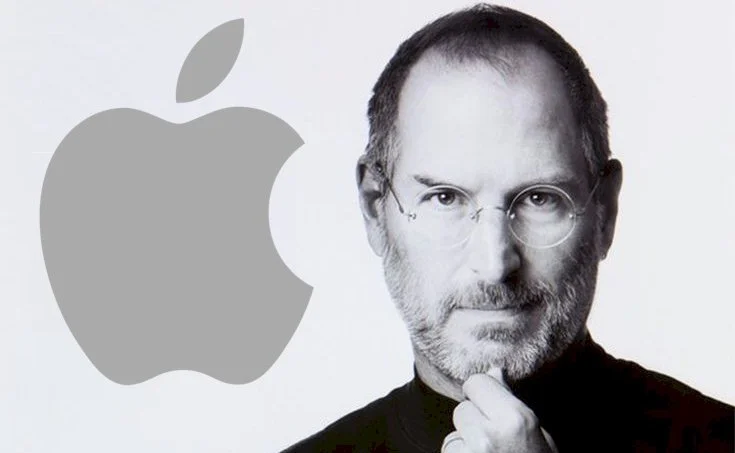
The commercial world has repeatedly demonstrated the power of emotional identity. Apple’s success has never depended solely on technical specifications. Its brand has historically associated technology with creativity, individuality and design. Nike does not sell athletic shoes simply by explaining their construction; it sells a proposition about aspiration and human potential. Patagonia built powerful loyalty by connecting its products to environmental values. In Africa, brands such as MTN, Safaricom and Jumia have similarly invested heavily in creating emotional and cultural relevance rather than competing only on functional attributes.
The common denominator is meaning. A product can be copied. A price can be undercut. A distribution network can be replicated. But a deeply embedded emotional relationship is much harder to reproduce. That is why the strongest brands often survive periods when their competitors offer objectively similar products.
Lesson Seven: Power Belongs to the People
The Osun election should not be romanticised. Nigerian elections remain deeply affected by money, political machinery, institutional weaknesses, identity and the power of incumbency. Allegations of vote buying and political violence deserve investigation rather than being transformed into convenient mythology. Nor should Adeleke’s victory automatically be interpreted as a national referendum on President Tinubu or a forecast of the 2027 presidential election.
But as a case study in influence, the election is extraordinarily revealing. The APC possessed institutional scale. Adeleke possessed incumbency, a grassroots network, a distinctive personal identity and a highly recognisable cultural ecosystem around his family. Davido brought international visibility and youth-cultural influence. Voters ultimately made the decision. That is the crucial point for business. The organisation may control the campaign, but the audience controls the meaning.
BrandiQ Analysis
The Osun election provides a powerful framework for understanding the future of brands in an increasingly fragmented economy. The central lesson is that brand power is moving from ownership to relationships.
Companies once controlled most of the communication environment. They produced the message, bought the media and determined the narrative. Social media has changed that equation. Customers now interpret, remix, challenge and distribute brand messages themselves. The same is true of politics.
This is why the concept of brand affinity has become more important than simple awareness. Awareness answers the question: Do people know us? Affinity asks: Do people feel that we belong together? The difference is enormous.
A customer who knows Coca-Cola can easily switch to Pepsi. A customer who identifies deeply with a brand community behaves differently. The same principle applies to political loyalty. Once a brand becomes part of someone’s identity, switching becomes psychologically more costly.
The Osun result also demonstrates the limitations of what might be called resource determinism – the assumption that whoever possesses the greatest resources must possess the greatest influence. Businesses make this mistake frequently. They assume the largest advertising budget will defeat the smaller competitor. They assume the biggest celebrity will deliver the best campaign. They assume more media exposure equals greater persuasion.
It does not.
Resources create capacity. Relationships create influence.
The distinction should reshape how Nigerian companies allocate marketing budgets. Instead of asking only how many people a campaign reaches, boards should increasingly ask how deeply the brand is embedded in the lives of those people. Instead of measuring influencers primarily through followers, brands should measure credibility, cultural fit, engagement quality and behavioural influence. Instead of treating customer experience as an operational issue, companies should understand it as a central component of brand equity.
This is consistent with Keller’s Customer-Based Brand Equity framework, which argues that the strongest brands are those that establish favourable, strong and unique associations in consumers’ minds. The objective is ultimately not merely recognition but resonance.
Osun offers a political illustration of that principle: when the brand becomes meaningful enough, the audience begins to defend it.
BrandiQ Verdict
The Osun election is not proof that money does not matter. It is proof that money has limits. It is not proof that celebrity guarantees political success. It is evidence that celebrity influence becomes powerful when the celebrity’s meaning is compatible with the brand being endorsed. It is not proof that institutional power is irrelevant. It demonstrates that institutional power cannot substitute indefinitely for public trust. And it is certainly not proof that every incumbent who survives a difficult election possesses an unbreakable brand. The harder test begins after victory, when promises encounter performance and emotional loyalty encounters reality.
For Nigerian businesses, however, the message is unmistakable. Stop thinking of customers as transactions. Stop confusing visibility with influence. Stop treating influencers as billboards. Stop assuming that a large budget can manufacture affection.
The enduring brands of the next decade will be those that understand what the Osun election has demonstrated in a particularly dramatic way: people may accept your incentive, watch your advertisement and listen to your message, but ultimately, they act according to what they believe, whom they trust and where they feel they belong.
That is the real economy of influence.
And in an age when consumers have more choices, more platforms and more power to speak back, brand loyalty is no longer something a company can demand. It is something people must be given a reason to defend.