


‘Book Now, Fly Later’ initiative reflects growing convergence of banking, lifestyle financing and travel services as consumer demand for flexible payment solutions rises
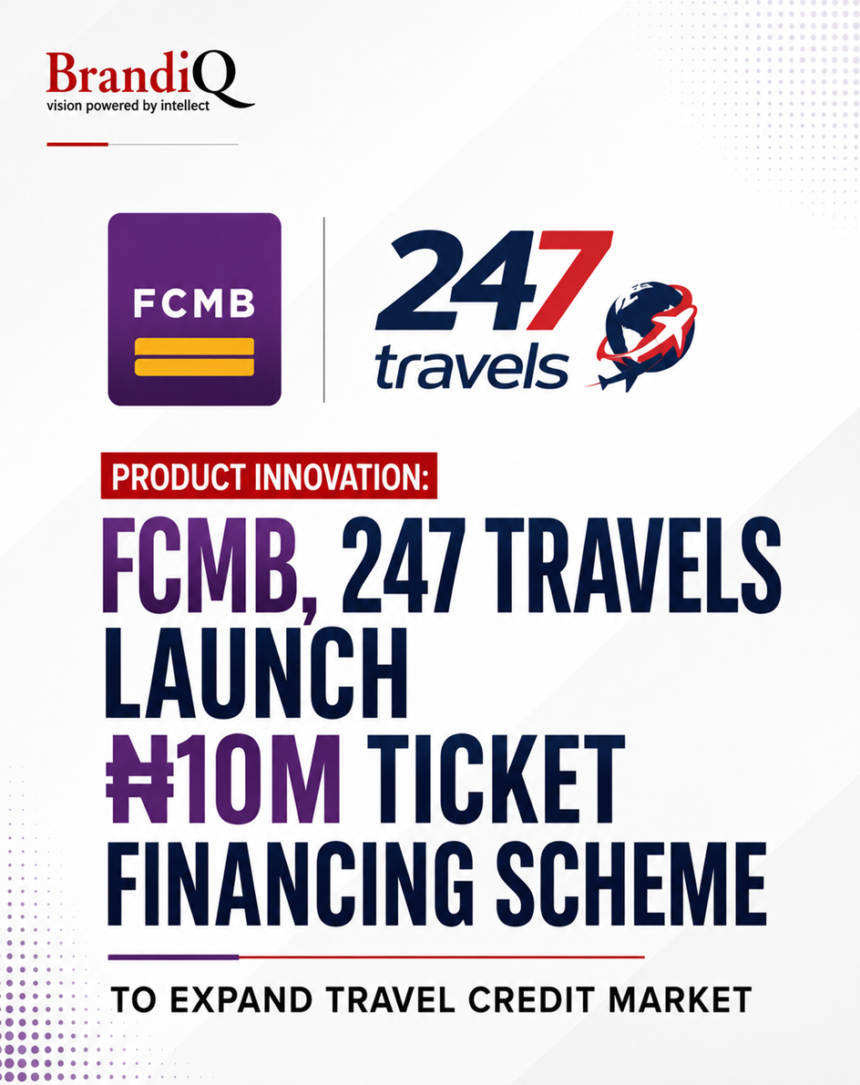
First City Monument Bank (FCMB) has partnered with travel technology company 247 Travels to introduce a new consumer financing solution that allows eligible customers to spread the cost of international airline tickets over several months, reflecting the growing convergence of financial services and lifestyle spending in Nigeria’s increasingly digital consumer economy.
The initiative, branded “Book Now, Fly Later,” provides qualified FCMB customers with access to financing of up to ₦10 million for international flight tickets purchased through 247 Travels. Under the arrangement, customers can repay the facility over periods ranging from three to nine months, reducing the immediate financial burden associated with overseas travel for business, education, healthcare, tourism and family commitments.
The partners said the facility is available exclusively through FCMB Premium Banking and combines the bank’s consumer lending capabilities with 247 Travels’ airline booking platform to create a seamless digital financing experience. Eligible salaried and self-employed customers who satisfy the bank’s credit requirements are expected to receive loan approval and disbursement within 24 working hours, enabling them to secure flight reservations without paying the full ticket cost upfront.
Speaking on the initiative, FCMB’s Managing Director, Yemisi Edun, said the financing solution reflects the bank’s broader commitment to developing customer-focused products that remove financial barriers while promoting responsible money management.
“At FCMB, we believe banking should empower people to pursue their goals without unnecessary financial strain. Our Book Now, Fly Later solution makes travel more accessible and affordable while giving customers flexibility to manage their finances responsibly,” she said.
Edun added that the partnership aligns with the bank’s long-term strategy of driving growth through innovation, collaboration and customer-centric financial solutions capable of simplifying important life decisions.
For 247 Travels, the partnership responds to changing consumer expectations in the travel industry, where flexibility has become almost as important as pricing. According to the company’s Managing Director, Tunji Adeyemi, travellers increasingly seek financing options that allow them to secure flights immediately while managing payment obligations over time.
“Travellers increasingly want flexibility and convenience. Our partnership with FCMB enables customers to secure flights and spread payments over time,” Adeyemi said.
Also commenting, FCMB’s Group Head of Premium Banking, Opeyemi Makinwa, described the programme as part of the bank’s broader effort to expand lifestyle-oriented financial services beyond traditional banking products.
According to him, today’s consumers increasingly expect financial services to integrate naturally into their daily activities, making instalment-based travel financing another example of how banking is evolving from transactional services to lifestyle enablement.
Customers can apply through FCMB’s dedicated Book Now, Fly Later platform or directly via the 247 Travels website by selecting their preferred international flight and completing a financing request. Upon approval, the loan is disbursed while the airline ticket is simultaneously issued through the travel platform.
The initiative adds Nigeria to the growing list of markets where travel financing is becoming an important consumer credit category as financial institutions seek to diversify retail lending beyond conventional personal loans and salary advances.
The BrandiQ Perspective
The significance of this partnership extends well beyond airline ticket financing. It illustrates a much larger transformation taking place within the financial services industry.
Banks are increasingly repositioning themselves from institutions that simply hold deposits and provide loans into platforms that facilitate everyday experiences. Whether customers are buying smartphones, paying school fees, financing healthcare, purchasing vehicles or booking international travel, financial institutions are embedding credit directly into consumer journeys.
This trend, widely known as embedded finance, is becoming one of the fastest-growing segments of global financial services. Instead of customers first approaching a bank before making a purchase, financing is now being integrated directly into the point of sale, creating smoother and more convenient customer experiences.
For FCMB, the partnership represents more than another lending product. It strengthens the bank’s positioning within Nigeria’s growing lifestyle banking segment, where customer experience increasingly differentiates one financial institution from another. By aligning its financial products with travel, education and personal mobility, the bank is building deeper relationships with customers while opening additional revenue opportunities beyond conventional banking.
For 247 Travels, the benefits are equally strategic. One of the biggest obstacles facing travel agencies has always been consumers’ inability to pay the full cost of international tickets at once. By embedding financing directly into the booking process, the company potentially expands its addressable market, improves booking conversion rates and strengthens customer loyalty.
The initiative also reflects broader changes in consumer behaviour. Across global markets, younger consumers increasingly prefer flexible payment options over large one-time expenditures. The rapid growth of Buy Now, Pay Later (BNPL) services across retail, healthcare, education and travel demonstrates that convenience and affordability have become powerful competitive differentiators.
Nigeria’s travel industry appears to be following that global trajectory. However, the long-term success of such programmes will depend on prudent credit risk management. Travel financing remains unsecured consumer lending, making effective credit assessment, responsible borrowing and repayment discipline essential to ensuring sustainability for both lenders and customers.
As Nigeria’s financial services sector becomes increasingly digital, partnerships such as this signal that the future of banking will be shaped less by branches and more by ecosystems. The banks that thrive will be those capable of embedding financial services into the moments that matter most in customers’ personal and professional lives.