


Why Does Energy Waste Persist in Nigeria Despite Decade of Gas Ambitions
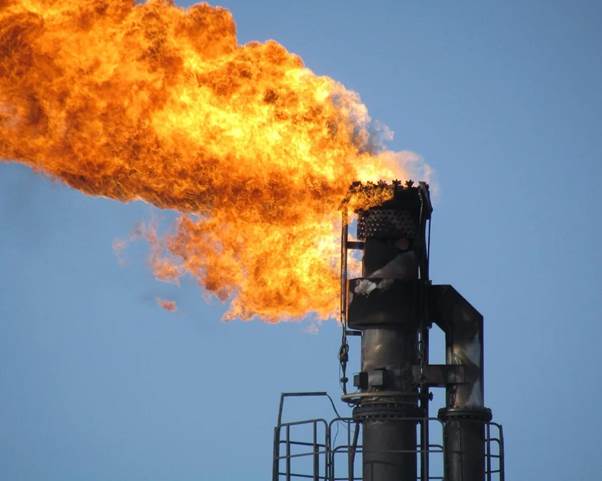
Nigeria flared approximately 76.92 billion standard cubic feet (Bscf) of natural gas between January and May 2026, even as households and businesses grapple with rising cooking gas prices and persistent energy shortages across the country.
Data published by the Nigerian Upstream Petroleum Regulatory Commission (NUPRC) showed that operators burnt a combined 76,919.78 million standard cubic feet of gas during the five-month period, representing resources that could have been utilised for electricity generation, industrial development, compressed natural gas (CNG) projects and domestic Liquefied Petroleum Gas (LPG) supply.
According to the NUPRC figures, Nigeria flared 17.17 billion standard cubic feet of gas in January, accounting for 7.10 per cent of total gas production for the month. The volume declined to 14.09 billion cubic feet in February, representing 6.44 per cent of output. March recorded 15.58 billion cubic feet, while April and May recorded 14.52 billion and 15.58 billion cubic feet respectively.
The latest figures emerged as domestic LPG prices continued to rise sharply. Market findings indicate that cooking gas prices increased from about N1,000 per kilogramme earlier in the year to as much as N2,400 per kilogramme in recent weeks. Industry sources attributed part of the supply pressure to declining LPG availability in the domestic market.
One industry source familiar with developments in the sector explained that recent supply challenges were linked to internal consumption at the Dangote Refinery rather than exports.
“The recent decline in LPG supply from the Dangote refinery, which has created a crisis in the domestic market, isn’t because of exports but is due to their internal utilisation for enhancing petroleum production capacity,” the source stated.
Despite possessing Africa’s largest proven gas reserves, estimated at over 200 trillion cubic feet, Nigeria continues to struggle with gas utilisation. A significant proportion of associated gas produced alongside crude oil is still being burnt off at oil production sites.
The Federal Government has repeatedly committed to ending routine gas flaring through its Decade of Gas initiative, the Petroleum Industry Act (PIA) 2021 and the Nigerian Gas Flare Commercialisation Programme (NGFCP). In December 2025, the NUPRC announced permits for successful bidders under the NGFCP, with projected investments of approximately $2 billion and the potential to capture between 250 million and 300 million standard cubic feet of gas daily that would otherwise be flared.
Expert Raises Concern Over Slow Progress
Commenting on the latest data, Professor of Energy at the University of Lagos, Dayo Ayoade, expressed concern that gas flaring remains widespread despite numerous policy interventions.
“It is always disappointing when the government sets up policies and laws to address a problem, but those laws do not seem to work effectively. That naturally creates concern among stakeholders, investors, host communities and environmental advocates,” Ayoade said.
According to him, Nigeria has made substantial policy progress through the Petroleum Industry Act and the Nigerian Gas Flare Commercialisation Programme, but implementation remains a major challenge.
“Historically, we ignored gas and focused almost entirely on crude oil development. Gas was largely treated as a by-product and was simply flared away. Over time, however, we realised that the country had wasted billions of dollars’ worth of resources that could have been used to industrialise Nigeria, create jobs, power industries and improve economic growth,” he stated.
The professor noted that while the Petroleum Industry Act was designed to discourage gas flaring through economic incentives and penalties, actual utilisation levels suggest significant gaps between policy intentions and operational outcomes.
He also identified inadequate infrastructure as a major obstacle.
“One of the major reasons gas flaring persists is that the infrastructure required to gather, process and transport gas remains insufficient. Pipelines, processing facilities, compression stations and transportation networks all require substantial investment,” Ayoade explained.
He added that stronger regulatory enforcement, increased investment and sustained political commitment would be necessary if Nigeria hopes to eliminate routine gas flaring and unlock the economic value of its gas resources.
Analysis: Why Nigeria’s Gas Flaring Problem Matters to Africa and the Global Economy
A Resource-Rich Nation Continues to Burn Wealth
From an energy economics perspective, the most striking aspect of the NUPRC data is the contradiction it reveals. Nigeria is home to Africa’s largest proven natural gas reserves, yet it continues to destroy a resource that many countries are desperately seeking to secure.
The 76.92 billion cubic feet of gas flared within five months represents more than an environmental problem; it is a significant economic loss. At a time when Nigerian households are paying record prices for cooking gas and industries are struggling with high energy costs, the continued destruction of usable gas reflects a persistent failure to convert natural resource wealth into productive economic value.
In simple terms, Nigeria is burning a commodity that could generate electricity, power industries, support manufacturing, reduce energy imports and create jobs.
The Economic Cost Extends Beyond Nigeria
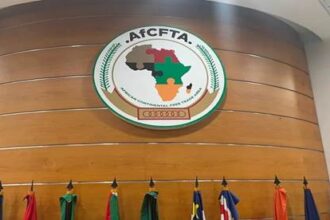
The implications are not limited to Nigeria alone. Africa is currently pursuing industrialisation through initiatives such as the African Continental Free Trade Area (AfCFTA). Energy availability will determine whether many African economies can successfully industrialise and compete globally.
Natural gas is widely regarded as a transition fuel capable of supporting economic growth while countries gradually increase renewable energy capacity. Every cubic foot of gas flared represents energy that could have powered factories, fertiliser plants, transportation systems and export-oriented industries.
For Africa, the persistence of gas flaring slows progress toward energy security and industrial development. At a time when many African countries face electricity shortages, the continued waste of such a strategic resource highlights the structural challenges confronting the continent’s economic transformation.
Implications for Global Energy Markets
The global energy market is undergoing profound change. The geopolitical disruptions caused by the Russia-Ukraine conflict have forced Europe and many Asian economies to diversify energy supply sources. Natural gas has become one of the most strategically important commodities in the global economy.
Countries with large gas reserves are increasingly viewed as critical suppliers in the emerging global energy landscape. Nigeria, with more than 200 trillion cubic feet of proven reserves, has the potential to become a major player in international gas markets through LNG exports and regional energy trade.
However, persistent gas flaring sends an unfavourable signal to global investors. It suggests that despite abundant resources, infrastructure deficits and regulatory weaknesses continue to constrain efficient resource utilisation.
Investors are increasingly directing capital toward countries that demonstrate strong energy governance, efficient resource management and clear pathways to monetisation. Gas flaring raises questions about whether Nigeria is moving quickly enough to capture these opportunities.
The Climate Change Dimension
Gas flaring is also attracting growing international scrutiny because of its contribution to greenhouse gas emissions. As governments, investors and multinational corporations adopt stricter environmental, social and governance (ESG) standards, countries that continue routine flaring risk reputational and financial consequences.
The global economy is moving toward carbon accountability. Energy projects increasingly compete for financing based on their environmental performance. Consequently, reducing gas flaring is no longer simply an environmental obligation; it has become an economic necessity for attracting international investment and maintaining competitiveness in a low-carbon world.
A Test of Nigeria’s Decade of Gas Strategy
Perhaps the most important takeaway from the latest data is that it represents a critical test of Nigeria’s Decade of Gas agenda.
The policy vision is compelling. The legal framework exists through the Petroleum Industry Act. The Nigerian Gas Flare Commercialisation Programme has attracted investor interest. The country possesses the reserves required to transform its economy through gas-led industrialisation.
Yet the latest figures demonstrate that implementation remains the weakest link. As Professor Ayoade correctly observed, the challenge is no longer policy formulation but execution. If Nigeria succeeds in converting flared gas into commercially productive energy, it could significantly strengthen energy security, lower domestic energy costs, attract billions of dollars in investment and reinforce its position as Africa’s leading gas economy.
If it fails, the country risks continuing a decades-long cycle of resource waste while other gas-producing nations capture opportunities emerging from the global energy transition.
The Bottom Line
The flaring of nearly 77 billion cubic feet of gas in just five months is more than an operational statistic. It represents lost economic value, missed industrial opportunities and delayed energy security for Africa’s largest economy.
For Africa, it highlights the urgent need to transform natural resources into productive assets that support industrial growth. For the global economy, it underscores the growing importance of efficient gas utilisation in an era of energy transition, supply diversification and climate accountability.
The lesson is clear: in the twenty-first-century energy economy, countries will not be judged solely by the resources they possess, but by how effectively they utilise them.