

How the World Bank’s Regional Electricity Strategy Is Rewiring the Economic Future of Africa
For decades, electricity has remained one of the greatest barriers to economic transformation in West Africa. While the region possesses vast natural resources, a youthful population, growing urban centres and expanding markets, weak electricity infrastructure has consistently constrained industrialisation, investment, manufacturing productivity and digital growth.
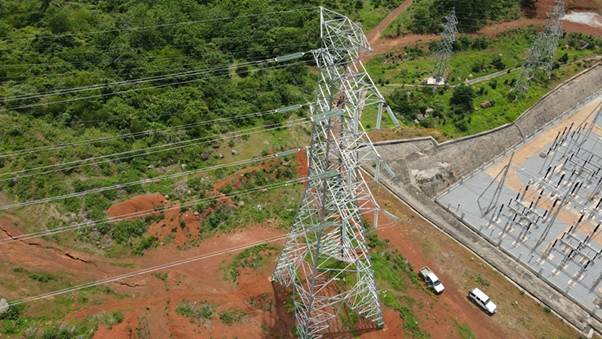
Today, however, a quiet but potentially transformative revolution is unfolding across the sub-region. According to recent disclosures from the World Bank, the West Africa Regional Power Integration and Electricity Access Programme is beginning to reshape the continent’s energy landscape through cross-border electricity trading, regional grid integration and large-scale transmission investments. The programme has already delivered more than 4,000 kilometres of high-voltage transmission infrastructure linking 15 West African countries and has expanded electricity access to more than three million people between 2019 and 2025.
While the figures appear technical, the broader significance is profound. What is emerging is not merely an electricity project but the foundation of a regional economic architecture capable of redefining trade, industrialisation, investment and competitiveness across Africa.
Why Electricity Remains Africa’s Most Strategic Development Challenge
Development economists have long argued that no country has achieved sustained industrialisation without reliable and affordable electricity. The historical experiences of Britain during the Industrial Revolution, the United States during its manufacturing expansion, Germany after reunification, China during its economic rise and South Korea’s export-driven transformation all reveal one common denominator: energy abundance.
In Africa, the opposite reality has often prevailed. Despite hosting over 400 million people, West Africa continues to experience some of the world’s lowest electricity access rates. Businesses routinely depend on expensive diesel generators, manufacturers face high operating costs, hospitals struggle with unstable power supplies and digital businesses encounter infrastructure limitations.
The consequences are significant. According to various development estimates, unreliable electricity can reduce productivity by between 10 and 40 per cent in some African economies, while significantly increasing the cost of doing business. This is why the World Bank-backed initiative deserves far more attention than it has received.
From National Grids to a Regional Energy Market
Perhaps the most important aspect of the programme is its ambition to move West Africa away from isolated national electricity systems toward an integrated regional energy market. Historically, most African countries-built power systems designed primarily for domestic consumption. This fragmented model often produced inefficiencies.
Some countries generated excess electricity that could not be fully utilised, while neighbouring countries suffered severe shortages. The West African Power Pool seeks to solve this problem by creating a unified regional market where electricity can move freely across borders, much like goods and services under the African Continental Free Trade Area.
The result is greater efficiency. Countries with surplus hydroelectric capacity can export power to neighbours facing shortages. Utilities can purchase cheaper electricity rather than invest immediately in expensive generation projects. Consumers benefit from improved reliability, while governments reduce fiscal pressure.
Already, regional electricity trade now accounts for approximately eight per cent of electricity consumption within the network, moving closer to levels seen in more mature regional electricity markets. The implications for regional integration are enormous.
The Strategic Importance for Nigeria
For Nigeria, the largest economy and population centre in West Africa, the programme offers both opportunities and responsibilities. Nigeria remains Africa’s biggest electricity paradox. Despite possessing one of the continent’s largest power generation capacities, millions of Nigerians still experience chronic electricity shortages.
Participation in a stronger regional power market could help Nigeria optimise generation assets, attract energy investment and position itself as both an energy producer and consumer within a broader regional ecosystem. The ongoing collaboration with global firms such as Siemens under the Presidential Power Initiative further strengthens this opportunity.
If successfully implemented, improved regional interconnections could support Nigeria’s ambition to expand industrial production, accelerate manufacturing growth and strengthen its role as a regional economic hub. For sectors such as cement, steel, agriculture processing, fintech, telecommunications and digital services, reliable electricity remains a critical competitiveness factor.
Why Investors in London, New York and Frankfurt Should Pay Attention
Global investors increasingly evaluate emerging markets through the lens of infrastructure readiness. Electricity reliability directly influences foreign direct investment decisions. A multinational manufacturer considering an African production facility will examine power availability before assessing labour costs or market potential.
This is why the World Bank’s programme has implications far beyond Africa. For investors in the United Kingdom, the United States and Europe, a more reliable West African electricity system lowers operational risk and increases the attractiveness of the region for manufacturing, logistics, data centres, digital infrastructure and industrial investments.
Investment opportunities are likely to emerge in transmission infrastructure, renewable energy development, battery storage technologies, smart grid systems and industrial power solutions. As global supply chains continue diversifying away from excessive dependence on single production centres, Africa’s infrastructure improvements could position the continent as an increasingly attractive destination for international capital.
The Hidden Story: Energy Security as Economic Security
One of the most overlooked dimensions of electricity infrastructure is its relationship with national security. Energy shortages often contribute to social instability, unemployment, poverty and weakened state capacity. Reliable electricity improves healthcare systems, strengthens educational institutions, supports security operations and enables economic participation.
The programme’s impact on more than 70,000 beneficiaries through mini-grid projects demonstrates how energy access can directly improve livelihoods and community resilience. From a public policy perspective, energy integration is increasingly becoming a security strategy as much as an economic strategy.
The Rise of a Continental Infrastructure Mindset
A notable feature of the programme is its embrace of regional thinking rather than national isolation. For decades, African infrastructure planning largely occurred within national boundaries. Yet Africa’s future growth increasingly depends on cross-border infrastructure systems.
Just as Europe created integrated transport, energy and telecommunications networks to facilitate economic growth, Africa’s development trajectory will likely depend on similar regional approaches.
The West African Power Pool may ultimately become a model for broader continental integration. Its success could encourage similar approaches in transportation corridors, digital infrastructure, logistics networks and renewable energy development.
What This Means for African Businesses
For African businesses, electricity is not merely a utility service. It is a competitiveness multiplier. Reliable power lowers production costs, reduces equipment damage, improves operational efficiency and enhances customer service.
Small and medium-sized enterprises stand to benefit significantly. The World Bank reports that utility reforms supported by the programme have already improved financial performance in several participating countries. More financially sustainable utilities create conditions for better service delivery and future investment.
As energy reliability improves, businesses can redirect resources previously spent on generators, diesel fuel and backup systems toward expansion, innovation and job creation. The cumulative effect could substantially strengthen regional productivity.
Climate Transition and Green Growth Opportunities
The programme also aligns with broader global climate objectives. By facilitating greater use of hydropower and cleaner energy sources across interconnected grids, the initiative supports lower-carbon electricity systems. This is increasingly important as global investors integrate environmental, social and governance considerations into investment decisions.
Africa’s energy transition will differ from Europe’s or North America’s. The continent’s challenge is not merely decarbonisation but energy expansion. The West African Power Pool demonstrates that both objectives can be pursued simultaneously through regional cooperation.
Job Creation Beyond the Energy Sector
The World Bank estimates that more than 52,000 direct and indirect jobs have already been created through programme-related construction and operations. However, the longer-term employment impact may be significantly larger.
Electricity acts as an economic enabler. Every factory that expands production, every digital startup that scales operations, every hospital that improves service delivery and every agricultural processor that increases output creates secondary employment opportunities. The multiplier effect of reliable electricity often exceeds the direct employment generated by infrastructure projects themselves.
The Day-Ahead Market: A Quiet but Important Innovation
One of the programme’s most significant developments is the planned introduction of a regional Day-Ahead Market. While technical in appearance, this reform has major economic implications. It allows utilities to purchase electricity one day before delivery, improving market efficiency and reducing costs.
Similar systems operate successfully in advanced electricity markets around the world. For West Africa, it represents a transition from administrative electricity allocation toward market-driven energy management. This evolution could enhance transparency, improve pricing efficiency and attract greater private-sector participation.
The Emerging Geopolitical Dimension
Energy infrastructure is increasingly becoming a geopolitical asset. As competition intensifies among global powers for influence in emerging markets, infrastructure investments are playing a central role.
The World Bank’s involvement, alongside institutions such as the African Development Bank, European Investment Bank and Agence Française de Développement, reflects growing international recognition of Africa’s strategic importance. For Western economies, supporting Africa’s infrastructure development is increasingly viewed as both a development objective and a geopolitical priority. For Africa, this creates opportunities to leverage global partnerships while strengthening economic sovereignty.
BrandiQ Perspective: The Future of African Competitiveness May Depend on Infrastructure Integration
The most important lesson from the West Africa Regional Power Integration and Electricity Access Programme is that Africa’s future competitiveness will increasingly depend on regional integration rather than fragmented national approaches.
Electricity may be the first major test. If successful, the programme could become one of the most consequential infrastructure initiatives in modern African history. For Nigeria, it offers a pathway toward greater industrial productivity and regional leadership.
For African businesses, it promises lower costs and improved competitiveness. For investors in the UK, US and Europe, it signals the emergence of a more investable and infrastructure-ready African market.
For the global economy, it demonstrates that Africa’s development story is gradually shifting from aid dependency toward market integration, productive investment and long-term economic transformation.
In an era defined by digitalisation, artificial intelligence and global competition, electricity is no longer merely an infrastructure issue. It is the foundation upon which economic power, industrial capability and national prosperity are built.
West Africa’s power revolution may still be in its early stages, but its implications are already extending far beyond the transmission lines being erected across the region. It is, increasingly, a story about the future of African growth itself.