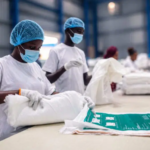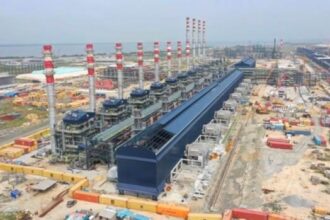

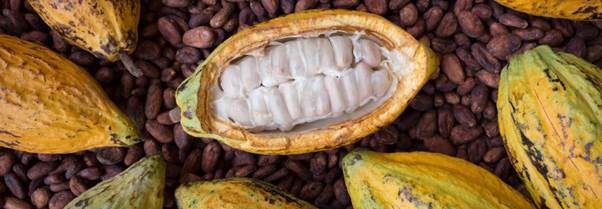

Sunbeth Global Concepts has announced plans to establish a 70,000-metric tonne cocoa processing plant alongside an 80,000-metric tonne cashew processing facility as part of a broader strategy to deepen local value addition across Africa’s agricultural supply chains.
The facilities, scheduled for commissioning in March 2027, were announced during the Africa Cocoa Finance and Investment Forum held at the London Stock Exchange.
Managing Director, Olasunkanmi Owoyemi, said the investment reflects the company’s transition from commodity trading into integrated agro-industrial processing.
“Scaling in this industry demands far more than capacity expansion. Vertical integration is not optional; it is the foundation of a business built to last,” he said.
The company stated that the cocoa processing facility would strengthen Nigeria’s position within global cocoa processing markets, while the cashew facility would support export demand across Europe, Asia, and the Americas.
Sunbeth currently operates across Nigeria, Ghana, and Cameroon, while maintaining international offices in London, Dubai, and New York.
The company also disclosed plans to strengthen farmer education, financing systems, quality control, and logistics under its Orange Cocoa Sustainability Framework.
BrandiQ Analysis
Sunbeth’s expansion represents a significant structural shift within Africa’s economic development narrative.
For decades, Africa has largely exported raw commodities while importing finished products at significantly higher value. This model has historically limited industrialisation, job creation, and wealth retention across the continent.
The announcement signals a growing recognition among African firms that the future of economic competitiveness lies not in raw commodity exports alone, but in controlling larger portions of the value chain.
Cocoa provides a particularly powerful example.
Although Africa produces the majority of the world’s cocoa, most global chocolate manufacturing profits are captured in Europe and North America where processing, branding, and retailing occur.
By expanding local processing capacity, companies such as Sunbeth are attempting to shift Africa’s position within global agricultural economics from:
- Raw commodity supplier
to - Industrial value creator
The implications for Nigeria and Africa are substantial.
Large-scale agro-processing could:
- Increase export earnings
- Create industrial jobs
- Improve rural incomes
- Expand foreign exchange generation
- Reduce commodity dependency risks
- Build manufacturing ecosystems
For investors in the UK, US, Europe, and the Gulf, African agro-processing is increasingly emerging as a strategic investment category because of:
- Rising global food demand
- Supply chain diversification
- Sustainability pressures
- Ethical sourcing requirements
- Climate-related production risks elsewhere
The emphasis on vertical integration is particularly important.
Globally, supply chain resilience has become a central corporate priority following disruptions caused by pandemics, wars, and climate events. Companies capable of controlling sourcing, logistics, processing, and export systems are likely to enjoy stronger long-term competitiveness.
Sunbeth’s expansion also highlights a broader continental trend: Africa’s next economic phase may depend less on resource ownership and more on processing capacity, infrastructure, and industrial intelligence.
The real economic battle of the future may no longer be about who owns raw materials, but who captures the highest-value layers of production.