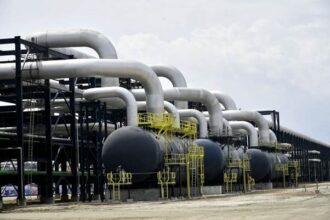



Africa’s ambitious infrastructure expansion programme, backed by over $360bn in planned investments, is facing a critical talent shortage that could delay project delivery and weaken economic returns, according to new research by the Project Management Institute (PMI).
The report highlights a growing deficit of skilled construction project professionals across Sub-Saharan Africa, warning that the region could face a 57 per cent talent gap by 2035—one of the highest globally.
This challenge emerges at a pivotal moment, as the continent accelerates development under the Programme for Infrastructure Development in Africa, which includes more than 400 priority projects spanning energy, transport, ICT, and water systems, aimed at driving regional integration and long-term growth.
According to PMI, demand for construction project professionals is projected to rise from approximately 260,000 in 2025 to over 410,000 by 2035, leaving a shortfall of nearly 150,000 workers. Globally, the sector will require an additional 2.5 million professionals within the same period.
The report underscores a structural paradox: while infrastructure development remains central to economic growth and job creation, execution inefficiencies continue to erode value. PMI estimates that about 10 per cent of global project investment is lost annually due to poor performance, a trend that could translate into billions of dollars in unrealised value across Africa.
“Construction sits at the heart of the region’s development ambitions,” Managing Director for PMI Sub-Saharan Africa George Asamani stated.
“From transport corridors and energy infrastructure to housing, healthcare and digital connectivity, projects are the vehicles through which we build our future. But without the right project management capabilities, we risk delays, cost overruns and, ultimately, lost value.”
Infrastructure activity is expanding rapidly, driven by population growth, urbanisation, and rising regional trade. PMI identified Sub-Saharan Africa as the fastest-growing region globally in demand for construction project professionals, with countries such as Ethiopia projected to record annual demand growth of about 7.8 per cent.
However, project delivery remains complex, involving multiple stakeholders including governments, contractors, financiers, and communities. Weak coordination among these actors continues to drive inefficiencies and costly project rework.
“Construction is highly visible and deeply scrutinised,” Asamani said.
“Every bridge, hospital or power plant carries public expectations. When projects go wrong, the impact is felt not just financially but also socially and politically.”
The report also noted that the sector lags behind others in productivity and technology adoption, with tools such as building information modelling, digital twins, and artificial intelligence increasingly seen as critical to improving outcomes.
Employers are facing shortages not only in technical skills such as planning and resource management but also in leadership and collaboration capabilities needed to manage complex infrastructure ecosystems.
At the same time, the growing importance of environmental, social, and governance standards is reshaping project requirements, increasing demand for professionals capable of integrating sustainability into execution.
PMI emphasised that closing the talent gap will require sustained investment in training, improved working conditions, and clearer career pathways, alongside expanded certification programmes.
“If we want infrastructure to be a true engine of GDP growth, we must professionalise the way we deliver it,” Asamani added.
“We cannot afford to treat training as a cost. It is an investment in national competitiveness.”