The contest for audiences and public attention is no longer confined to the television screen. In the emerging media economy, the real prize is not merely viewership. It is trust, engagement and ownership of the audience relationship.
In 2008, Garrett Graff, author of The First Campaign: Globalization, the Web, and the Race for the White House, offered a remarkably prescient observation of the Obama–Clinton primaries: “This is the first election that will be won on the internet, or the last that won’t be.” He was right. For the first time, Americans were spending as many hours online as they were in front of the television. The contest was quickly labelled “the YouTube election.”
Obama did not win because of the internet. But he could not have won without it. He was, in Graff’s blunt assessment, “uniquely unqualified.” What he possessed was a movement. Social media made that movement visible, contagious and self-reinforcing. The medium favoured the insurgent over the heir apparent. It still does.
Nearly two decades later, that relationship between institutions, personalities and audiences is undergoing another transformation. This time, the emerging battleground is livestreaming.
From the television studio to the creator’s screen
For much of the twentieth century, the architecture of mass media was relatively straightforward. Television networks owned the studios, controlled the schedules, employed the presenters and determined what audiences watched and when. The audience had choices, but those choices were largely confined to the channels made available by broadcasters. That arrangement has been disrupted.
Today an independent journalist, political commentator or digital creator can broadcast live to thousands – sometimes millions – without a broadcast licence, a transmission mast or a carriage deal. A camera, a microphone, a stable connection and a compelling proposition are often enough.
The real disruption, however, is not technological. It is behavioural. Audiences are increasingly choosing not only what they want to watch, but who they want to watch it with, whose interpretation they trust, and which communities they want to join. The traditional broadcaster once controlled access to the audience. Today the audience can find its own broadcasters.
A revealing case study: the 2026 American midterms
The November 2026 midterms offered a clear illustration of the new landscape.
NBC News experimented with its “Kornacki Cam,” following political analyst Steve Kornacki for nearly eleven hours as he tracked results. The livestream attracted approximately 29 million views and peaked at more than 300,000 concurrent viewers. A traditional media organisation had successfully turned one of its established talents into a digital event.
Independent creators were equally competitive. Streamer Hasan Piker peaked at over 241,000 concurrent viewers and generated roughly 1.75 million viewing hours. YouTube reported that more than 35 million people in the United States watched election-related content on the platform on Election Day alone. Across YouTube, Twitch, Kick and Rumble, election-related livestreams in the preceding 30 days generated 10.27 million viewing hours — 4.5 times the figure recorded before the 2022 midterms.
Traditional television was hardly absent. Nielsen estimated that 31.2 million people still watched primetime coverage across broadcast and cable. The lesson is not that livestreaming has killed television. It is that the battle for audiences has expanded beyond it. Established broadcasters are now competing on multiple fronts, sometimes by adapting their own talent for the new format.
The rise of the personality as a media brand
Perhaps the most consequential shift is the growing power of individual personalities. For generations, the media organisation was the principal brand. People watched the BBC, CNN or their preferred national network. The presenter mattered, but the institution usually carried greater weight.
That relationship is changing. A growing number of audiences now follow individual journalists, commentators and creators across platforms. Loyalty is often stronger to the personality than to the organisation that once employed them.
This creates a new category of media entrepreneur: individuals who build audiences around distinctive voices, perspectives and styles, then monetise those relationships through sponsorships, subscriptions, memberships and advertising. For traditional media organisations, the implication is double-edged. Their most talented presenters may be their greatest assets — or the seeds of future competing brands.
Views are not the whole story
Livestreaming has also complicated the commercial conversation. Advertising, subscriptions, donations, super chats and platform monetisation all offer revenue paths. Yet there is a critical distinction between attracting attention and building a sustainable media business. A livestream may draw hundreds of thousands of viewers and still struggle to generate dependable income. Controversy can produce enormous engagement while eroding the credibility required for long-term value. The more sophisticated questions are therefore: How many people returned? How long did they stay? How much did they trust the content? And can that relationship be monetised responsibly? In the attention economy, reach is valuable. Sustained attention, trust and loyalty are considerably more consequential.
The Nigerian reality
This shift is already visible in Nigeria. Political and public-affairs conversation increasingly takes place on YouTube channels, Instagram Live, TikTok, X Spaces and independent online platforms. Recent data shows a growing share of Nigerians, particularly younger audiences, meeting a substantial portion of their news needs through creators and livestreamers rather than traditional bulletins.
During a major political controversy, a television station may still air a structured bulletin and invite studio guests. At the same time, independent commentators are often live, taking questions, reacting in real time and building communities around the unfolding story. The audience is no longer restricted to waiting for the next scheduled programme.
For Nigerian media organisations, the opportunity is significant. An established broadcaster already possesses reputation, experienced journalists and editorial systems that many independent creators must build from scratch. The challenge is to translate those assets into digital experiences that feel native to the medium — not merely television programmes uploaded to another platform.
The danger of speed without responsibility
There is a less attractive side to the transformation. Livestreaming rewards speed, spontaneity and personality. These qualities can make broadcasting more engaging; they can also weaken the safeguards that responsible journalism requires. An unverified claim can spread and harden into accepted fact long before a correction arrives. The pressure to hold an audience can encourage sensationalism and the deliberate cultivation of outrage.
There remains a difference between being first and being right. The rise of independent broadcasters does not make verification, accountability and correction less important. It makes them more necessary. Credibility must remain a competitive asset.
The strategic question: who owns the audiences?
For media businesses, the central question is no longer simply: How do we attract viewers?
It is: How do we build an audience that trusts us, returns regularly, engages meaningfully, and is commercially sustainable?
That is a brand-management question as much as a broadcasting one. Media organisations must understand their audiences more deeply, develop distinctive digital propositions, invest in talent, and design experiences that take advantage of interactivity without abandoning editorial discipline.
Their competitors are no longer limited to other television networks. They include independent journalists, podcasters, digital creators and communities that have learned to produce and distribute their own content. The task is not to imitate every successful creator or abandon the strengths of institutional journalism. It is to identify what audiences value in the new environment and build a credible, differentiated proposition around it.
The final verdict
Garrett Graff’s observation about the 2008 campaign was more than a comment on electoral strategy. It was an early recognition that technology was rewriting the relationship between institutions, personalities and their audiences. Livestreaming is the latest chapter in that story.
A television station may still own the studio, the cameras and the broadcast licence. Those assets no longer guarantee exclusive access to public attention. A creator operating from a modest setup can now compete for the same audience. The difference increasingly lies in the strength of the personality, the relevance of the content, the immediacy of the coverage, and the trust established with viewers.
The future belongs neither automatically to the television networks nor to the livestreamers. It will belong to those who understand the audience, earn its confidence, and give it compelling reasons to return.
In the new media economy, owning a television station may still confer influence. Owning the audience’s attention, trust and loyalty is becoming an altogether different — and more decisive — contest.
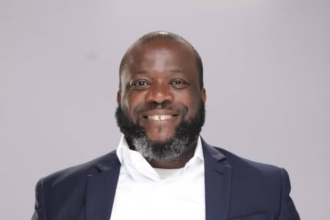
Ken Ihedioha is a seasoned business and marketing strategist, communications consultant and former journalist with over 30 years of corporate and media experience, having held senior leadership roles at FrieslandCampina and Dangote Cement, and undertaken executive programmes at Harvard Business School, Wharton and Wits Business School.